 Lynden Siding
 Fiber Cement Siding Built for Aldergrove's Weather
Aldergrove sits in that stretch of the Pacific Northwest where marine air, heavy rain, and long stretches of grey, damp weather aren't the exception — they're the baseline. Homes here take a beating that homes in drier climates never see: siding gets soaked, dries slowly, and repeats that cycle for months at a time. Add salt-laden air drifting in off the Strait of Georgia and the Fraser Valley's own moisture patterns, and you've got a recipe that exposes every weak point in a siding system within a few years, not a few decades.
We're a Lynden, Washington crew that works this border region regularly, including Aldergrove and the surrounding Langley Township area. We install exactly one siding product: James Hardie fiber cement. This page walks through what that means specifically for a home in Aldergrove — what the climate demands, what correct installation actually involves, and why the crew doing the work matters as much as the product going on the wall.
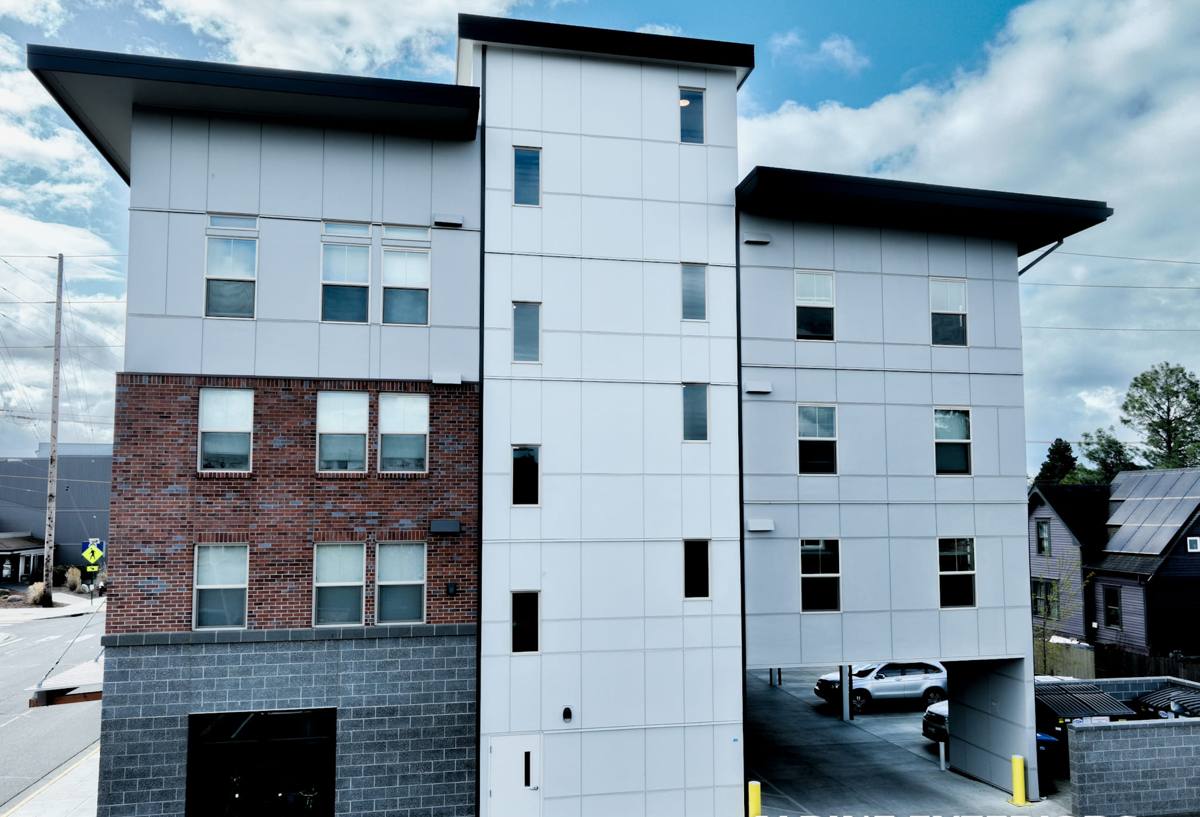
What Salt Air, Driving Rain, and Moss Season Actually Do to Siding
It helps to understand the failure mechanisms before talking about the fix. Three things drive siding problems in this area:
Salt Air
Moist, salt-carrying air accelerates corrosion on fasteners, trim flashings, and any exposed metal components. Siding materials that rely on paint film alone for protection are vulnerable once that film gets compromised by UV and moisture cycling — salt exposure speeds up the breakdown.
Driving Rain
Wind-driven rain doesn't just wet the surface of a wall — it pushes water sideways, testing every seam, joint, and butt edge. A siding system is only as good as its weakest lap joint or caulk line. Products that swell, wick, or delaminate when they take on water fail from the inside out, often long before the damage is visible from the street.
Moss and Extended Damp Season
Long stretches of overcast, humid weather mean siding surfaces stay damp for days at a time, especially on north-facing walls and anywhere shaded by trees or fences. That's ideal moss and mildew territory. Organic growth holds moisture against the siding surface even longer, which compounds every other problem on this list.
None of this is unique to any one house in Aldergrove — it's the regional reality, and it's exactly why the siding material and the installation details matter more here than in a drier climate.
Why We Only Install James Hardie Fiber Cement
We get asked regularly why we don't offer vinyl, LP SmartSide, or other fiber cement brands. It's a fair question, and the honest answer is that we standardized on one product after weighing what actually holds up in this climate against long-term maintenance and warranty structure.
- Vinyl is affordable and low-maintenance in mild climates, but it expands and contracts with temperature swings, can crack in cold snaps, and its seams are a long-term weak point against driving rain.
- Engineered wood products (like LP SmartSide) perform well when detailing is perfect, but wood-based substrates are inherently more vulnerable to swelling and edge deterioration if water gets past a seam — a real risk in a climate with this much sustained moisture.
- Other fiber cement brands (Cemplank, Allura) are legitimate cement-based products, but we've built our process, our crews' training, and our warranty relationship around one manufacturer so we can guarantee consistency from job to job.
James Hardie fiber cement is non-combustible, dimensionally stable in wet-dry cycling, and finished at the factory with ColorPlus technology — a baked-on finish that resists fading and chipping better than field-applied paint. It's engineered specifically for climate zones like ours (Hardie's HZ5 product line is built for the Pacific Northwest's wet, cool conditions), and it carries a strong transferable warranty when installed to Hardie's published specifications. That's the product we put on Aldergrove homes, and it's the only one.
What a Correct Fiber Cement Installation Involves
Fiber cement is only as good as the installation behind it. A rushed or improperly detailed job can undercut even a premium product's performance — and in a climate this wet, installation mistakes show up fast. Here's what we hold every job to:
Water Management Comes First
Before a single board goes up, the wall needs a properly lapped weather-resistive barrier, correctly integrated flashing at windows, doors, and penetrations, and a drainage plane that lets any moisture that gets behind the siding find its way back out. This step is invisible once the job is done — and it's the single biggest factor in whether the siding lasts.
Clearances and Gaps
Hardie siding needs specific clearances from grade, roof lines, decks, and other trim to keep the bottom edge from sitting in standing water or trapped moisture. We follow Hardie's published clearance and gap specifications, not shortcuts.
Fasteners
Given the salt air in this region, fastener selection matters. We use corrosion-resistant fasteners driven to the correct depth and spacing — over-driven or under-driven nails are a common cause of early siding failure, whether the crew realizes it or not.
Joints and Caulking
Butt joints, corners, and penetrations get properly sealed with a caulk rated for exterior, high-moisture exposure. Driving rain finds every gap that isn't sealed correctly, so this is not a step to rush.
Painting and Touch-Up
ColorPlus finishes come factory-cured, which is more durable than job-site paint, but cut edges and any field-painted trim still need the right primer and paint system to match Hardie's warranty requirements.
James Hardie Product Lines for This Climate
Hardie makes several siding profiles and product lines, and the right choice depends on the home's style, budget, and exposure. Here's a general comparison of what we typically discuss with homeowners in this area:
| Product | Best For | Notes for This Climate |
|---|---|---|
| HardiePlank Lap Siding | Most homes — traditional or modern look | Available in smooth or cedar-textured finish; the most common choice here |
| HardieShingle | Accent areas, gables, Craftsman-style detailing | Adds texture without the maintenance burden of real wood shingle |
| HardiePanel | Modern builds, board-and-batten look | Clean vertical lines; needs correct joint detailing for rain exposure |
| HardieTrim | Corners, window and door trim, fascia | Matches the siding system so the whole exterior weathers evenly |
All of these are available in Hardie's ColorPlus factory finishes, engineered for the HZ5 climate zone that covers this part of Washington and the adjacent BC border area.
Our Process, Start to Finish
- Walkthrough and assessment — we look at the existing siding, water management, and any problem areas (north-facing walls, shaded sections prone to moss, trim in poor condition).
- Written estimate — clear scope, product selection, and a realistic timeline, with no pressure to decide on the spot.
- Prep and tear-off — removal of old siding, inspection of sheathing for hidden moisture damage, and repair of any compromised wall structure before new siding goes up.
- Weather barrier and flashing — the water management layer described above, done correctly before anything visible goes on.
- Installation — Hardie siding installed to manufacturer spec: clearances, fastener schedule, joint treatment.
- Trim, caulking, and final detailing — the finishing work that determines how the house looks and how well it sheds water for the next several decades.
- Final walkthrough — we go over the finished job with the homeowner before calling it done.
What Drives Cost on an Aldergrove Job
Every home is different, but these are the main factors that move the number:
| Factor | Why It Matters |
|---|---|
| Home size and wall complexity | More corners, gables, and dormers mean more cutting, trim, and labor time |
| Condition of existing sheathing | Hidden moisture damage found during tear-off can add repair scope |
| Product line and profile | Lap siding, shingle accents, and panel systems price differently |
| Access and site conditions | Tight lots, fencing, or landscaping can affect staging and labor time |
| Trim and detail work | Full trim replacement adds cost but keeps the whole system consistent and warrantable |
We give straight, itemized estimates — no inflated "starting at" numbers designed to get a foot in the door.
Maintaining Fiber Cement Siding in a Wet Climate
Fiber cement is low-maintenance compared to wood, but "low-maintenance" isn't "no-maintenance," especially with this much rain and moss pressure. A short seasonal checklist:
- Rinse siding annually, especially north-facing and shaded walls where moss and mildew tend to establish first
- Inspect caulk lines at joints, windows, and trim every year or two and re-caulk any that have cracked or pulled away
- Keep gutters clear so overflow isn't running down the siding face
- Trim back vegetation and shrubs that hold moisture against the wall
- Watch for any soft spots, staining, or paint failure at the bottom courses, which often signal a clearance or drainage issue worth checking early
Why a Crew That Already Works Aldergrove Matters
Siding installation is detail-sensitive work, and getting those details right takes more than reading a spec sheet once. A crew that regularly works this border region — Lynden, Aldergrove, and the surrounding Whatcom County and Langley Township area — already knows how the local weather patterns behave, which walls on a typical lot orientation take the worst of the driving rain, and where moss problems tend to start. That local pattern recognition shows up in better water management decisions on day one, not lessons learned the hard way after a callback.
It also means straightforward logistics: material staging, scheduling around weather windows that actually apply to this area, and a crew that's used to coordinating a cross-border job without added friction. That's the difference between a contractor who installs siding generically and one who installs it for this specific climate.
If you're weighing a siding project on your Aldergrove home, we're happy to walk the property, look at what's there now, and give you a straight, no-pressure estimate on James Hardie fiber cement siding. Use the form below to get started.