 Lynden Siding
 Birch Bay's Climate Is Rougher on Siding Than Most of Whatcom County
Birch Bay sits right on the water, and that changes what a siding product has to survive. Homes a few miles inland in Lynden deal with plenty of rain, but Birch Bay adds salt air off the bay, near-constant wind exposure, and a moss and algae season that runs long into the year because shaded, damp walls rarely get a chance to fully dry. Put those three things together — salt, driving rain, and moss — and you have one of the more demanding siding environments in the county.
Salt air is corrosive to fasteners, flashing, and any exposed metal trim. Wind-driven rain doesn't just fall straight down here; it gets pushed sideways into wall assemblies, seams, and butt joints that would stay dry on a calmer, more inland lot. And moss doesn't just look bad — a mat of moss and algae holds moisture against a wall for weeks at a time, which is exactly the condition that rots wood-based siding and delaminates poorly-bonded products.
Why This Matters More Than It Looks Like It Should
None of these three stresses is dramatic on its own. It's the combination, applied year after year, that separates siding that lasts three decades from siding that needs real repair work inside ten years. A product and installation method that would be fine in a dry inland neighborhood can fail early on a shoreline lot in Birch Bay.
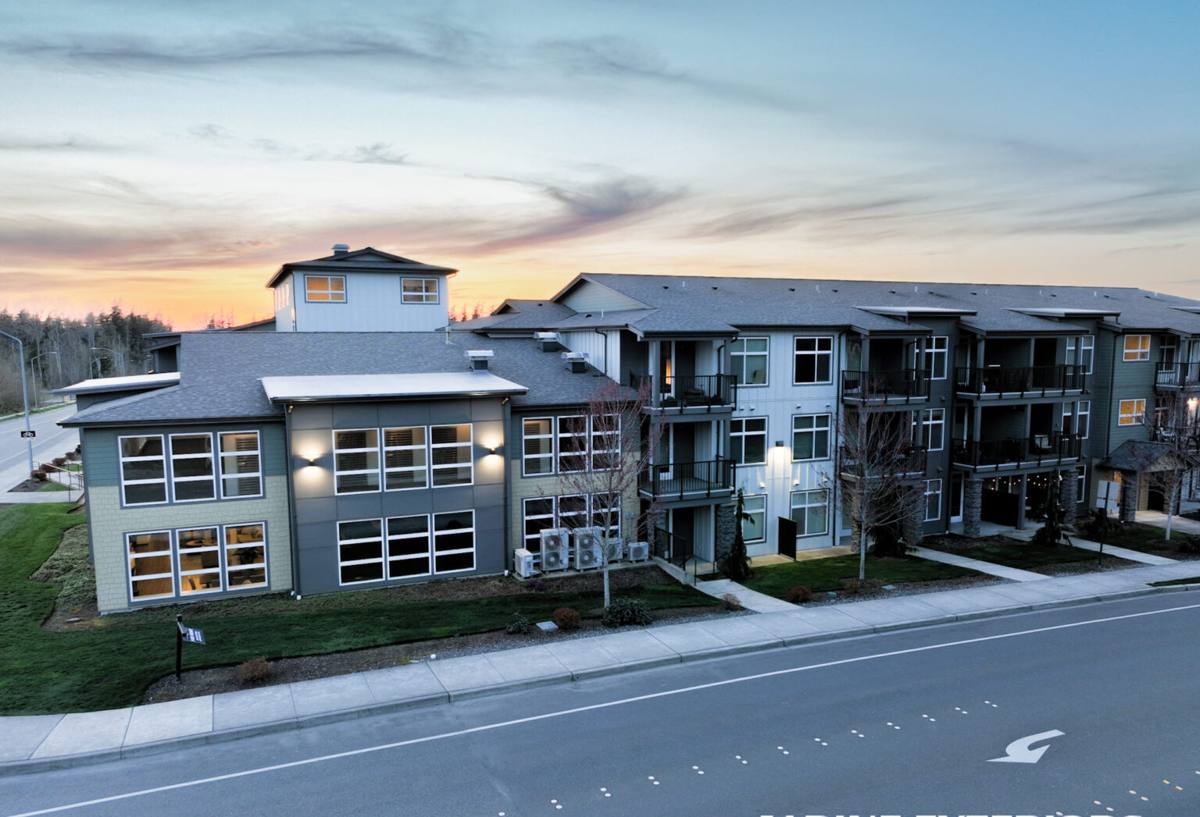
Why We Install Only James Hardie Fiber Cement Here
We standardized on James Hardie fiber cement siding for every home we side, and Birch Bay's conditions are a good example of why. Fiber cement is not organic — it's cement, sand, and cellulose fiber, engineered and cured under controlled conditions. It doesn't feed moss the way wood-based products can, it doesn't rot, and it holds up to sustained damp exposure far better than materials built around a wood-fiber core.
Hardie also builds a version of its siding specifically for wetter, harsher climates — the HZ5 product line, engineered for regions with more moisture exposure and freeze-thaw cycling. That's the line we specify for coastal and near-coastal work in this part of Washington, rather than a lighter-duty formulation meant for drier regions.
ColorPlus Finish and Salt Air
The factory-applied ColorPlus finish matters here too. It's baked on in a controlled environment with better adhesion and UV resistance than field-applied paint, and it holds color and sheen longer under the kind of sun-and-salt-air cycling a bay-front or near-bay home gets. That means fewer repaint cycles over the life of the siding, which matters on a house where a ladder job means dealing with wind and moisture on top of the usual scheduling headaches.
Non-Combustible Construction and the Warranty Behind It
Fiber cement is non-combustible, which is a genuine safety advantage regardless of coastal exposure. James Hardie also backs correctly installed siding with a strong, transferable warranty — one more reason it's the only product we put on homes rather than something we sell alongside cheaper alternatives.
Why We Don't Install Vinyl, LP SmartSide, or Cedar in an Environment Like This
We get asked why we don't offer alternatives, and the honest answer is that Birch Bay's climate exposes the weak points of those materials faster than a drier location would.
- Vinyl siding expands and contracts with temperature swings and can warp or loosen under sustained wind loading; its seams and J-channels are also a common entry point for wind-driven rain if not detailed perfectly.
- LP SmartSide and other engineered wood products use a wood-strand core. Wood-based cores are more vulnerable to sustained moisture and to moss and algae holding damp against the wall — exactly the condition Birch Bay produces for long stretches of the year.
- Cedar and primed spruce are natural wood. They can look great, but they need consistent refinishing to keep water out, and a shaded, salt-air, high-moisture wall is an unforgiving place to fall behind on that maintenance.
None of these are bad products in every setting — they're just products whose real-world trade-offs get worse in exactly the conditions a Birch Bay home faces. That's a professional judgment call on our part, based on what we see in this climate, not a claim that they fail everywhere.
What a Correct Installation Involves on a Birch Bay Home
Fiber cement siding is only as good as the installation behind it. In a coastal-influenced environment, a few details matter more than they would on a calmer inland lot.
Fasteners and Flashing
We use corrosion-resistant fasteners rated for the exposure, not standard interior-grade hardware. Flashing at windows, doors, and roof-to-wall transitions has to be sequenced correctly — lapped so water sheds outward at every layer — because wind-driven rain will find any flashing detail that was installed out of sequence.
Drainage Plane and Rainscreen Gap
Behind the siding, a properly lapped weather-resistive barrier and a drainage gap give any moisture that does get past the cladding a path to drain and the airflow to dry out, instead of sitting against the sheathing. On a wall that stays damp longer because of shade and salt-laden air, that drainage path is not optional — it's the difference between a wall system that dries out between storms and one that stays wet.
Joint and Butt-Seam Treatment
Butt joints and panel seams are caulked and detailed to manufacturer spec rather than left to rely on caulk alone as the only line of defense. Caulk is a maintenance item; the flashing and lap sequencing underneath it is the real water management.
Clearances
We hold correct clearance from grade, roof lines, and decks so the bottom edge of the siding isn't sitting in standing water or trapped moisture, which is a common failure point we see on older coastal-area homes.
Our Process for Birch Bay Projects
The steps are the same ones we use everywhere, but the emphasis shifts toward moisture management given the location.
- On-site assessment. We look at existing siding, sheathing condition, current moss and algae buildup, and how exposed each elevation is to wind and driving rain.
- Tear-off and sheathing check. Old siding comes off and we inspect the sheathing underneath for any moisture damage before anything new goes on — covering a wet wall assembly with new siding just hides the problem.
- Weather barrier and drainage plane install. Correctly lapped, sealed at penetrations, with a drainage gap behind the cladding.
- Flashing at every penetration. Windows, doors, hose bibs, vents, and roof lines all get flashed before siding goes on around them.
- James Hardie HZ5 panel or lap installation, fastened and spaced to manufacturer specification with corrosion-resistant hardware.
- Trim, caulking, and touch-up using ColorPlus-matched materials so repairs and cut edges blend rather than standing out.
- Final walkthrough covering maintenance expectations specific to a salt-air, high-moss setting.
Living With Salt Air and Moss: Realistic Maintenance
Correctly installed James Hardie siding is low-maintenance, not no-maintenance, and that's especially true this close to the water.
- Rinse siding periodically to clear salt residue and organic buildup, particularly on shaded north- and west-facing walls where moss gets a foothold first.
- Keep gutters clear so overflow doesn't run down the face of the siding and feed algae growth in one concentrated stripe.
- Trim back vegetation and tree cover where possible to cut down on the shade and trapped humidity that let moss establish.
- Have caulking and trim checked every few years — caulk is a wear item even on a fiber cement wall system with good flashing behind it.
- Watch for soft spots, staining, or bubbling at the bottom courses and around penetrations, and have them looked at early rather than after a wet winter.
Cost Factors on a Birch Bay Project
Every home is different, but these are the variables that move the price on a Birch Bay siding job specifically.
| Factor | Why It Affects Cost |
|---|---|
| Wall exposure to wind and salt air | Bay-facing and upper-elevation walls often get upgraded fastener and flashing detailing |
| Existing moisture or moss damage | Sheathing repair or replacement adds labor and material before new siding can go on |
| Home access and site logistics | Waterfront and hillside lots can limit staging space and equipment access |
| Siding profile (lap vs. panel vs. shingle) | Material and labor rates vary by profile and coverage |
| Trim and detail complexity | Multiple gables, dormers, and window openings add flashing and cutting time |
| Tear-off scope | Full removal of old siding versus a simpler re-side changes labor hours |
We walk through these factors on-site and put together a written estimate before any work starts — there's no accurate way to price a coastal-area re-side over the phone.
Why a Crew That Already Works Birch Bay Is Worth Hiring
We're based in Lynden and already work this stretch of Whatcom County regularly, which matters for a few practical reasons beyond just knowing the climate.
We know what condition to expect under old siding on a bay-exposed wall before we open it up, which means fewer surprises and more accurate estimates. We're familiar with the permitting and inspection process for Whatcom County, so scheduling doesn't stall on paperwork. And because we're not driving in from out of the area for a one-off job, follow-up on caulking, trim, or a warranty question is a normal service call, not a special trip.
A siding crew that treats Birch Bay as familiar territory, rather than an unusual job site, tends to plan for the wind, the water table, and the moss from day one instead of learning those lessons the hard way partway through the project.
Checklist: What to Confirm Before Hiring for a Coastal-Area Re-Side
- Are they specifying a climate-rated product line, like Hardie's HZ5, rather than a standard inland formulation?
- Will they inspect and document sheathing condition before installing new siding over it?
- Do they detail flashing sequencing and drainage plane installation in writing, not just "we'll seal it up"?
- Are they using corrosion-resistant fasteners rated for a salt-air environment?
- Do they have recent, verifiable experience working in Birch Bay or comparable shoreline settings?
- Is the estimate written, itemized, and based on an in-person assessment rather than a phone quote?
If your Birch Bay home is due for new siding, or you want a second opinion on moss, staining, or moisture issues you're already seeing, we're happy to come take a look. The estimate is free, there's no pressure, and you'll get a straight answer about what your home actually needs — just fill out the form below.