 Lynden Siding
 Why Decks in Kendall Wear Out Differently
Kendall sits in the kind of Whatcom County terrain that's tough on outdoor structures: tree cover that keeps decks shaded and damp long after a storm passes, marine air drifting in off the Sound that carries salt and moisture, and a moss season that can stretch from October through May in a wet year. A deck built for a drier climate — or built without accounting for how long surfaces stay wet here — will show its age faster than the homeowner expects. That's not a knock on any one product; it's just what happens when framing, fasteners, and decking material aren't matched to the conditions they actually face.
We replace decks in and around Lynden regularly, and the failure patterns we see in Kendall are consistent: soft spots where moss and organic debris trapped water against the boards, rust streaks from fasteners that weren't rated for ground contact or coastal air, and ledger connections that were never properly flashed to the house. None of that is unusual for the region — it's just what a correct replacement needs to solve for.
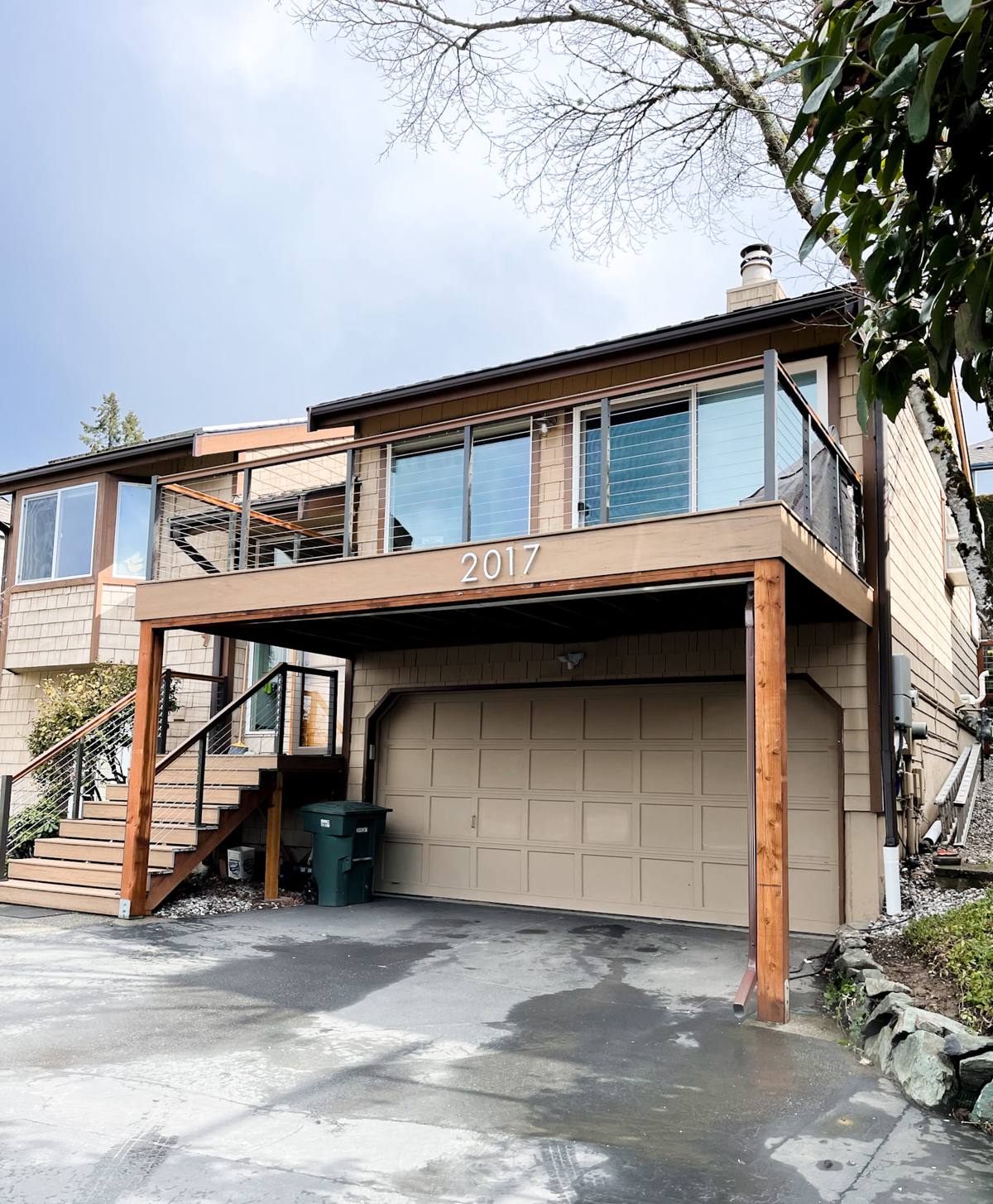
Signs a Deck Needs Replacement, Not Another Repair
Not every tired-looking deck needs to come out. But there's a point where patching boards is just delaying a bigger problem, and in a wet climate that point arrives faster than homeowners expect.
- Soft, spongy, or spring-back decking when you walk on it, especially near the house or in shaded corners
- Persistent moss or black-green staining that comes back within weeks of cleaning
- Visible gaps, splitting, or checking along more than a few boards, not just one or two
- Rust bleeding from fastener heads or joist hardware
- Any softness or discoloration at the ledger board where the deck attaches to the house — this is a moisture intrusion signal, not a cosmetic one
- Railings or posts that flex more than they used to
- Footings that have shifted, heaved, or show visible cracking
If it's one or two of these, a repair might genuinely be the right call. If it's several at once, especially anything involving the ledger or footings, replacement is usually the more honest recommendation — repairs on a structurally compromised deck just move the problem, they don't solve it.
What a Correct Deck Replacement Actually Involves
A deck replacement is a structural project first and a finish-material choice second. Getting the parts underneath right matters more for long-term performance in this climate than which decking board gets picked.
Ledger Board and Flashing
The ledger — the board that bolts the deck to the house — is the single most common failure point we find on older decks in this area. If it isn't properly flashed to shed water away from the house framing, moisture works its way behind it season after season, and by the time it's visible from outside, there's often rot in the rim joist behind it. A correct replacement uses proper flashing, structural screws or through-bolts rated for the load, and a clear water path away from the building — not just caulk and hope.
Footings and Frost Depth
Footings need to be sized and set to local frost depth requirements and soil conditions, not guessed at. Undersized or shallow footings are a common shortcut on older decks, and they show up later as heaving, shifting, or uneven decking that no amount of board replacement will fix.
Joists, Hardware, and Fasteners
In a climate with this much moisture and, in Kendall's case, some exposure to salt-carrying marine air, fastener and hardware choice matters more than it would in a dry inland climate. Galvanized or stainless structural connectors and coated or stainless fasteners rated for exterior and ground-contact use hold up; standard interior-grade hardware corrodes and weakens far faster than the decking above it shows.
Ventilation Underneath
Low decks built close to grade, or decks tucked under heavy tree cover, need airflow underneath to keep framing from staying damp constantly. Grading, gaps, and skirting design all affect how quickly the structure dries out after rain — which in this area can be often.
Decking Material Options for Kendall Homes
There's no single "best" decking material — there's a best fit for the site, the budget, and how much upkeep the homeowner wants to do. Here's how the common options actually compare for a shaded, damp, moss-prone lot.
| Material | Upfront Cost | Maintenance Needed | How It Handles This Climate |
|---|---|---|---|
| Pressure-treated wood | Lowest | Regular cleaning, re-staining/sealing every 1-3 years | Affordable and repairable, but needs consistent upkeep to resist moss and rot in shaded, damp spots |
| Cedar | Moderate | Periodic sealing/staining, moss cleaning | Naturally rot-resistant and handsome, but still an organic material that needs attention in constant shade |
| Capped composite | Higher | Occasional washing, no sealing/staining | Resists moisture absorption and moss staining far better than wood; performs well in shaded, wet conditions |
| PVC decking | Highest | Occasional washing | Fully synthetic, essentially immune to rot and moisture damage; best long-term option for constantly damp or shaded lots |
Composite and PVC cost more upfront, but on lots with heavy tree cover or persistent dampness — which describes a fair number of properties around Kendall — the maintenance savings and moss resistance often make the math work out over the life of the deck. Wood isn't a bad choice; it just asks more of the homeowner to keep it performing well in this climate.
Our Process, Start to Finish
We keep the process straightforward because homeowners deserve to know what's happening and when.
- On-site evaluation. We look at the existing deck's framing, footings, ledger connection, and overall condition to determine what's salvageable versus what needs to go.
- Honest scope and estimate. You get a clear picture of what's being replaced, what materials are recommended and why, and a straightforward cost range — no vague allowances.
- Permitting. We handle the permit application and inspections required for the jurisdiction, so the structure is built and signed off correctly.
- Demolition and disposal. Old decking, framing, and any compromised structural members are removed and hauled off.
- Structural rebuild. Footings, posts, beams, joists, and ledger flashing are built to current code, not just replicated from what was there before.
- Decking and railing installation. Your chosen material goes down with fasteners and hardware matched to the climate, not just whatever's cheapest.
- Final walkthrough. We go over the finished deck with you, including what maintenance (if any) your chosen material needs going forward.
Permits and Code in Whatcom County
Deck replacements that involve structural changes — new footings, a rebuilt ledger connection, or any change to the deck's size or height — generally require a permit and inspection in this jurisdiction. That's not paperwork for its own sake: inspections catch footing depth, ledger attachment, and railing height issues before they're buried under decking, which is exactly when they're cheapest to fix. We handle this as part of the project so homeowners aren't left navigating it alone.
Maintenance That Actually Extends Deck Life Here
Whatever material you choose, a few habits make a real difference in a climate with this much rain and moss pressure.
- Clear leaves, needles, and debris off the deck surface regularly, especially in fall and winter
- Keep gutters and downspouts clear so runoff isn't dumping extra water onto or near the deck
- Wash off moss and algae growth as soon as it appears rather than letting it establish
- Check the ledger board area and any flashing visually once or twice a year for staining or softness
- Trim back overhanging branches where practical to reduce shade and debris buildup
- For wood decks, keep sealing/staining on schedule — skipping a cycle in this climate costs more later
Why a Crew That Works Kendall Already Matters
Deck replacement isn't exotic work, but doing it right in this specific climate takes judgment that comes from repetition — knowing which fastener specs actually hold up locally, how deep footings need to go in this soil, and where ledger flashing tends to fail on homes built decades apart. A crew that already works Kendall and the greater Lynden area has seen how decks age here, not just in a manual. That local pattern recognition is what separates a deck that looks good on install day from one that's still solid a decade in, after another decade of Whatcom County rain and moss seasons.
If your deck is showing its age, or you're just not sure whether it needs a repair or a full replacement, we're happy to take a look and give you a straight answer. Request a free, no-pressure estimate using the form below.