 Lynden Siding
 Siding Repair Built for What Kendall Homes Actually Deal With
Kendall sits in a part of Whatcom County that puts a specific kind of pressure on exterior siding year after year. Salt-tinged marine air works on fasteners, trim hardware, and flashing metal over time. Wind doesn't let rain fall straight down here so much as push it sideways and up under laps, seams, and panel edges where a casual repair never expects water to reach. And a long, damp moss season settles into shaded walls and stays there for months, keeping moisture against the siding far longer than a dry-climate product or a rushed patch job was ever designed to handle. Siding repair in this area only holds up when it's approached with those specific stresses in mind, not treated as a quick cosmetic fix.
This page covers siding repair specifically for a Kendall home — how to tell whether a section actually needs replacing or can be properly repaired, what a correct repair involves, and how our process works from first look to final walkthrough. A crew that already works in Kendall has seen where these failures tend to start, and that matters as much as the repair materials themselves.
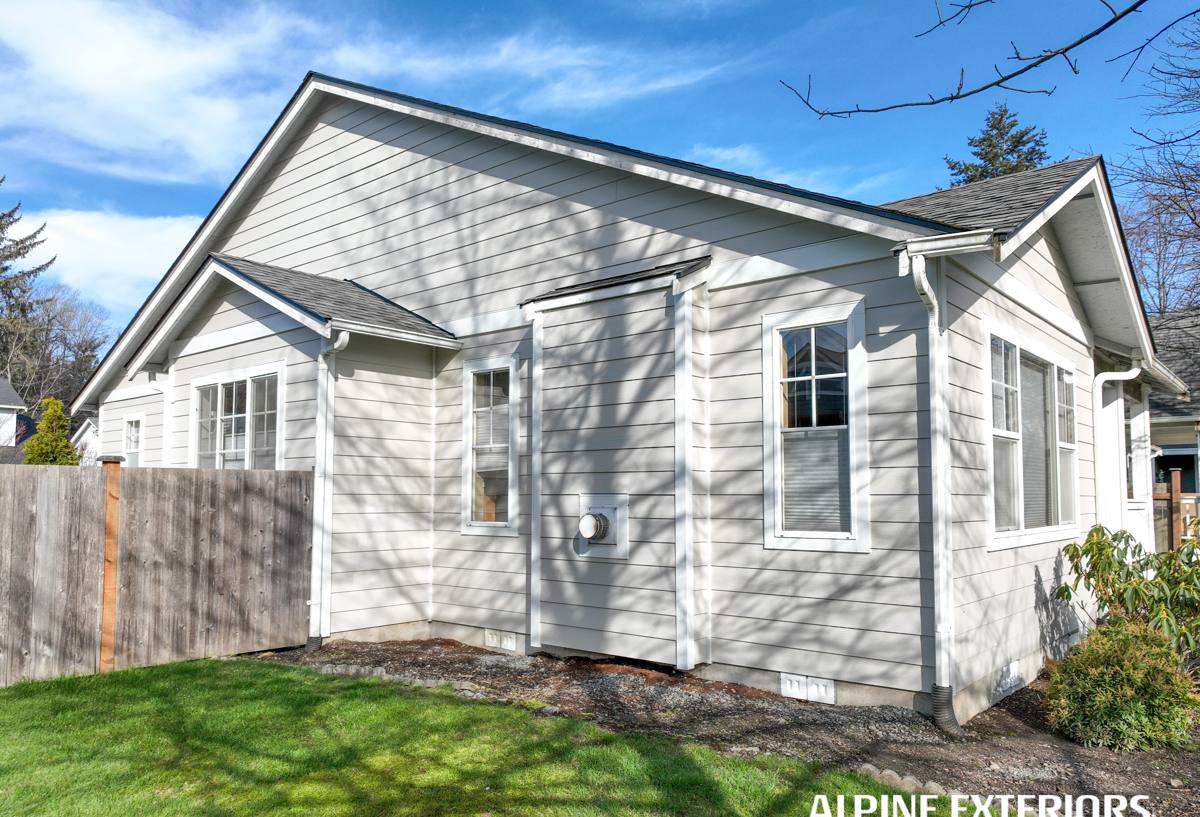
What Kendall's Climate Does to Siding Over Time
Salt Air and Corrosion
Marine air moves through this part of the county even away from the immediate shoreline, and over years it accelerates corrosion on exposed fasteners, trim hardware, and flashing metal. A repair that reuses corroded fasteners or ignores compromised trim metal because it's hidden under the visible damage tends to fail again within a season or two, in the same spot.
Wind-Driven Rain
Rain that gets pushed sideways and upward finds its way under panel laps, around trim, and through seams that would stay dry in a calmer climate. The damage a homeowner actually sees — a crack, a stain, a soft spot — is often not where the water is getting in. It's usually a sign that water has been tracking behind the siding from somewhere else for a while, which is exactly why a repair that only patches the visible spot without tracing the entry point tends to disappoint.
A Long Moss Season
Mild temperatures and near-constant moisture on shaded or tree-sheltered walls keep siding damp for long stretches, which swells wood-based materials, keeps joints and caulk lines wet longer than they should be, and encourages rot at the substrate behind a failed seal. A repair that doesn't account for how long that section stays wet each year is a repair that's likely to be revisited.
Repair or Replace? How to Tell the Difference
Not every siding problem calls for a full replacement, and not every crack or soft spot is a candidate for a simple patch. The honest answer usually comes down to how isolated the damage is and whether the underlying cause has already spread.
| What You're Seeing | Repair Usually Fits | Replacement Usually Makes More Sense |
|---|---|---|
| Impact or storm damage | Limited to one or two panels or sections | Cracked or dislodged panels across multiple wall faces |
| Rot or soft spots | Traced to a single flashing or sealant failure that can be corrected | Found at multiple, unrelated locations on the same wall |
| Age of existing siding | Well within expected service life, otherwise sound | Near or past expected lifespan with recurring failures |
| Color and finish | Fading limited to one repaired section that can be reasonably blended | Widespread fading or chalking across most of the house |
| Material condition | Substrate underneath the damaged section is still sound once opened up | Sheathing or structural framing shows moisture damage beyond the immediate repair area |
When damage is isolated and the cause can be corrected, a properly executed repair is the right, cost-effective call. When the same failures keep showing up in different spots, or the siding itself is simply reaching the end of its service life, a repair is really just delaying a replacement that's coming regardless — and it's worth being told that honestly rather than paying for patch after patch.
What a Correct Siding Repair Actually Involves
Diagnosing the Actual Cause, Not Just the Symptom
Before anything gets cut out or patched, the real question is why that section failed in the first place. A crack near a window is frequently a flashing problem, not a siding problem. A soft spot low on a wall is often a grading or drainage issue pushing moisture up from below. Repairing the visible siding without addressing what caused the damage just resets the clock on the same failure.
Checking the Sheathing and Weather Barrier Behind It
Once the damaged siding comes off, the sheathing and house wrap underneath need a real look before anything new goes back up. Covering hidden rot or a compromised weather barrier with a fresh piece of siding buries a problem that's still getting worse behind the wall — it just delays when it shows up again, usually as a bigger repair.
Matching Material, Profile, and Finish
On James Hardie fiber cement, the plank width, texture, and factory ColorPlus finish all need to be matched as closely as possible so the repair doesn't stand out as an obvious patch. Sun exposure fades even a durable factory finish gradually over years, so an exact color match on an older section isn't always achievable, and it's worth knowing that going in rather than being surprised by it at the end.
Re-Establishing Sealing and Flashing at the Repair
A repair isn't finished when the new piece is in place. Flashing and sealant at the repaired section have to be re-established correctly, or the same water path that caused the original failure just finds its way back in around the edges of the patch during the next stretch of driving rain.
Repairing James Hardie Siding vs. Other Siding Materials
We install James Hardie fiber cement exclusively for full siding jobs, but repair calls in Kendall come in on whatever's already on the house — Hardie, vinyl, engineered wood, or primed cedar and spruce. What a repair actually involves, and how well it holds afterward, depends heavily on which of those you're starting with.
| Material | Repair Considerations |
|---|---|
| James Hardie fiber cement | The board itself rarely needs replacing on its own; most repair calls trace back to trim, caulking, or a fastener issue rather than the siding material failing outright |
| Vinyl siding | Panels get brittle with UV exposure and cold, and older color runs are frequently discontinued, which makes an exact match difficult even for a small patch |
| LP SmartSide / engineered wood | Moisture at cut edges and fastener points expands the underlying strand board, so visible damage often signals more swelling than what's showing on the surface |
| Primed spruce or cedar | A rot repair only addresses that one spot — the same ongoing paint and moisture maintenance the rest of the wall already needs doesn't go away with a patch |
Most of the time, isolated damage on any of these materials is a reasonable repair candidate. Where we're honest with homeowners is when a material has reached the point where repairs keep resurfacing in new spots — an aging vinyl wall that's cracking in multiple places, or wood siding with rot recurring across several sections. At that point we'll say so directly, and if a homeowner decides to move to full replacement, James Hardie is what we'd put on the house — not because it's the only thing we install, but because it's genuinely what we've seen hold up best under Kendall's conditions.
How Our Repair Process Works
- In-person inspection: We look at the affected area in person, check adjacent trim and flashing, and where practical, open up a small section before quoting rather than estimating from the ground.
- Written estimate: You get a clear scope covering what's being repaired, the materials involved, and whether flashing or sealant work is included — not a vague single-line "patch siding" quote.
- Root-cause correction: Any flashing, sealant, or drainage issue behind the damage gets addressed as part of the repair, not left in place under a new piece of siding.
- Material and color matching: We source the closest practical match in profile and finish, and we'll tell you upfront if an exact match isn't realistic so there's no surprise at the end.
- Final walkthrough: We review the completed repair with you, confirm the sealing and flashing details, and clean up the site before calling the job done.
What Affects the Cost of a Siding Repair in Kendall
| Factor | What It Affects |
|---|---|
| Hidden damage found once siding is opened up | Whether the repair stays isolated or has to expand to adjacent sections |
| Material and color match availability | Whether a clean patch is possible or a wider section needs reworking for a consistent look |
| Flashing or trim work required | Whether the actual source of water intrusion gets corrected, not just covered |
| Wall height and access | Staging and labor time needed to reach the repair area safely |
| Number of separate repair locations | Total scope of the job and how efficiently it can be completed in one visit |
A written estimate that itemizes these factors gives a much clearer picture than a flat number, and it's worth asking any contractor what's actually included before comparing quotes.
Signs a Kendall Home's Siding Needs a Repair
- Cracked, split, or missing sections of siding after wind or impact
- Soft or spongy spots when pressed, especially low on a wall or near trim
- Peeling paint or bubbling finish concentrated in one specific area
- Moss or staining that returns quickly after cleaning in the same spot
- Gaps opening at seams, corners, or trim joints
- Water staining on an interior wall that backs up to a specific section of exterior siding
Signs like these, caught early and addressed as isolated repairs, are often exactly that — isolated. Left through another wet season, the same issue tends to spread to a wider section of wall and turn a modest repair into a much larger one.
Why a Crew That Already Works in Kendall Matters
A crew that's regularly on siding jobs in and around Kendall has already seen how salt air corrodes underspecified trim hardware, where wind-driven rain typically finds its way in on homes in this area, and which wall orientations hold moisture longest through the moss season. That shapes real decisions during a repair — knowing to check a specific flashing detail rather than assuming the visible crack tells the whole story, or recognizing a second problem starting nearby while addressing the one that prompted the call.
It also matters after the work is done. A repair warranty is only as good as the company standing behind it, and a contractor with an ongoing local presence is one you can actually reach in a year or two if a question comes up, rather than a name that only shows up for the initial bid.
If your Kendall home has siding damage you'd like looked at, or you're not sure whether a section needs a repair or a full replacement, we're glad to come take a look and give you a straightforward, no-pressure estimate. Use the form below to get started.