 Lynden Siding
 Siding Replacement Built for Laurel's Climate
Laurel sits in the part of Whatcom County where marine weather off Bellingham Bay meets the wet, low-lying farmland around the Nooksack River valley. That combination is hard on exterior siding. Homes here deal with salt-laden air carried in on westerly winds, long stretches of driving rain that push moisture sideways into wall assemblies, and a moss season that can run eight months or more in shaded, north-facing exposures. Siding that isn't specifically suited to this environment shows it early — chalking, swelling, delamination, and dark streaking well before a normal service life is up.
When we talk about siding replacement in Laurel, we're not describing a generic project. We're describing a specific set of failure patterns we see repeatedly on homes in this area, and a specific installation approach that addresses them. This page covers what that looks like.
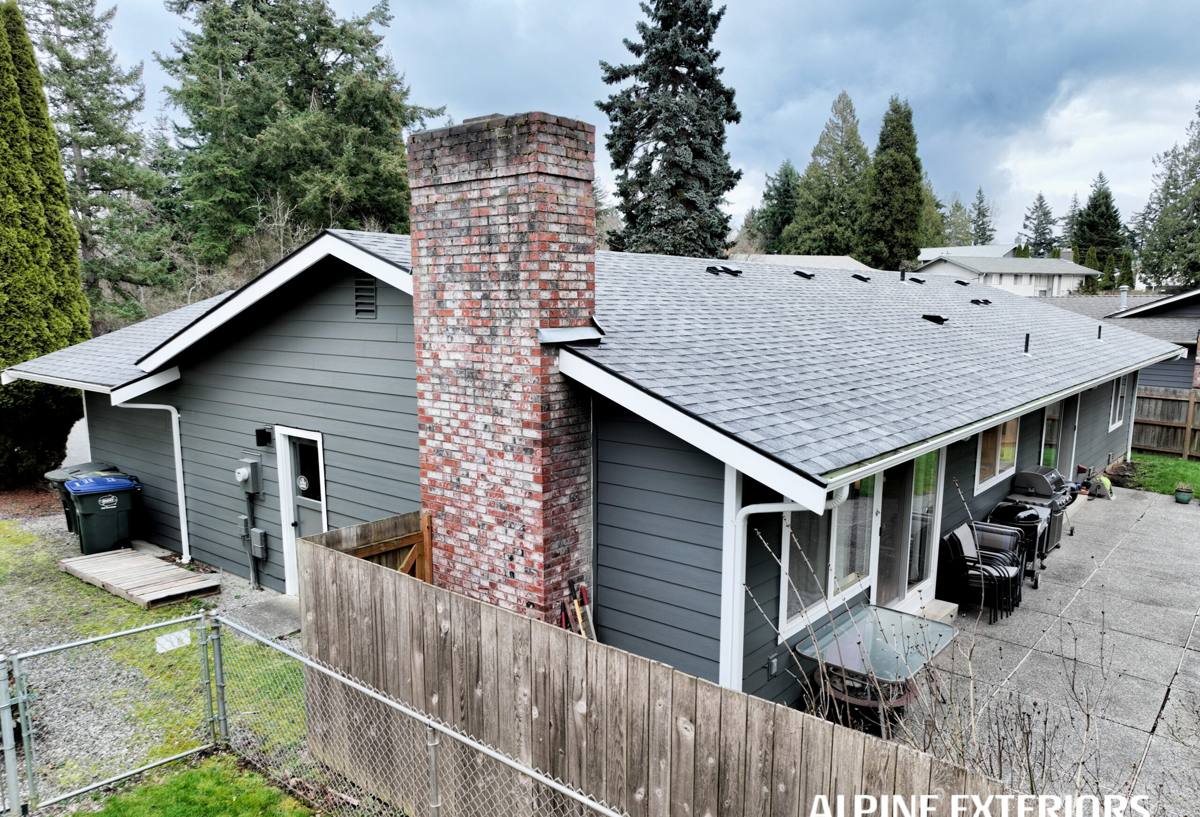
What Laurel Homes Are Up Against
Salt Air and Corrosion
Laurel isn't oceanfront, but it's close enough to Bellingham Bay and the Strait of Georgia that airborne salt reaches homes here, especially during winter storm systems. Salt accelerates corrosion on fasteners, flashing, and any exposed metal trim. It also breaks down certain paint and coating systems faster than inland climates would predict, which is part of why factory-applied, baked-on finishes hold up better here than field-applied paint.
Driving Rain
Whatcom County storms rarely fall straight down. Wind-driven rain gets forced under laps, around trim, and into any gap in the water-resistive barrier. Siding material that absorbs water — or that relies on paint film alone to stay sealed — is fighting a losing battle against this kind of exposure year after year.
Moss and Sustained Moisture
Shaded walls, tree-lined lots, and the general dampness of a Pacific Northwest fall through spring create ideal conditions for moss and algae growth on siding surfaces. Moss holds moisture directly against the material, which matters a lot depending on what that material is made of. Wood-based products can soften and rot underneath moss growth that isn't caught early. Fiber cement doesn't feed moss the way organic-based siding does, and it doesn't degrade structurally from surface moisture sitting on it.
Why We Only Install James Hardie Fiber Cement
We've made a standing decision not to install vinyl, LP SmartSide, primed spruce or cedar, or composite panel products like Cemplank or Allura. That's not a marketing position — it's a reflection of what actually holds up on homes in this climate zone and what we're willing to warranty our labor against.
- Non-combustible: Fiber cement doesn't contribute fuel to a fire the way wood-based siding does — a meaningful consideration as wildfire smoke seasons have extended even into western Washington.
- Moisture-resistant by composition: James Hardie fiber cement is engineered to resist swelling, cracking, and moisture-driven decay far better than wood-fiber composite products.
- ColorPlus factory finish: The finish is baked on in a controlled factory process, not brushed or sprayed on-site. It holds color and resists the fading and chalking that salt air accelerates.
- HZ5 product engineering: Hardie's HZ5 line is formulated specifically for climates with freeze-thaw cycling and sustained moisture exposure — a good match for Whatcom County's winters.
- Strong transferable warranty: A meaningful, structured warranty that can transfer to a new owner if the home sells.
We're not going to tell you vinyl or LP SmartSide are junk products — they have legitimate uses and plenty of installers who work with them successfully. Our decision is about what we've seen fail prematurely on homes in this specific climate, and what we're comfortable standing behind with our own labor warranty. For us, that's James Hardie, every time.
What a Correct Siding Replacement Actually Involves
Replacing siding is not a cosmetic swap. Done right, it's an opportunity to fix the water management system behind the old siding — which is usually where the real problems start.
Tear-Off and Inspection
Old siding comes off in sections so we can inspect sheathing, framing, and existing flashing as we go, rather than all at once with no chance to catch problems. Any water damage, soft sheathing, or compromised framing gets identified and addressed before anything new goes up — covering rot with new siding just delays the same repair at a higher cost later.
Water-Resistive Barrier
A new, continuous weather-resistive barrier goes over the sheathing. This is the layer that actually keeps wind-driven rain out of the wall cavity if any water gets past the siding itself — critical given how much sideways rain this area gets.
Flashing at Every Penetration
Windows, doors, hose bibs, vents, and any other wall penetration get properly flashed so water is directed out and away rather than trapped behind the siding. This is one of the most commonly shortcut steps in low-bid siding jobs, and it's usually where premature failures trace back to.
Correct Fastening and Clearances
James Hardie has specific fastening patterns, nail spacing, and minimum clearances from grade, roof lines, and decks. Installing to spec is what keeps the manufacturer's warranty valid and what keeps water from wicking up from the bottom edge — a common failure point when installers rush the ground-clearance detail.
Trim, Caulking, and Final Finish
Corner boards, trim, and caulking get finished to shed water rather than trap it. Touch-up paint on cut edges (using Hardie's matched touch-up product) protects the exposed fiber cement core at every cut.
Our Process for a Laurel Siding Replacement
- On-site assessment: We walk the exterior, check for moisture damage, evaluate current siding condition, and note problem areas like shaded walls with heavy moss growth.
- Written estimate: A clear scope and price, with no pressure to sign on the spot.
- Material selection: We walk you through Hardie plank profiles, panel options, and ColorPlus color choices suited to your home and the neighborhood.
- Tear-off and prep: Old siding removed, sheathing inspected and repaired as needed.
- Weather barrier and flashing installation: The step that determines whether the job holds up long-term.
- Siding installation to manufacturer spec: Correct fastening, clearances, and seams.
- Final walkthrough: We review the completed work with you before calling the job done.
Cost Factors for a Laurel Siding Replacement
Every home is different, but the same variables tend to drive cost up or down across siding replacement projects in this area.
| Factor | Why It Matters |
|---|---|
| Home size and wall complexity | More corners, gables, and dormers mean more cutting, flashing, and labor time |
| Extent of existing water damage | Sheathing or framing repairs add cost but are essential to a lasting job |
| Siding profile and finish choice | Lap width, panel style, and ColorPlus color tier affect material pricing |
| Trim and detail work | Corner boards, window trim, and accent details add labor |
| Site access | Tight lots, fencing, or landscaping close to the house can slow tear-off and staging |
What to Check Before Hiring a Siding Contractor in Laurel
Local experience matters more than most homeowners realize — a crew that's worked this specific pocket of Whatcom County knows what moisture and moss damage actually looks like once siding comes off, and doesn't have to learn it on your house.
- Are they James Hardie certified, and do they only install what they're certified for?
- Will they inspect and repair sheathing before installing new siding, not just cover it?
- Do they include a full weather-resistive barrier and flashing replacement in the scope, or just the visible siding?
- Is their bid written with a clear, itemized scope — not a vague lump sum?
- Do they carry proper licensing and insurance for exterior work in Washington?
- Can they explain why they'd use a specific Hardie product line for your home's exposure?
Why Local Experience in Laurel Matters
A crew that regularly works Laurel and the surrounding Lynden area already knows which walls take the worst of the driving rain, which lots hold onto moss longest, and how the Nooksack valley's damp air behaves differently than a drier inland job would. That's not something you can fully account for from a general siding playbook — it comes from doing the work here repeatedly and paying attention to what actually fails and why.
If your siding is showing moss staining, soft spots, cracking, or just isn't holding up the way it should, we're happy to take a look. Reach out for a free, no-pressure estimate — we'll walk the exterior with you, explain what we find, and give you a straight answer on what a proper replacement would involve.