 Lynden Siding
 Laurel sits in that stretch of Whatcom County where weather off the water and weather off the foothills seem to take turns working on your roof. One month it's driving rain that finds every weak seam, the next it's wind that lifts a corner of shingle you didn't know was loose, and in between there's a moss season that never really ends. If you've had a storm move through and you're looking at missing shingles, a stained ceiling, or granules collecting in the gutter, this page walks through what storm damage repair actually involves for a Laurel roof and how we handle it.
Why Laurel Roofs Take a Different Kind of Beating
A roof in Laurel isn't fighting the same battle as one in a drier inland climate. Whatcom County sits close enough to the water that salt-laden, moisture-heavy air is part of the picture, and that moisture doesn't just sit on the surface — it works into fastener heads, flashing seams, and any gap in the underlayment. Add the wind that comes with a real storm system and you get a one-two punch: rain finds the entry point, wind widens it.
Then there's moss. Whatcom County's mild, wet stretch of the year runs long, and roofs here spend more months of the year damp than dry. Moss doesn't just look bad — it holds water against the roofing material, lifts shingle edges as it grows, and speeds up the wear that a storm then exploits. A roof with an active moss problem is a roof that's already more vulnerable when the next storm hits.
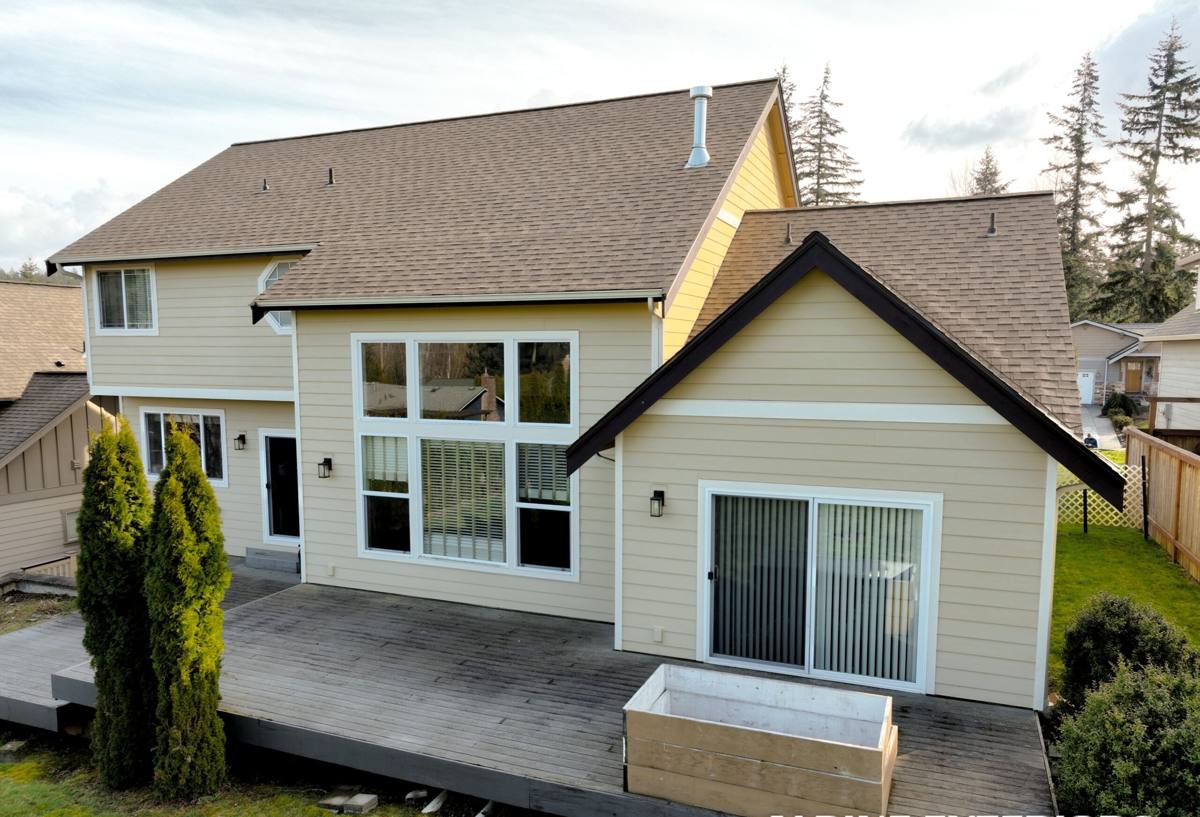
What Actually Counts as Storm Damage
Not every storm-related roof problem looks dramatic. Some of the most common issues we find in Laurel after a wind and rain event are easy to miss from the ground:
- Lifted or missing shingles — wind gets under an edge and either tears the shingle off outright or breaks the seal, leaving it vulnerable next time.
- Flashing separation — around chimneys, skylights, and roof-to-wall transitions, flashing can work loose without any obvious sign until water starts tracking inside.
- Granule loss — driving rain and wind-blown debris strip the protective granule coating off shingles, which accelerates aging even where nothing looks visibly torn.
- Valley and gutter damage — valleys carry the heaviest water volume on the roof, and a dent, debris jam, or worn liner there turns into a leak fast.
- Moss-softened decking — when moss has been sitting on a section of roof for a while, the wood underneath can be softer and more prone to storm damage than a clean section nearby.
The tricky part is that storm damage and ordinary wear can look almost identical from the ground, and insurance coverage often hinges on being able to document which is which.
What a Correct Storm Repair Actually Involves
A real inspection, not a drive-by
A proper repair starts with getting on the roof, not just looking up at it from the driveway. That means checking every slope, every valley, every penetration (vent pipes, chimneys, skylights) and the full gutter line. We're looking for the obvious damage as well as the damage that's easy to miss — a shingle that's cracked but hasn't separated yet, or flashing that's shifted a quarter inch and hasn't leaked yet but will.
Flashing and underlayment come first
Replacing a shingle without checking what's underneath it is how the same leak comes back in six months. If underlayment is torn or flashing has pulled away from a wall or chimney, that gets addressed before any new shingle goes down. This is the step that's most often skipped by a rushed repair, and it's the step that determines whether the fix actually lasts through the next Whatcom County wet season.
Matching materials, not just covering the hole
A patch that doesn't match your existing roofing in type, weight, and often color sticks out and can create its own weak point at the seam. Where we can source a close match, we do. Where an exact match isn't available — which happens on older roofs — we'll be upfront about that before starting, not after.
Our Process From Call to Cleanup
- Initial contact and, if needed, emergency tarping. If a storm has left an active leak or an open section of roof, stopping further water intrusion comes first, before any full repair plan is set.
- On-roof inspection. We document the damage with photos, note affected areas, and check surrounding sections that weren't obviously hit but could be compromised.
- Written scope and estimate. You get a clear explanation of what's damaged, what needs to be repaired versus what can be left alone, and a straightforward cost range — no pressure to upsell into a full re-roof if a repair will genuinely hold.
- Repair work. Flashing, underlayment, and roofing material are addressed in that order, matched to your existing roof where possible.
- Cleanup and final check. Debris and old materials are cleared, gutters are checked for anything that washed or blew into them during the repair, and the repaired area is inspected once more before we call it done.
Repair or Replace: How to Think About It
Storm damage doesn't automatically mean a full re-roof, and it doesn't automatically mean a quick patch is enough either. The right call depends on a few honest factors.
| Factor | Leans toward repair | Leans toward replacement |
|---|---|---|
| Age of roof | Under roughly 10-12 years, still within useful life | Already near or past expected lifespan for the material |
| Extent of damage | Localized to one slope or section | Spread across multiple slopes or repeated storm events |
| Decking condition | Solid, dry decking under the damaged area | Soft or rotted decking found during inspection |
| Moss/moisture history | Minor, manageable moss on an otherwise sound roof | Long-term moss damage affecting multiple areas |
| Material availability | Close match to existing roofing is available | Existing material is discontinued or badly mismatched |
We'll tell you plainly which side of that table your roof falls on. A repair that's going to need redoing in two years isn't a favor to you, and a full replacement on a roof that only needs a localized fix isn't either.
Working With Your Insurance Company
Most storm damage claims come down to documentation. Insurers want to see clear evidence that the damage was caused by a specific weather event, not gradual wear, and they want it dated and photographed. Our inspection report is built with that in mind — photos of the damage, notes on likely cause, and a scope of work that an adjuster can follow. We're not a public adjuster and we don't negotiate your claim for you, but we can walk an adjuster through what we found on the roof if that's useful, and we'll give you a written estimate you can submit either way.
What to Do Right After a Storm
What you do in the first day or two after storm damage affects both how well the repair goes and how smoothly an insurance claim moves. A short checklist:
- Check the attic or top-floor ceiling for staining or dampness, even if the roof looks fine from outside.
- Take photos of any visible damage — missing shingles, debris on the ground, dented gutters — before cleanup starts.
- Don't get on the roof yourself after a storm; wet, moss-covered surfaces are more dangerous than they look.
- Cover an active leak with a tarp only if you can do it safely from a ladder without walking the roof deck.
- Call for an inspection sooner rather than later — a small opening left through another rain event tends to become a bigger repair.
- Keep any receipts related to emergency measures (tarping, temporary buckets) for your insurance file.
Why a Crew That Already Works Laurel Matters
A roofer who works this part of Whatcom County regularly already knows what a Laurel roof is up against — the moss season, the wind patterns that come through this stretch of the county, and how salt-carrying, moisture-heavy air affects fasteners and flashing over time. That's not something you can fully substitute with a general contractor passing through from farther out. It also means faster response when a storm hits a lot of roofs in the area at once, and a crew that's still around locally next year if a repair needs a warranty check.
We work on roofs throughout the Lynden area, and Laurel homes get the same standard: fix what's actually damaged, do the flashing and underlayment work that keeps a repair from failing early, and be straight with you about whether a patch or a bigger job is the honest answer.
If a recent storm has left your roof with missing shingles, a leak, or damage you're not sure how to read, we're glad to take a look. Estimates are free and there's no pressure to commit to anything beyond that first honest assessment — use the form below to get started.