 Lynden Siding
 Decking That Has to Work Under a Lot of Tree Cover
Maple Falls sits in one of the wetter, shadier corners of Whatcom County, and that changes how a deck should be built here compared to a wide-open lot closer to town. Homes tucked under conifers and mixed timber get less direct sun to dry things out between storms, which means moisture sits longer on every horizontal surface — decking included. Add in the driving rain that comes through this part of the county for months at a stretch, plus a moss season that can run from fall through spring, and you have conditions that will find every weak point in a deck within a few years if the build wasn't done with that in mind.
Composite decking is a good match for this climate because it doesn't absorb water the way wood does and it won't rot. But composite is not maintenance-free, and it is not immune to bad installation. A composite deck built without proper drainage, ventilation, and flashing will still trap moisture underneath, grow moss and algae on shaded boards, and eventually cause problems at the ledger board where the deck ties into the house. The material solves some problems on its own. The build solves the rest.
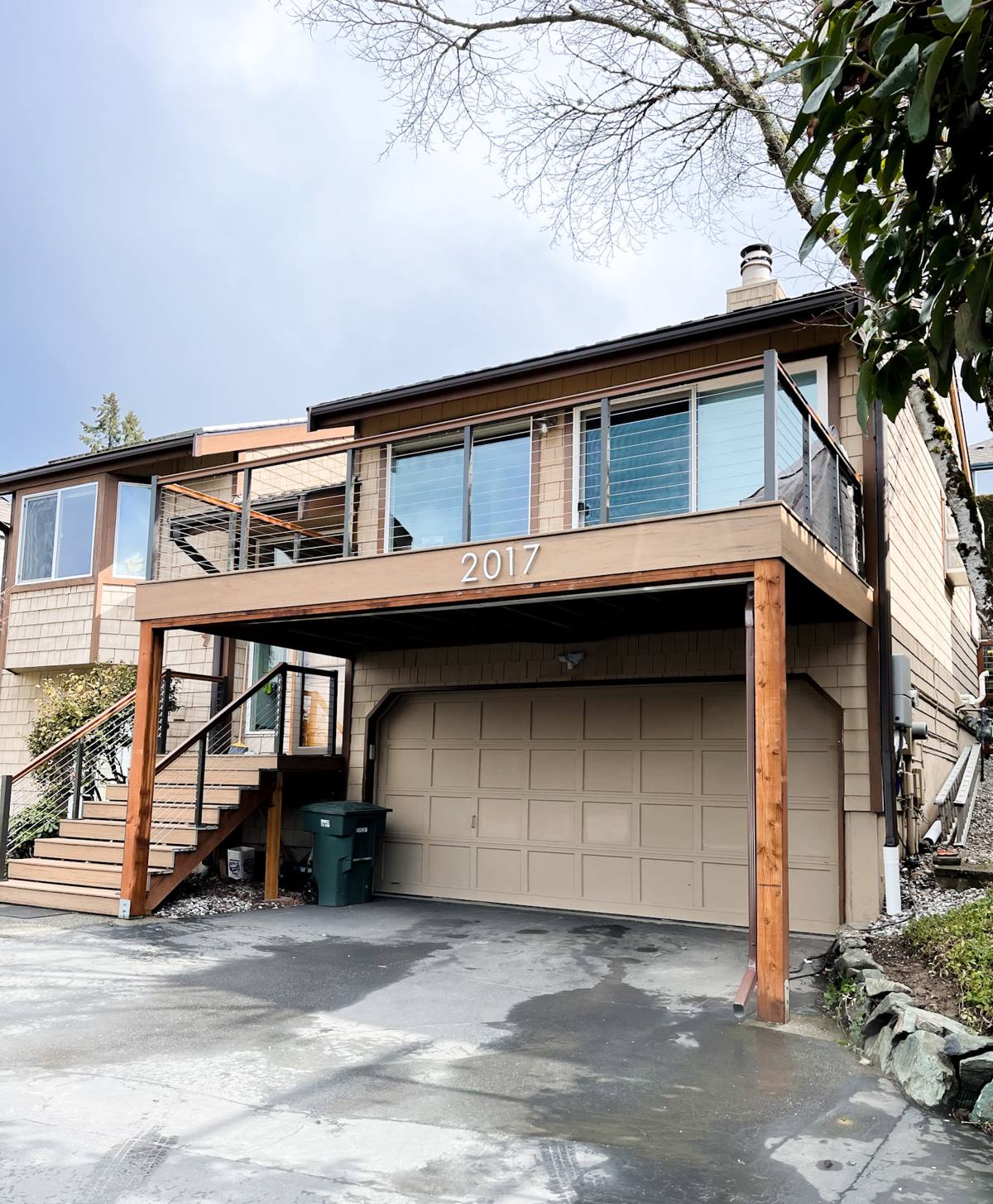
What a Correct Composite Deck Installation Actually Involves
A lot of the difference between a deck that looks good for 20 years and one that gives you trouble in five comes down to details that aren't visible once the boards are down. For a Maple Falls property, we pay particular attention to:
Ledger Attachment and Flashing
Where the deck attaches to the house is the single most common source of hidden water damage on any deck, composite or wood. That connection point needs proper flashing, correct fastener spacing, and a gap or membrane that keeps water from tracking behind the siding and into the wall framing. On a shaded, wet lot this detail matters even more, because that area may never get direct sun to help it dry out on its own.
Joist Protection
Composite boards don't rot, but the wood or engineered joists underneath them still can if they stay wet. We wrap or tape the tops of joists and beams so that condensation and rain that gets between the boards doesn't sit directly on exposed framing. This is one of the most-skipped steps on lower-budget deck jobs, and it's the reason some "composite" decks still develop soft framing underneath a perfectly good-looking deck surface.
Drainage and Slope
Every deck should have a slight slope away from the house so water has somewhere to go. On lots with heavy shade and slower drying times, we're also more careful about board spacing and under-deck airflow, so water and debris don't just sit and collect between boards.
Hidden Fastener Systems
Most composite decking today is installed with hidden clip systems rather than face screws, which gives a cleaner look and avoids the small water traps that form around exposed screw heads. Getting board spacing right with these systems also matters for expansion and contraction as temperatures swing through the year.
Composite, Wood, and PVC — How They Actually Compare
Homeowners in Maple Falls usually narrow it down to a choice between pressure-treated wood, composite, or PVC decking. Here's an honest look at how they compare for a shaded, wet property like this one:
| Factor | Pressure-Treated Wood | Composite | PVC / Capped Polymer |
|---|---|---|---|
| Moisture resistance | Absorbs water; needs regular sealing | Won't rot; resists moisture well | Fully moisture resistant |
| Moss/algae in shade | Prone to staining and softening | Can develop surface growth in deep shade; cleans off | Least prone to surface staining |
| Maintenance | Annual cleaning and sealing | Occasional wash, no sealing | Occasional wash, no sealing |
| Upfront cost | Lowest | Mid-range | Highest |
| Typical lifespan | 10-15 years before major repair | 25-30+ years | 25-30+ years |
| Feel underfoot | Warmer, more traditional | Solid, consistent | Can run warmer in direct sun |
For most Maple Falls properties we recommend composite as the practical middle ground — it holds up to the moisture and shade far better than wood without the added cost of full PVC systems. PVC is a reasonable option for homeowners who want the lowest possible long-term maintenance and are comfortable with the higher upfront investment.
Shade, Moss, and Debris: The Maple Falls Reality
Heavier tree cover means more falling needles, leaves, and seasonal debris landing on the deck surface, and it means the deck stays damp longer after rain. This isn't a reason to avoid composite decking — it's a reason to build and finish it correctly. A few things make a real difference here:
- Board orientation and gapping that allows water and debris to move off the deck instead of collecting in corners
- Textured composite surfaces that hide dirt better than smooth boards, but still need occasional cleaning to prevent buildup in shaded areas
- Keeping vegetation trimmed back from deck edges so airflow isn't blocked and debris doesn't pile up against the boards
- Under-deck ventilation so the space below the decking can actually dry out between storms
None of this is complicated, but it has to be planned for at the design stage — not patched in after the fact.
Our Process, Start to Finish
For a composite deck project in Maple Falls, our process is straightforward:
- On-site assessment — we look at the existing structure (if there is one), the ledger attachment point, tree cover and sun exposure, and drainage across the lot.
- Design and material selection — board style, color, railing, and fastener system based on your budget and how the space will be used.
- Framing and structural work — joists, beams, and footings are sized and spaced correctly for composite decking, which behaves differently than wood under load and temperature change.
- Flashing and moisture protection — ledger flashing, joist tape, and drainage details go in before a single deck board is installed.
- Decking and railing installation — boards, hidden fasteners, and railing systems installed to manufacturer spec, which matters for keeping warranty coverage intact.
- Final walkthrough — we go over basic care so you know what routine maintenance actually looks like versus what we handle during installation.
Framing and Structural Considerations Specific to This Area
Composite decking is heavier than standard wood decking in most product lines, and it can require different joist spacing than a traditional wood deck depending on the brand and board profile. On top of that, this part of Whatcom County sees enough temperature swings and wet-to-freeze cycles that footings and ledger connections need to be built to hold up over time, not just pass initial inspection. We size the substructure to the specific composite product being used rather than assuming a standard wood-deck frame will work underneath it — that mismatch is a common source of bounce, squeaks, and premature wear that has nothing to do with the decking material itself.
What a Homeowner Should Actually Budget For
Composite deck pricing depends heavily on size, framing complexity, railing choice, and how much of the existing structure (if any) can be reused. Rather than quote a number that won't reflect your actual property, here's what tends to move the price up or down:
| Cost Factor | Tends to Lower Cost | Tends to Raise Cost |
|---|---|---|
| Existing structure | Sound framing that can be reused | Full tear-off and rebuild needed |
| Height and access | Ground-level, easy access | Elevated deck requiring stairs, extra railing |
| Board tier | Standard capped composite | Premium/PVC-hybrid boards |
| Railing | Basic composite or metal railing | Glass panel or custom railing systems |
| Site conditions | Level, cleared lot | Slope, tree removal, or drainage work needed |
We give a firm, itemized quote after seeing the property in person — not a rough number over the phone that changes once we open things up.
A Simple Maintenance Checklist
Composite decking cuts down on maintenance significantly compared to wood, but "low-maintenance" isn't "no-maintenance," especially under tree cover. A basic routine keeps a Maple Falls deck looking good year-round:
- Sweep or blow off needles, leaves, and debris regularly, especially in fall
- Rinse the deck a few times a year with plain water and a soft brush to prevent moss or algae film from setting in
- Keep gutters and downspouts near the deck clear so runoff isn't dumping directly onto or under the decking
- Trim back overhanging branches and nearby vegetation to improve airflow and sun exposure
- Check railing connections and fasteners once a year for looseness
- Clear standing debris from between boards and around posts before it compacts and holds moisture
Why It's Worth Hiring a Crew That Already Works This Area
Deck framing and drainage details that work fine in a dry, open part of the county aren't always the right call on a shaded, wetter Maple Falls lot. A crew that already builds decks in this specific environment knows to size joist spacing for the added moisture load, plan drainage and airflow around tree cover, and get ledger flashing right the first time — because they've seen what happens when it's skipped. That local experience shows up years later as a deck that's still solid and low-maintenance, not one that needs early repairs at the house connection or soft spots in the framing.
If you're considering a new composite deck or replacing an aging wood one, we're happy to come take a look at your property and walk you through what makes sense for your specific site. There's no pressure and no cost for the estimate — just a straight answer on what the job actually involves and what it will take to do it right.