 Lynden Siding
 Metal Roofing in Wiser Lake: Built for What This Climate Actually Does to a Roof
Wiser Lake sits in the low, wet farmland north of Lynden, close enough to the Strait of Georgia and the Salish Sea that homes here deal with a mix of coastal-influenced air and heavy inland rainfall. That combination is hard on roofing. Salt-tinged moisture works into fasteners and flashings, driving rain off Whatcom County's frequent storm systems finds every weak seam, and the tree cover and lake-adjacent humidity keep roofs damp long enough for moss to take hold and stay. A metal roof, installed correctly for this specific environment, handles all three of those stresses better than most other roofing options — but "installed correctly" is doing a lot of work in that sentence, and it's the part that separates a 40-year roof from a leaking one in year eight.
This page covers what metal roofing needs to do for a Wiser Lake home, what a proper installation actually involves, and why local experience with this specific stretch of Whatcom County matters more than it might seem.
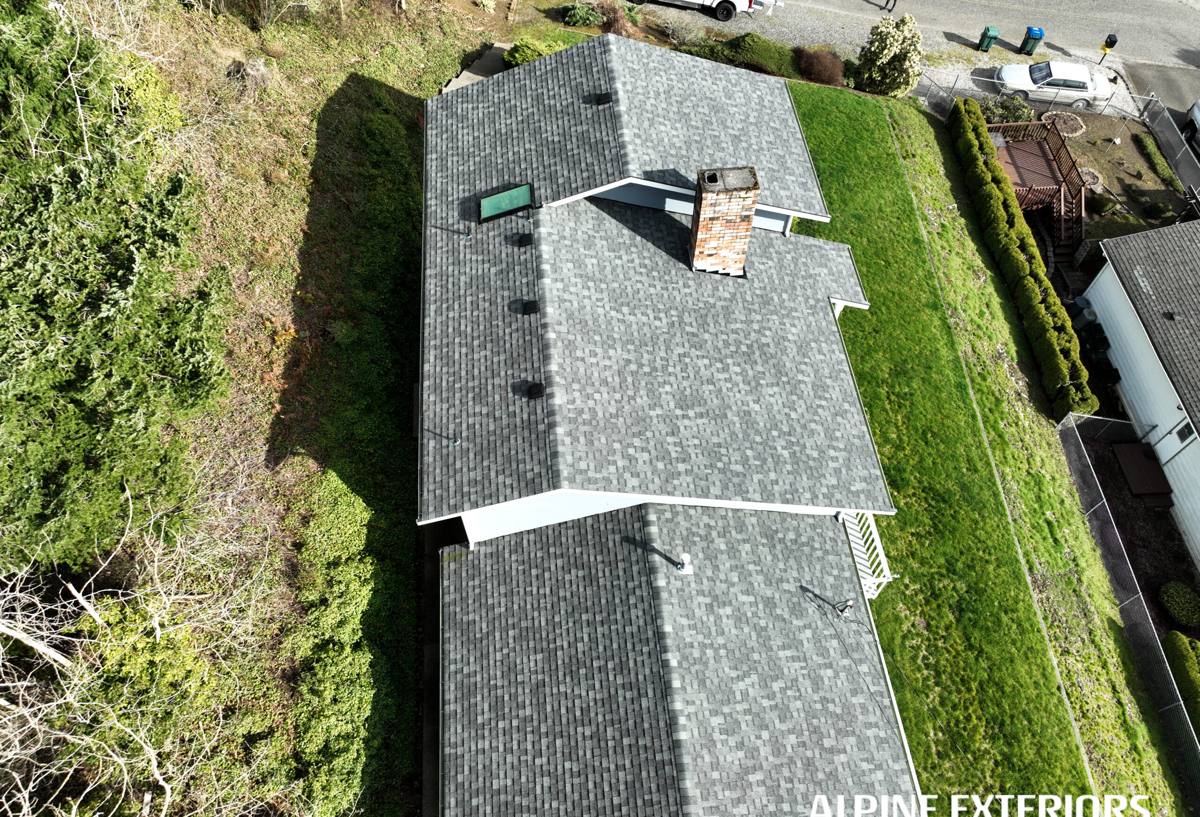
Why Wiser Lake's Climate Is Tougher on a Roof Than It Looks
Salt Air and Slow Corrosion
Wiser Lake isn't oceanfront, but Whatcom County's proximity to the Salish Sea means airborne salt does travel inland, especially on the storm winds that blow through fall and winter. Salt exposure doesn't destroy a roof overnight — it works slowly, attacking exposed fasteners, cut edges, and any spot where a protective coating has worn thin. Over years, that slow corrosion is what turns a small maintenance item into a full re-roof.
Driving Rain
Lynden gets a lot of rain, and a meaningful share of it arrives sideways during winter storms. Driving rain doesn't just test how waterproof a roof is — it tests the flashing details, the underlayment, and every penetration where a vent, chimney, or skylight interrupts the roof plane. A roof that sheds water fine in a light drizzle can still leak under wind-driven rain if those details weren't done right.
The Long Moss Season
Between the tree cover common around Wiser Lake and the region's extended damp season, moss and algae have months of favorable conditions every year. Moss holds moisture against roofing material, works its way under laps and seams, and accelerates wear on anything it colonizes. It's less of a threat to metal than to other roofing types, but it's not a non-issue — panel choice, coating, and roof design all affect how much moss pressure a metal roof actually faces.
What a Correct Metal Roof Installation Involves
Metal roofing performs well in this climate specifically because it's engineered as a system, not just a surface. Skipping steps is where problems start.
- Deck inspection and repair — any soft, rotted, or previously water-damaged decking gets addressed before a single panel goes down.
- Underlayment matched to the panel type — a high-temp, waterproof synthetic or self-adhered membrane, not a generic felt that wasn't designed for metal.
- Proper fastener selection — corrosion-resistant fasteners matched to the panel metal, since mismatched metals accelerate corrosion through galvanic reaction.
- Flashing at every transition — valleys, chimneys, skylights, and wall intersections are where driving rain gets in if flashing is undersized or poorly lapped.
- Correct panel overlap and seam direction — set to shed water with prevailing wind and rain direction, not just laid on for speed.
- Ventilation — a properly vented roof deck controls condensation underneath the metal, which matters as much as what's happening on top of it.
Any one of these done poorly can undercut the whole roof's performance, regardless of how good the metal panel itself is.
Standing Seam vs. Exposed Fastener: Which Fits a Wiser Lake Home
Both are legitimate metal roofing systems, but they behave differently under sustained damp and driving rain, and that difference matters more here than in a drier climate.
| Factor | Standing Seam | Exposed Fastener |
|---|---|---|
| Fastener exposure | Concealed clips, no fastener penetrations through the panel face | Fasteners penetrate the panel face directly |
| Long-term leak risk | Lower — no repeated penetrations to seal and re-seal | Higher over time as fastener gaskets age and shrink |
| Upfront cost | Higher | Lower |
| Maintenance | Minimal once installed correctly | Gaskets and fasteners should be checked periodically |
| Best fit | Primary roofs, long-term ownership, low-maintenance goals | Outbuildings, shops, budget-driven projects |
For a primary home near Wiser Lake dealing with years of driving rain and damp seasons, standing seam is generally the stronger long-term choice because it removes the repeated fastener penetrations that salt air and moisture work on hardest. Exposed fastener systems still have a place — they're a reasonable, honest option for shops, barns, and secondary structures where upfront cost matters more than 40-year maintenance-free performance.
Moss and Algae: What Actually Reduces the Problem
Metal roofing doesn't feed moss the way organic roofing surfaces can, but a metal roof under heavy tree cover can still collect debris and hold moisture in valleys and low-slope areas if the design doesn't account for it. What actually reduces moss pressure on a metal roof:
- Panel finishes and coatings designed to shed water quickly rather than hold a film of moisture
- Clean roof lines with fewer flat or slow-draining transitions where debris can collect
- Keeping gutters and valleys clear so water isn't backing up against panel edges
- Trimming overhanging branches where practical, since less organic debris on the roof means less moss to begin with
We're not going to claim any coating makes a roof maintenance-free — that's not honest. What we can say is that a well-detailed metal roof needs far less moss treatment over its life than shingle or wood roofing does in the same conditions.
Cost Factors for a Wiser Lake Metal Roof
Every roof is different, but the factors that move the price up or down are consistent. We'll always give a specific number after an on-site look — broad ranges here are just to help you plan.
| Factor | Effect on Cost |
|---|---|
| Panel system (exposed fastener vs. standing seam) | Standing seam typically costs more per square due to labor and material |
| Roof complexity (valleys, dormers, penetrations) | More cuts and flashing detail means more labor |
| Existing roof tear-off vs. new construction | Tear-off and deck repair add cost but are often necessary |
| Panel gauge and coating quality | Heavier gauge and better coatings cost more upfront, less over time |
| Roof pitch and accessibility | Steep or hard-to-access roofs increase labor time |
Our Process for Metal Roofing Projects Near Wiser Lake
We walk every project the same way, because skipping a step is how the problems described above end up on someone's roof five years later.
- On-site assessment — we look at the existing roof, deck condition, ventilation, and how water and debris move across the roof today.
- Honest scope and estimate — what needs to happen, what it costs, and why, in plain language.
- Deck prep and repair — any rot or soft spots get fixed before anything else goes on.
- Underlayment and flashing install — the part that actually keeps driving rain out, done to spec at every transition.
- Panel installation — set with correct overlap, fastening, and seam direction for this site's exposure.
- Final walkthrough — we go over the finished roof with you, including what maintenance (if any) it actually needs.
Why Local Experience in This Area Matters
A roof that's correct for a dry-climate install manual isn't automatically correct for Wiser Lake. Wind direction relative to the lake, how much tree cover a given lot has, how exposed a roof is to driving rain off passing storms — these are things a crew learns from working this specific stretch of Whatcom County repeatedly, not from a general specification sheet. We're not guessing at flashing details or panel orientation based on national averages; we're building on what actually holds up on roofs like yours, in this area, through winters like the ones Lynden gets.
Simple Maintenance Checklist for Wiser Lake Metal Roofs
- Clear gutters and valleys of leaves and debris at least twice a year, more often under heavy tree cover
- Check flashing around chimneys, skylights, and vents annually for gaps or lifted edges
- Look for moss or algae buildup in shaded valleys and low-slope sections, and remove it before it spreads
- Trim back branches that overhang the roof where practical
- After major windstorms, do a visual check for loose panels or displaced flashing
If you're weighing a new roof or a replacement for a home in or near Wiser Lake, we're happy to take a look and walk you through what your specific roof needs — no pressure, no upsell, just a straight answer. Use the form below to request a free estimate.