 Lynden Siding
 Roofing Built for Abbotsford's Weather, Not Against It
Abbotsford sits in the Fraser Valley just north of the Whatcom County line, close enough to Georgia Strait and Puget Sound that homes here deal with a marine-influenced climate: salt-tinged air, long stretches of steady rain, and shaded, damp conditions that keep moss and algae active for much of the year. A roof that would hold up fine in a drier inland climate can wear out early here if it wasn't installed with this specific weather pattern in mind. That's the difference between a roof that just gets nailed down and one that's actually built for where it sits.
We install new roofs for homeowners on both sides of the border, and Abbotsford is a regular part of our service area. That means we're not guessing at what this climate does to a roof over ten or twenty years — we see it on tear-offs regularly, and we build the replacement to hold up against it.
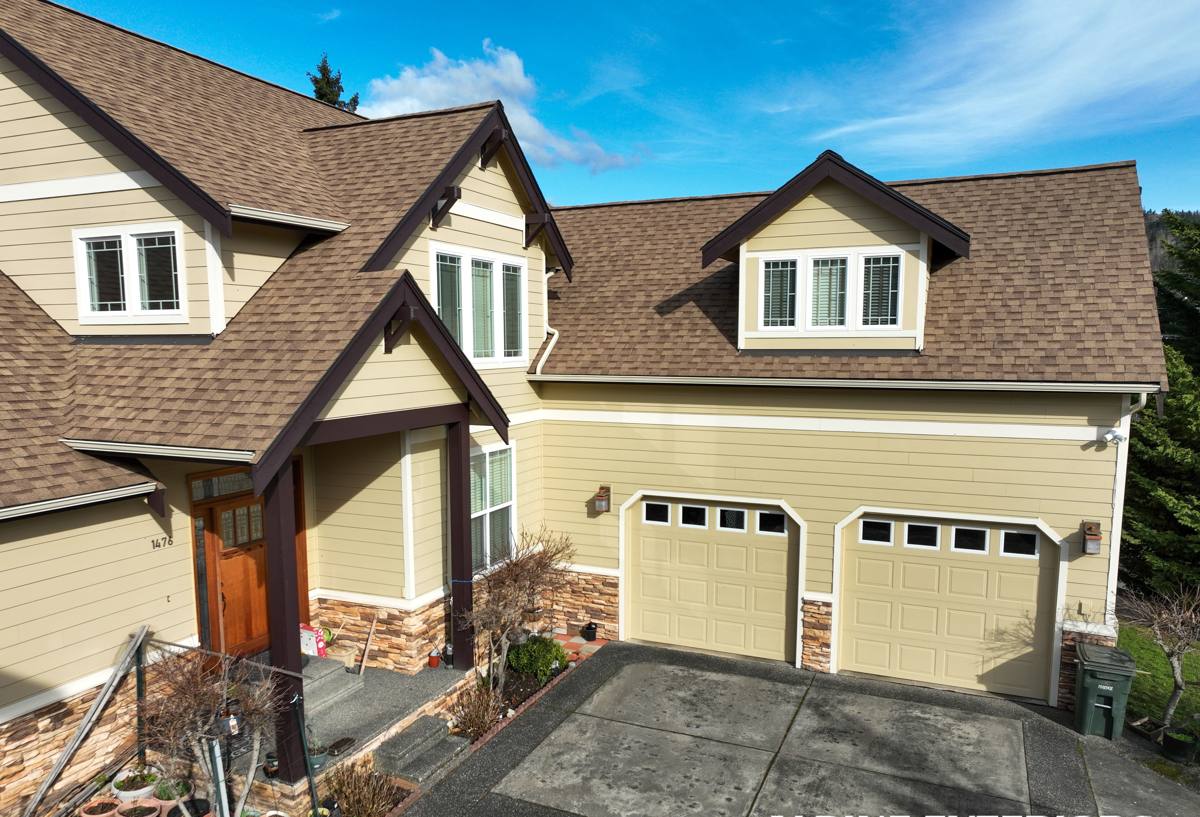
What the Local Climate Actually Does to a Roof
Salt Air and Corrosion
Even well inland from open water, airborne salt carried by coastal weather systems accelerates corrosion on exposed metal — flashing, fasteners, vent caps, and gutter hardware. Cheap or mismatched metal components corrode faster than the shingles around them, which is often where leaks actually start even though the roofing material itself looks fine.
Driving Rain
Rain here doesn't just fall straight down — wind-driven storms push water sideways under shingle edges, around vent penetrations, and into any flashing detail that isn't sealed correctly. A roof in this region needs tighter attention to flashing laps, underlayment coverage, and edge details than a roof in a calmer, drier climate.
Moss and Algae Season
Shaded roof sections, north-facing slopes, and areas under tree cover stay damp for long stretches, which is exactly what moss and algae need to establish. Once moss gets a foothold under shingle tabs, it lifts them and holds moisture against the roof deck, which shortens the life of the roofing system regardless of how good the material was to start.
What a Correct New Roof Installation Involves
A new roof is more than laying shingles over the old ones or stripping and re-nailing. Done right, it's a full system, and every layer matters in a climate like this one.
Tear-Off and Deck Inspection
We remove the old roofing down to the deck so we can actually see the wood underneath. Soft spots, rot, or delamination from years of moisture exposure get found and replaced at this stage — not discovered later as a leak. Roofing over a compromised deck is one of the most common shortcuts that leads to early failure.
Underlayment and Water Barrier
Given how much sustained rain this area gets, we pay close attention to underlayment coverage, with extra protection — ice and water shield membrane — at vulnerable points like eaves, valleys, and roof-to-wall transitions. This is the layer that protects your home if wind-driven rain gets past the shingles, and it matters more here than in drier regions.
Flashing
Flashing around chimneys, skylights, vent pipes, and where the roof meets walls or dormers is where most roof leaks actually originate — not the field of the roof. We use corrosion-resistant flashing material and take the time to lap and seal it correctly, because in a salt-air, high-rain climate, flashing shortcuts show up as leaks within a few seasons, not decades.
Ventilation
Proper intake and exhaust ventilation keeps the attic dry and temperature-balanced, which matters for shingle life, moisture control, and preventing condensation buildup on the underside of the deck. A roof can be installed perfectly and still underperform if the attic underneath it isn't ventilated correctly.
Choosing a Roofing Material for This Area
There's no single "best" roofing material — the right choice depends on your home, your roof's exposure and pitch, and how much long-term maintenance you want to take on. Here's how the common options compare for a climate like Abbotsford's:
| Material | Moss/Algae Resistance | Wind-Driven Rain Performance | Typical Lifespan | Maintenance |
|---|---|---|---|---|
| Standard asphalt composition shingle | Moderate — benefits from algae-resistant granules | Good with proper underlayment and flashing | 20-30 years | Periodic moss removal, especially on shaded slopes |
| Architectural/laminate shingle | Better than standard 3-tab, thicker profile sheds moisture faster | Very good | 25-35 years | Low to moderate |
| Metal roofing (standing seam or panel) | High — moss struggles to grip smooth metal | Excellent, minimal seams/joints | 40-50+ years | Low, occasional fastener/seam check |
| Cedar shake | Low without regular treatment | Good if installed and maintained correctly | 20-30 years with upkeep | High — regular treatment and moss control required |
We'll walk through these trade-offs honestly during your estimate rather than steering you toward whatever's easiest for us to install. If a material needs more maintenance than you want to keep up with — cedar shake being the clearest example — we'll say so up front rather than let you find out after it's on your roof.
Our Installation Process
- On-site inspection and estimate. We look at your current roof's condition, pitch, ventilation, and any problem areas before recommending materials.
- Material selection. We go over the trade-offs for your specific roof and budget, not a one-size-fits-all pitch.
- Scheduling around weather. Given how much rain this region gets, we plan installation windows carefully and use temporary protection if a job needs to pause for weather.
- Tear-off and deck repair. Old roofing removed, deck inspected, any damaged sheathing replaced.
- Underlayment, flashing, and ventilation installed. The parts of the job that actually determine how long the roof lasts.
- Roofing material installed to manufacturer specification. This affects your warranty coverage, so it's not a step we shortcut.
- Final walk-through and cleanup. Site cleared of debris and nails, and we go over the finished roof with you.
Moss, Algae, and Long-Term Roof Care
Even a well-installed roof in this climate benefits from occasional attention. Moss that's allowed to spread will eventually lift shingle edges and trap moisture against the deck, which turns a maintenance issue into a repair issue. A few habits go a long way:
- Keep gutters clear so water isn't sitting against the roof edge
- Trim back overhanging branches to reduce shade and debris buildup on north-facing slopes
- Remove moss growth gently — don't pressure-wash shingles, which can strip protective granules
- Have flashing and vent penetrations checked periodically, since that's where leaks typically start
- Address small issues (a lifted shingle, a gap in flashing) before they turn into deck damage
Signs You Need a New Roof, Not a Repair
Not every roofing issue calls for full replacement, but there's a point where patching stops making financial sense. Watch for:
- Shingles that are curling, cracking, or losing granules across large sections rather than one spot
- Repeated leaks in different locations, rather than one isolated failure point
- Visible sagging in the roofline, which can indicate deck or structural issues
- Daylight visible through the attic roof boards
- A roof approaching or past the upper end of its expected lifespan, especially if it was never properly ventilated
- Heavy, persistent moss coverage that's lifted shingles in multiple areas
If you're only dealing with one of these in isolation, a repair may still be the right call — we'll tell you that if it's true, rather than push a full replacement you don't need yet.
Why a Crew That Already Works Abbotsford, BC Matters
Abbotsford sits just across the border from our Lynden base, and we treat it as part of our regular service area rather than a one-off trip. That matters in a few practical ways: we're familiar with how homes in this part of the Fraser Valley are built, we're not learning the local weather patterns on your job, and we can schedule and follow up without the delays that come from a contractor who rarely works this side of the border. Roof installation always involves permits and inspections tied to your local jurisdiction — we coordinate with whatever's required for your specific municipality rather than assuming the rules are the same as where we're based, and we'd rather confirm requirements up front than have a job stall over paperwork.
Working this area regularly also means we're not unfamiliar with sourcing materials and coordinating logistics across the border, which keeps a project moving on schedule instead of hitting delays over supply or paperwork surprises partway through.
What Roof Replacement Typically Costs
Pricing depends on your roof's size, pitch, current condition, and the material you choose — the table above gives a sense of how those material choices differ in cost over the roof's lifespan, not just at installation. Steeper roofs, multiple layers of old roofing to remove, extensive deck repair, or complex flashing details (multiple valleys, skylights, chimneys) all add to the scope of the job. We'll give you a clear, itemized estimate after seeing the roof in person — not a ballpark number pulled from square footage alone.
If your roof is showing its age, dealing with persistent moss, or you just want an honest read on whether repair or replacement makes more sense, we're glad to come take a look. We offer free, no-pressure estimates for homeowners in Abbotsford and throughout the Lynden area — use the form below to get started.