 Lynden Siding
 Blaine's Climate Puts Real Demands on a Roof
Blaine sits right on Semiahmoo Bay at the northern edge of Whatcom County, which means homes here deal with a combination of weather stresses that inland Washington neighborhoods simply don't face. Salt-laden air off the water accelerates corrosion on exposed metal fasteners, flashing, and vents. Driving rain, often pushed sideways by wind coming off the Strait of Georgia, tests every seam, lap, and penetration on a roof rather than just falling straight down onto it. And the long, damp moss season that runs from fall through spring gives organic growth months to take hold on any roof surface that doesn't shed water and dry out quickly.
None of this means a Blaine roof needs to be exotic or overbuilt. It means the details that get skipped on a cheap install — proper flashing metal, correct fastener choice, real ventilation, underlayment that's actually rated for this kind of exposure — matter more here than they would in a drier, calmer part of the state. A new roof installation done right in this area is less about the shingle brand on the wrapper and more about how the whole system is put together underneath it.
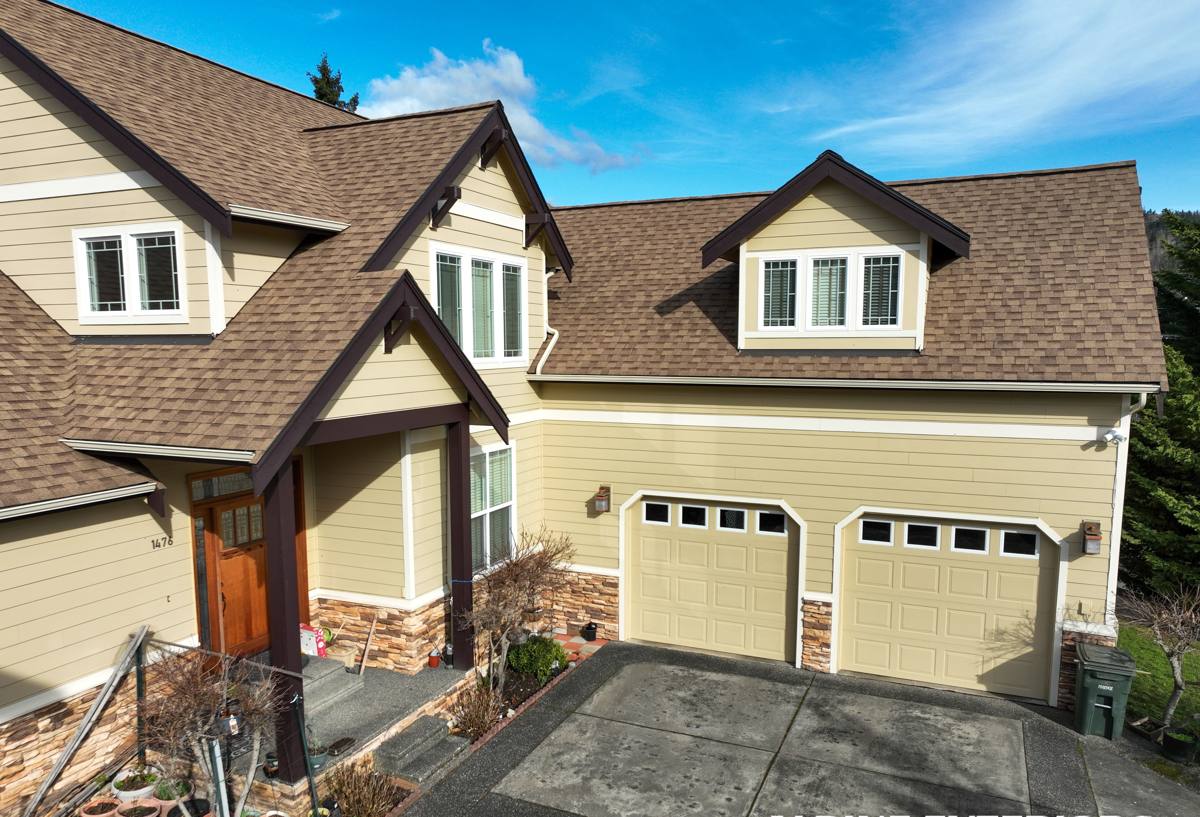
What a Correct Installation Actually Involves
A new roof is a system, not a single product. Every layer has a job, and skipping or shortcutting any one of them is usually where leaks, premature moss growth, or early failure start.
Tear-Off and Deck Inspection
We remove the old roofing down to the deck rather than layering over it. This lets us actually see the plywood or OSB sheathing underneath, which is the only way to catch soft spots, delamination, or old water damage before they're sealed under a brand-new roof. In a coastal, high-moisture area like Blaine, hidden deck damage is one of the most common surprises on older homes, and it has to be fixed before anything new goes down.
Underlayment
This is the roof's real waterproofing layer, and it's the part most homeowners never see or think about. Given how much driving rain this area gets, we favor synthetic or ice-and-water shield underlayment in vulnerable areas — eaves, valleys, and low-slope sections — over older felt products that break down faster under sustained moisture exposure.
Flashing
Flashing around chimneys, skylights, vent pipes, and roof-to-wall transitions is where most roof leaks actually originate — not the field of the roof itself. Salt air speeds up corrosion on lower-grade or improperly finished metal, so material choice and clean fabrication at every penetration matters more here than in inland climates.
Fasteners
Standard fasteners can corrode faster in coastal air, which shows up years later as streaking, weakened hold, or premature wear right at the nail line. We treat fastener selection as part of the job spec for homes this close to the water, not an afterthought.
Ventilation
A roof that can't breathe traps moisture in the attic, which shows up as condensation, mold, and — combined with our damp winters — faster moss colonization on the shingles themselves from the underside up as well as the top down. Balanced intake and exhaust ventilation is part of a correct installation, not an upgrade.
Roofing Material Options for a Coastal Whatcom County Home
There's no single "best" roofing material for every Blaine home — it depends on your roof's slope, your home's style, your budget, and how much long-term maintenance you want to take on. Here's how the common options actually compare for this climate.
| Material | Performance in Salt Air & Rain | Moss Resistance | Typical Lifespan |
|---|---|---|---|
| Architectural asphalt shingles | Good with correct flashing and fasteners | Moderate — benefits from algae-resistant granules and good ventilation | 25-30 years |
| Standing seam metal | Very good with coastal-rated coatings and fasteners | High — sheds water and debris quickly | 40-50+ years |
| Composition (3-tab) shingles | Fair — thinner profile is more exposed to wind-driven rain | Lower unless treated | 15-20 years |
| Cedar shake | Requires diligent maintenance near salt air and moisture | Needs regular treatment to resist moss and rot | 20-30 years with upkeep |
For most Blaine homeowners, architectural asphalt shingles hit the best balance of upfront cost, appearance, and durability. Metal is a strong option for homeowners planning to stay in the home long-term or who want to minimize moss and maintenance calls over the decades ahead. We'll walk through the honest trade-offs for your specific roof rather than pushing one product line.
Our Installation Process
- On-site inspection of the existing roof, decking access points, and any problem areas you've noticed (leaks, sagging, granule loss in the gutters)
- Written estimate covering material options, scope of work, and a realistic timeline
- Scheduling around Whatcom County weather windows — we don't install over wet decking or during active storms
- Full tear-off and deck inspection, with any repairs discussed and approved before covering the deck
- Underlayment, flashing, and ventilation installed per the plan for your roof's specific slope and exposure
- Final material installation, followed by a full walk-through with you before we consider the job complete
- Clean-up, including magnetic sweep for stray fasteners around the property
We keep the crew and communication local. If a question comes up mid-project, you're talking to the people actually on your roof, not routed through a call center.
Moisture, Moss, and Ventilation — Why This Gets More Attention Here
Whatcom County's wet season is long, and Blaine's proximity to the water keeps humidity higher than you'd find further inland. That combination is exactly what moss and algae need to establish themselves on a roof. A new installation is your best opportunity to get ahead of this: correct ventilation reduces the trapped moisture that feeds growth from underneath, and choosing shingles with algae-resistant granules or a naturally moss-resistant material like metal reduces what takes hold on top. We'll also make sure your gutters and roof edges are set up to shed water and debris cleanly, since trapped organic debris in valleys and along eaves is one of the most common places moss gets its start.
What Drives the Cost of a New Roof
| Factor | Why It Matters |
|---|---|
| Roof size and pitch | Steeper or more complex roofs take longer and require more safety setup and material |
| Material choice | Asphalt, metal, and cedar carry different material and labor costs |
| Deck condition | Rot or soft sheathing found during tear-off adds repair cost most homeowners don't budget for upfront |
| Number of penetrations | Chimneys, skylights, and multiple vents each require additional flashing work |
| Access and layout | Steep lots, limited driveway access, or multi-story homes affect staging and labor time |
Because so much of the final cost depends on what we find once the old roofing comes off, we avoid quoting a number over the phone. An honest estimate requires a real look at your roof.
Signs You Need a Replacement, Not Just a Repair
- Shingles that are curling, cracking, or missing granules across large sections rather than one isolated spot
- Daylight visible through the roof deck from inside the attic
- Soft or spongy spots when walking the roof
- Heavy, spreading moss or algae growth that keeps returning after cleaning
- Leaks appearing in more than one location, or after repairs have already been attempted
- A roof approaching or past the upper end of its material's expected lifespan
- Visible sagging along the roofline
If you're only seeing one or two of these and the roof is otherwise in reasonable shape, a targeted repair may still make sense. We'll tell you honestly which situation you're in rather than defaulting to a full replacement recommendation.
Why a Crew That Already Works Blaine Matters
A roofing crew that regularly works Blaine and the surrounding Whatcom County coastline already knows which details can't be skipped here — the flashing standards, the ventilation needs, the fastener choices that hold up against salt air over decades rather than years. That's different from a crew that mainly works drier inland areas and treats coastal exposure as an afterthought. Local experience also means straightforward scheduling, a crew that understands typical permitting and inspection expectations in the county, and a company that's still reachable down the road if a question comes up after the job is done.
After Installation: A Simple Maintenance Checklist
- Clean gutters and downspouts at least twice a year to keep water moving off the roof
- Remove overhanging branches that keep sections of the roof shaded and damp longer than the rest
- Have moss or algae growth addressed early rather than letting it spread
- Schedule a visual inspection after major windstorms to check for lifted or displaced shingles
- Keep an eye on attic ventilation — blocked vents undo a lot of the moisture protection built into the install
A well-installed roof in this climate still needs basic upkeep to hit its full expected lifespan, but it shouldn't need constant attention if the system underneath was done right the first time.
If your Blaine home needs a new roof or you're not sure whether repair or replacement makes more sense, we're happy to take a look and give you a straight answer. Use the form below to request a free, no-pressure estimate.