 Lynden Siding
 Roof Repair in Acme: What the Local Climate Demands
Acme sits in one of the wetter pockets of Whatcom County, and that shows up in the condition of local roofs. Between the driving rain that blows in off the water and the long stretch of overcast, damp months every year, roofs here don't fail the way they do in drier climates. They rarely blow off in one dramatic storm. Instead, they wear down slowly — a lifted shingle tab here, a soft spot in the underlayment there, moss creeping into a north-facing valley — until small problems turn into an active leak. A roof repair done right in this area has to account for that slow-motion wear, not just patch the spot where water is currently showing up inside the house.
We work throughout the greater Lynden area, and Acme's mix of wooded lots, older farmhouses, and newer builds tucked against tree lines means shade, humidity, and slow-drying roof surfaces are the norm rather than the exception. That combination is exactly what accelerates moss growth and shortens the life of roofing materials that would otherwise last decades.
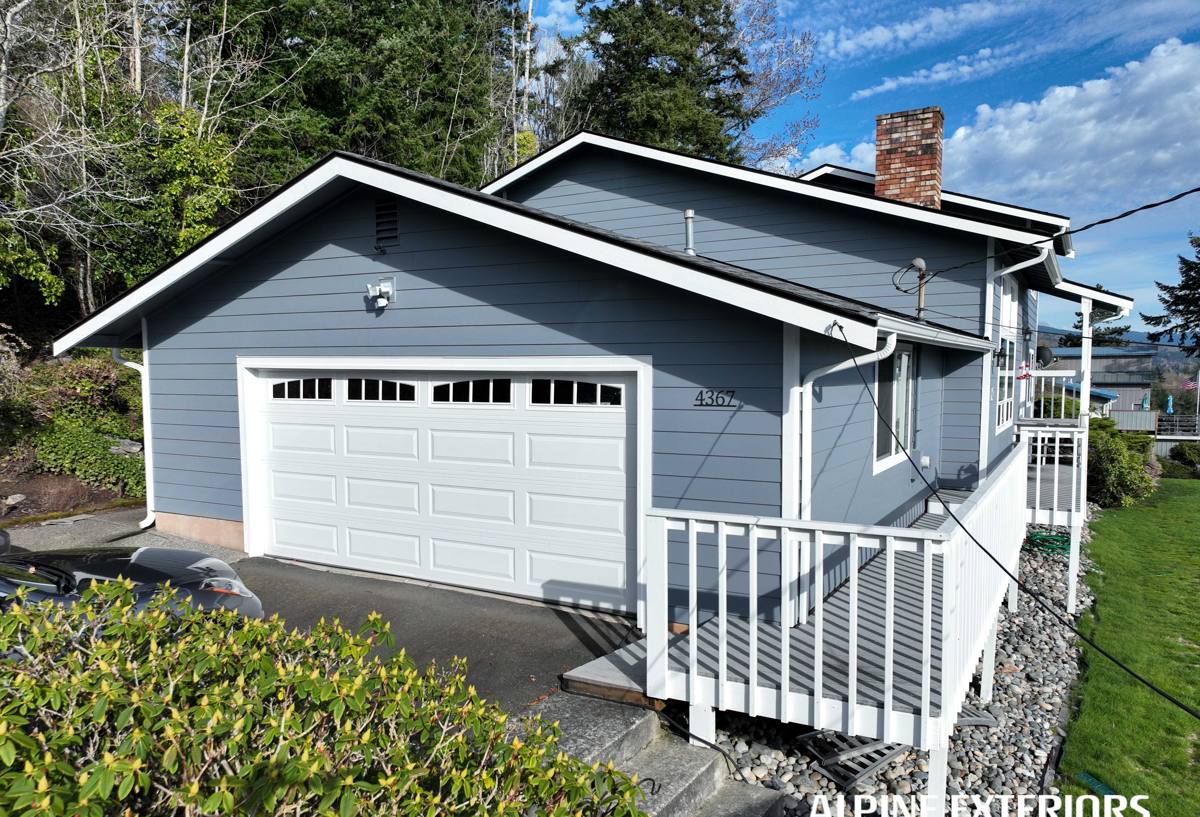
Signs an Acme Roof Needs Repair, Not Replacement
Most homeowners call us because of a specific symptom, but the underlying cause is usually broader. Here's what we look for, and what each one usually means:
- Interior water stains, especially near chimneys, skylights, or where two roof planes meet — almost always a flashing or underlayment failure, not a whole-roof problem.
- Granules collecting in gutters or at the base of downspouts — accelerated wear on asphalt shingles, often from years of trapped moisture.
- Dark streaking or thick moss mats, particularly on the shaded north and west slopes — moss holding moisture against the roofing material, which softens it over time.
- Curling, cupping, or missing shingle tabs after a windstorm — localized damage that can usually be repaired without touching the rest of the roof.
- Soft or spongy decking felt underfoot in the attic or during a walk-inspection — a sign water has already gotten past the surface layer and into the wood.
The last one is the dividing line. If the deck itself is still sound, a repair is almost always the right call. If moisture has been sitting in the wood long enough to soften it, that section needs to be opened up and replaced as part of the repair — patching over compromised decking just hides the problem for another season.
Moss, Moisture, and the Long Wet Season
Why Moss Spreads So Easily Here
Moss needs three things to establish itself on a roof: shade, organic debris, and time without drying out. Acme's tree cover and Whatcom County's extended wet season provide all three for a good part of the year. Once spores land in a shaded, debris-collecting area — usually a valley, the north slope, or anywhere a roof stays shadowed for most of the day — they don't need much encouragement to take hold.
What Moss Actually Does to a Roof Over Time
Moss doesn't just sit on top of shingles looking untidy. Its root structure works into the granule surface and shingle mat, and as it grows it lifts shingle edges slightly — just enough for wind-driven rain to get underneath. It also holds water against the roof surface long after a storm has passed, which keeps the material saturated far longer than it was designed for. On wood shake or shingle roofs, this moisture retention is even more damaging, since the wood itself can start to rot under a moss mat. A repair that removes moss without addressing what's underneath it is only a cosmetic fix; a proper repair checks the shingle or shake condition under the moss, not just the moss itself.
What a Correct Roof Repair Actually Involves
Diagnosis Before Anything Gets Touched
A repair is only as good as the diagnosis behind it. We start every job by tracing the actual water path, which is often not where the interior stain shows up — water can travel several feet along rafters or sheathing before it finds a gap to drip through. That means checking flashing at every penetration (chimneys, vents, skylights), inspecting valleys and eaves for wear, and confirming whether the deck underneath is still structurally sound.
Matching Materials and Technique to What's Already There
Once we know the cause, the repair itself needs to match the existing roof — same shingle profile and comparable color where possible, correct flashing metal and technique for the roof's age, and underlayment that's compatible with what's already installed. A mismatched patch is a common source of repeat leaks: different materials expand and contract at different rates, and a repair that isn't integrated properly into the surrounding roofline can create a new failure point instead of fixing the old one.
Common Roofing Materials on Acme Homes — Repair Considerations
The right repair approach depends heavily on what's already on the roof. Here's how the materials we see most often around Acme compare when it comes to repair work:
| Material | Typical Repair Complexity | Moss/Moisture Vulnerability | Repair Considerations |
|---|---|---|---|
| Asphalt composition shingle | Low to moderate | Moderate — granule loss accelerates near moss | Easiest to color-match if roof isn't too old; sun-faded sections may not blend perfectly |
| Architectural/laminate shingle | Moderate | Moderate | Thicker profile holds up well but requires careful tab alignment during patch repairs |
| Wood shake/shingle | Higher | High — most susceptible to moisture and rot under moss | Individual shake replacement is labor-intensive; deck often needs inspection underneath |
| Metal panel | Moderate to higher | Low — moss struggles to establish on metal | Fastener and seam repair require matching panel profile and correct sealant |
| Flat/low-slope membrane | Specialized | Moderate — ponding water is the bigger risk | Seam and membrane repairs need material-specific adhesives and heat-welding where applicable |
Our Roof Repair Process
- On-site inspection. We walk the roof (or use a ladder/drone assessment where a walk isn't safe) to trace the water path and check deck condition, not just the visible symptom.
- Written scope and estimate. You get a clear explanation of what's actually wrong, what the repair will involve, and an honest price before any work starts.
- Moss and debris clearing. If moss or organic buildup is part of the problem, we remove it properly rather than just around the repair area, so we're not leaving moisture sources next to fresh work.
- Deck and underlayment check. Any soft or water-damaged decking is opened up and replaced before new roofing material goes down — this step gets skipped by shortcut repairs, and it's the one that determines whether the fix lasts.
- Flashing and material repair. New flashing, shingles, or panels are installed using technique appropriate to the existing roof system, tied in properly with surrounding courses.
- Cleanup and final check. We clear debris, check gutters near the repair area, and confirm the fix from both the roof surface and, where relevant, inside the attic.
Roof Repair Cost Factors
Every repair is different, but the price is driven by a handful of consistent factors. Knowing them ahead of time helps set realistic expectations:
- Extent of deck damage — sound decking under a leak keeps costs down; rotted sheathing adds material and labor.
- Roof pitch and accessibility — steep roofs or those without easy ladder access take longer and require more safety setup.
- Material availability and match — discontinued shingle lines or older shake profiles can be harder to match, sometimes requiring a slightly larger repair area for a consistent look.
- Number and complexity of penetrations — chimneys, skylights, and multiple roof valleys each add flashing work.
- How long the leak has been active — a fresh leak is usually cheaper to fix than one that's been slowly saturating framing for a season or more.
We don't quote broad ballpark numbers over the phone for repairs, because the range between a simple flashing fix and a repair that involves deck replacement is too wide to be useful. What we can tell you honestly during the inspection is which end of that range your specific roof is likely to fall on, and why.
Why Hire a Crew That Already Works in Acme
Repair work rewards local knowledge in a way that new construction doesn't always require. We already know which shingle lines and flashing details tend to show up on homes in this area, how quickly moss reestablishes on a shaded north slope in this climate, and what a properly integrated repair on an older Whatcom County roof needs to look like to hold up through another wet season. That's not something you get from a crew driving in from outside the area for a one-off job — it comes from repeatedly working roofs that face the same rain patterns, the same tree cover, and the same moss pressure yours does.
It also means we're not guessing at how a repair will perform once the fall rains start. We've seen how our own repairs hold up a year or two later, which shapes how we approach the next one.
Maintenance After the Repair
A good repair extends the life of your existing roof, but it isn't a substitute for basic upkeep in a climate that works against roofing material year-round. After a repair, a few habits go a long way:
- Keep gutters and valleys clear of needles and leaf debris, especially heading into fall.
- Have moss growth addressed before it spreads across a full slope rather than after.
- Trim back overhanging branches that keep sections of the roof shaded and slow to dry.
- Schedule a roof check after any major windstorm, even if nothing looks obviously wrong from the ground.
- Watch for the early warning signs listed above rather than waiting for an active interior leak.
If you're dealing with a leak, moss buildup, or storm damage on a roof in Acme, we're glad to take a look and give you a straightforward assessment. Fill out the form below for a free, no-pressure estimate — we'll tell you honestly what we find and what it would take to fix it.