 Lynden Siding
 Why Bellingham Roofs Wear Out Differently
A roof in Bellingham doesn't fail the same way a roof does in a dry inland climate. Between the salt-laden air off Bellingham Bay and the Puget Sound, the driving rain that comes with our winter storm systems, and a moss season that can stretch from fall through spring under our tree cover, a roof here is under near-constant load. Two roofs installed on the same day, with the same shingles, can age at very different rates depending on how much shade they sit under, which direction they face the weather, and how well they were ventilated when they went on. That's the backdrop for every roof replacement we do in this part of Whatcom County, and it's why a roof that's correct for Bellingham isn't always the same job a generic install would produce.
Salt Air and Metal Fastener Corrosion
Homes closer to the water deal with airborne salt that accelerates corrosion on exposed metal — nails, flashing, vent housings, and fastener heads. Cheap or under-coated metal components can start rusting years before the shingles around them show any wear, and once flashing corrodes, water finds a way in around chimneys, valleys, and roof-to-wall transitions long before the field of the roof is actually due for replacement.
Driving Rain and Wind-Driven Water
Winter storms here don't just drop rain straight down — wind pushes it sideways and up under laps, edges, and poorly sealed penetrations. A roof system that relies on shingles alone to keep water out, without a properly detailed underlayment and flashing plan underneath, will eventually leak in exactly the spots you'd expect: valleys, low-slope sections, and anywhere two roof planes meet.
Moss, Shade, and Roof Life
Whatcom County's tree cover keeps a lot of roofs shaded and damp for long stretches of the year, which is exactly what moss needs to take hold. Moss doesn't just look bad — it holds moisture against the shingle surface, works its way under tabs and edges, and can lift granules and shingle edges over time, shortening the useful life of an otherwise sound roof.
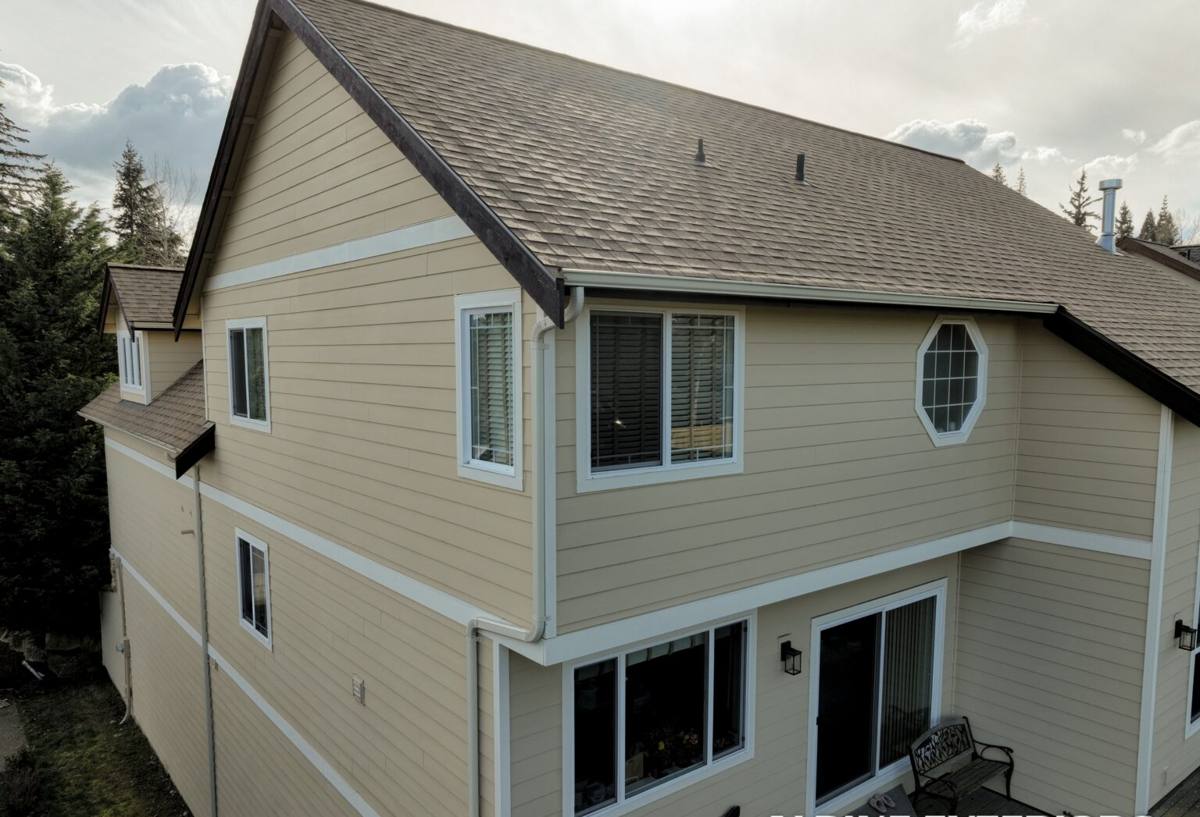
Signs You're Looking at a Replacement, Not Another Repair
Not every roof problem means a full replacement. But there's a point where patching individual leaks stops making financial sense and starts masking a roof that's failing as a system. Some signs point clearly in that direction:
- Granules collecting in gutters and downspouts in noticeable amounts, not just a light dusting
- Shingles that are cupping, curling, or cracking across multiple areas of the roof, not one isolated spot
- Moss or algae growth that keeps coming back within a season or two of cleaning
- Daylight visible through the roof deck from inside the attic
- Soft or spongy decking underfoot when walked, or visible sagging along the roofline
- Repeated leaks in different locations after previous repairs
- A roof that's at or past the manufacturer's expected service life for its material and this climate
If you're seeing two or more of these at once, a roofer should be assessing the whole roof system, not just quoting a patch.
What a Correct Roof Replacement Actually Involves
A roof replacement is more than swapping old shingles for new ones. The parts you don't see — decking condition, underlayment, flashing, and ventilation — are what determine whether the new roof actually performs in this climate or just looks new for a year or two before the same problems return.
Full Tear-Off vs. Overlay
Installing new shingles directly over an old layer can save money up front, but it traps moisture, hides deck damage, and voids many manufacturer warranties. Our standard is a full tear-off: strip the roof down to the deck so it can actually be inspected, not guessed at.
Decking Inspection and Repair
Once the old roofing is off, the deck gets checked board by board for soft spots, delamination, or rot — problems that are common on older Whatcom County homes where a slow leak has been present for years without showing indoors. Any damaged decking gets replaced before anything new goes down; roofing over bad decking just guarantees a shorter roof life.
Underlayment and Ice-and-Water Barrier
Given how much wind-driven rain this area sees, we treat underlayment as a real second line of defense, not a formality. Eaves, valleys, and areas prone to ice damming get a self-adhering water and ice barrier, with synthetic underlayment across the rest of the field for durability and better water resistance than older felt products.
Flashing Details
Chimneys, skylights, roof-to-wall junctions, and valleys are where most leaks actually start. Flashing gets replaced, not reused, and detailed so water is directed out and away rather than relying on caulk or sealant to do the job long-term.
Ventilation
Balanced intake and exhaust ventilation keeps the attic space at a consistent temperature and moisture level. Poor ventilation traps humid air against the underside of the deck, which speeds up rot and can shorten shingle life from the inside — a quieter but very real problem in a damp climate like ours.
Choosing a Roofing Material for This Climate
There's no single "best" roofing material — the right choice depends on your home's exposure, roof pitch, budget, and how much shade and moss pressure the roof will face. Here's how the common options compare for a Bellingham-area home:
| Material | Moss Resistance | Wind/Rain Performance | Salt Air Durability | Typical Lifespan |
|---|---|---|---|---|
| Standard 3-tab asphalt shingle | Low — moss holds easily on flat tab surface | Adequate when properly installed | Fasteners need corrosion-resistant coating | 15-20 years |
| Architectural (laminated) asphalt shingle | Moderate, better with algae-resistant granules | Good; heavier and more wind-resistant | Fasteners need corrosion-resistant coating | 25-30 years |
| Standing seam metal | High — moss struggles to grip smooth panels | Excellent; sheds wind-driven rain well | Requires marine-grade or coated fasteners near the water | 40-50+ years |
| Synthetic composite (cedar/slate look) | Moderate to high depending on product | Good | Generally durable, product-dependent | 30-50 years |
We'll walk through these trade-offs honestly during your estimate rather than steering everyone toward the same product. A shaded, moss-prone roof with steep valleys often benefits from a different material choice than an open, sunnier roof on the same street.
Our Roof Replacement Process
- Inspection and estimate — We walk the roof (not just look from the ground), check the attic for ventilation and moisture issues, and give you a written scope and price.
- Material selection — We go over options that fit your budget, roof exposure, and how much moss and shade your particular roof deals with.
- Scheduling and site protection — Landscaping, siding, and gutters get protected before work starts; we plan around weather windows rather than rushing a job into a storm.
- Tear-off — Old roofing is removed down to the deck and hauled away.
- Deck repair — Any damaged sheathing is replaced and documented before we cover it up.
- Underlayment and flashing — Ice-and-water barrier, synthetic underlayment, and new flashing go in at every vulnerable point.
- Installation — New roofing material is installed to manufacturer specification, which matters for both performance and warranty validity.
- Cleanup and magnetic sweep — The property is cleared of debris and swept for stray nails.
- Final walkthrough — We review the finished roof with you and hand over warranty paperwork.
Keeping Moss and Moisture From Cutting a New Roof Short
A new roof in Bellingham can still lose years of life if moss and moisture aren't managed afterward. A few things make a real difference:
- Zinc or copper strips installed near the ridge let rainwater carry trace metal down the roof, which discourages new moss growth over time
- Keeping overhanging branches trimmed back reduces shade and debris buildup, both of which feed moss
- Clean gutters prevent standing water at the eaves, which is one of the more common places rot starts
- Balanced attic ventilation keeps moisture from condensing against the deck from underneath
- A yearly or twice-yearly visual check catches small problems — a lifted shingle, a clogged valley — before they become leaks
None of this is complicated, but it's the difference between a roof that reaches its full expected lifespan and one that starts needing attention again in year eight or ten.
What Drives Roof Replacement Cost
Roof replacement pricing varies by home, and we won't quote a number without seeing the roof. But the factors that generally move the price are consistent:
| Factor | Why It Matters |
|---|---|
| Roof size and pitch | More surface area and steeper pitches mean more material and labor time |
| Material choice | Standing seam metal and premium composites cost more up front than standard asphalt shingle |
| Number of existing layers | Removing multiple old layers takes more labor and disposal cost than a single layer |
| Decking condition | Rotten or delaminated sheathing needs replacement, which adds material and time |
| Roof complexity | Valleys, dormers, skylights, and multiple chimneys add flashing work and labor |
| Accessibility | Steep sites, limited driveway access, or tall roofs affect equipment and safety needs |
Why Hiring a Crew That Already Works Bellingham Matters
Roofing done right for this area isn't generic. A crew that works Bellingham and greater Whatcom County regularly knows which flashing details actually hold up against our driving rain, which fastener coatings are worth the extra cost this close to the water, and how aggressively to plan for moss based on how much tree cover a particular property has. That local pattern recognition comes from doing the work here repeatedly, not from a manual.
There's also a practical accountability piece. As a Lynden-based company, we're not driving in from out of the area for one job and disappearing — we're around for warranty questions, storm follow-ups, and the next project down the road. That matters when something needs a second look a few years after installation, or when a wind event sends you outside to check your roof after the fact.
If your roof is showing its age or you just want an honest opinion on whether repair or replacement makes more sense, we're glad to take a look. Estimates are free, and there's no pressure to move forward — just a straight assessment of what your roof actually needs. You can request one using the form below.