 Lynden Siding
 Why Laurel Roofs Wear Differently Than Roofs Inland
Homes in the Laurel area sit close enough to the water and open farmland that the roof takes a different kind of beating than a roof twenty miles inland. Moist marine air moves through Whatcom County most of the year, and on a roof that means near-constant dampness, slow-drying shade pockets under fir and cedar trees, and a moss season that can run from October well into spring. Add driving rain that comes in sideways during winter storms, and you've got a roofing assembly that has to shed water fast, breathe correctly, and resist organic growth — not just look good from the street.
A roof built or repaired without that in mind tends to fail from the inside out. Trapped moisture rots decking and fascia years before the shingles themselves wear out. That's the core reason a roof replacement in this area needs to be approached differently than a straightforward re-roof in a drier climate — the materials matter, but the details underneath the materials matter more.
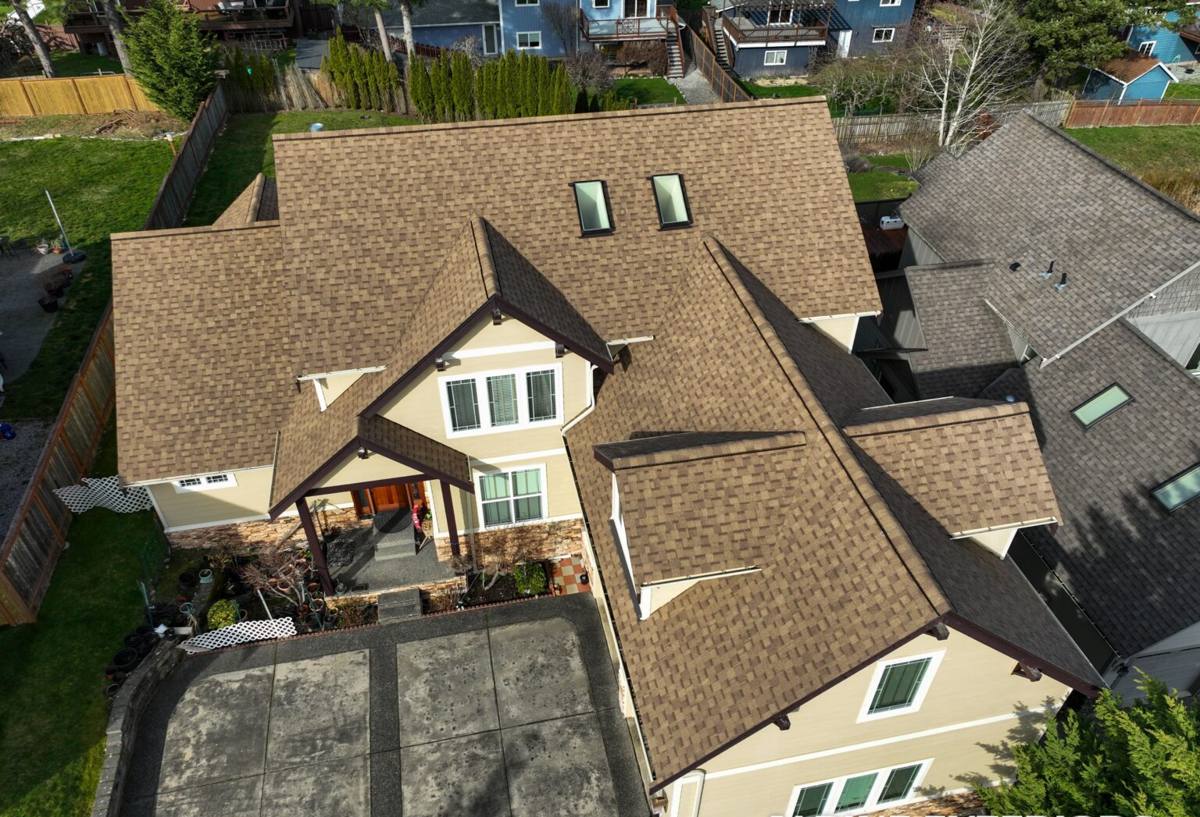
Signs a Laurel Home Needs a Roof Replacement, Not Another Repair
Not every roofing problem calls for full replacement, and we'll tell you honestly when a repair is the smarter move. But there are signs that point to a roof at the end of its useful life, especially on homes exposed to Lynden's wet-and-windy weather pattern:
- Granule loss heavy enough that shingles look patchy or bald, especially on south- and west-facing slopes
- Moss establishing itself in the shingle mat rather than just sitting on the surface — a sign it's been there long enough to hold moisture against the roof
- Soft or spongy decking felt underfoot in the attic, or daylight visible through the roof boards
- Repeated leaks around the same penetration or valley after prior repairs
- Shingles curling, cracking, or losing their seal — common once a roof passes 20-25 years in this climate
- Visible sagging along the ridge or roof plane
If you're seeing two or more of these, a full replacement is usually the more cost-effective path — patching a roof that's structurally tired just delays the same expense while risking interior water damage in the meantime.
What a Correct Roof Replacement Actually Involves
A roof replacement isn't just stripping old shingles and nailing down new ones. In a climate that sees this much rain and moss pressure, the layers underneath the visible roofing material do most of the real work.
Tear-Off and Deck Inspection
We remove the old roofing down to the deck rather than layering over it. That's the only way to actually see the plywood or plank sheathing underneath — which is where hidden rot from years of trapped moisture usually shows up first. Any soft or delaminated decking gets replaced before anything new goes down; installing new shingles over compromised decking just hides the problem for another few years.
Underlayment and Water-Entry Protection
Given how much wind-driven rain this area sees, we pay close attention to underlayment coverage and to ice-and-water shield placement at eaves, valleys, and any roof-to-wall transitions — the spots where wind can push rain uphill under the shingles instead of letting gravity carry it down and off.
Ventilation
A roof that can't breathe traps warm, moist attic air against the underside of the decking, which accelerates rot and helps moss and algae take hold from below as well as above. Correct intake and exhaust ventilation is part of a proper replacement, not an optional add-on.
Flashing and Edge Details
Chimneys, skylights, dormers, and roof-to-wall junctions are where most leaks actually start — not the open field of shingles. We install new flashing rather than reusing old, bent, or rusted pieces, and we pay particular attention to drip edge and rake details that keep wind-blown rain from getting behind the roofing material.
Choosing the Right Roofing Material for a Laurel Home
There's no single "best" roofing material — the right choice depends on your home's exposure, roof pitch, budget, and how much long-term maintenance you're willing to do. Here's an honest comparison of the options we install most often in this climate:
| Material | Typical Lifespan | Moss/Moisture Resistance | Maintenance |
|---|---|---|---|
| Architectural asphalt shingle | 25-30 years | Good, especially with algae-resistant granules | Periodic moss treatment and gutter care |
| Standard 3-tab shingle | 15-20 years | Fair — more prone to moss buildup over time | More frequent moss/algae maintenance |
| Metal panel roofing | 40-60 years | Excellent — sheds moisture quickly, little for moss to grip | Low; occasional debris clearing |
| Cedar shake | 20-30 years with upkeep | Fair — attractive but needs active moss/moisture management | Higher; regular treatment recommended |
For most Laurel-area homes, we recommend an architectural shingle with algae-resistant granules or, for homeowners who want to minimize long-term maintenance, a metal roof. We're glad to walk through the real trade-offs for your specific roof rather than push one product — appearance, budget, and how much upkeep you want to do all factor in.
Our Roof Replacement Process
- On-site inspection and estimate. We walk the roof, check the attic for ventilation and moisture issues, and give you a written estimate with no pressure to sign on the spot.
- Material selection. We go over color, material, and any upgrades (better underlayment, ventilation improvements) based on what your roof and budget call for.
- Scheduling around weather. We plan the tear-off and install for a stretch of dry weather where possible, and we protect the open roof deck if conditions shift mid-project.
- Tear-off and deck repair. Old roofing comes off, the deck gets inspected, and any damaged sheathing is replaced before anything new is installed.
- Underlayment, flashing, and ventilation installation. This is the part of the job that determines how the roof performs over the next 20-30 years, and we don't rush it.
- New roofing installation. Shingles, panels, or shakes go down to manufacturer specification, including proper nailing and exposure for wind resistance.
- Cleanup and final walkthrough. We clear debris and nails from the property and walk the finished roof with you before calling the job done.
Cost Factors to Expect
Every roof is different, so we won't quote a number without seeing the job — but the main factors that move the price on a Laurel-area roof replacement are consistent:
| Factor | Why It Matters |
|---|---|
| Roof size and pitch | Steeper roofs take longer and require more safety setup |
| Number of layers to remove | Tearing off multiple old layers adds labor and disposal cost |
| Deck condition | Rotted sheathing found during tear-off adds material and labor |
| Material choice | Asphalt, metal, and cedar carry different material and install costs |
| Roof complexity | Valleys, dormers, chimneys, and skylights add flashing work |
| Ventilation upgrades | Adding proper intake/exhaust venting where none existed |
Broadly speaking, a straightforward asphalt shingle replacement on an average home runs in the moderate five-figure range, with metal roofing and complex rooflines pushing higher. We give a firm written number after seeing the roof in person, not a phone estimate.
Moss and Algae: Managing Roof Health After the New Roof Goes On
Even a well-installed new roof in this part of Whatcom County will face moss and algae pressure eventually — it's a byproduct of the shade and moisture that come with the region, not a sign of a bad roof. What changes with a correct replacement is how well the roof resists and sheds that growth, and how much damage it does if it takes hold.
A few habits extend the life of any roof out here: keeping overhanging branches trimmed back so the roof gets more sun and airflow, clearing gutters and valleys of needles and leaf debris before the fall rains set in, and having moss treated before it spreads into the shingle mat rather than after. We're happy to point out anything we notice on your roof during the estimate, whether or not it turns into a job for us.
What to Ask Before Hiring a Roofing Contractor
Roof replacement is a significant investment, and the quality of the installation — not just the shingle brand — determines whether it lasts. Before you hire anyone for a Laurel-area roof:
- Ask whether they tear off down to the deck or install over existing layers
- Confirm they inspect and replace damaged decking as part of the job, not as a surprise change order
- Ask specifically how they handle ventilation, not just shingles
- Check that flashing is replaced, not reused, at chimneys and valleys
- Get the estimate in writing, with material specifications listed
- Ask how they handle scheduling around wet weather
- Confirm licensing and insurance, and ask for proof
A crew that's worked roofs in and around Laurel and greater Lynden has already seen how the local weather patterns affect installations over time — where moss tends to build up first, which roof orientations take the worst of the wind-driven rain, and what ventilation setups actually hold up here. That local track record is worth asking about directly.
Why Local Experience on Laurel Roofs Matters
A roofing crew that only occasionally works this part of Whatcom County is learning the local climate on your roof. A crew that regularly works Laurel and the surrounding Lynden area already knows how the marine air, rainfall patterns, and moss pressure interact with different roof designs — and builds the replacement accordingly, rather than applying a generic approach and hoping it holds up.
That local familiarity shows up in small decisions that add up: where extra underlayment coverage is worth it, which ventilation setup actually performs in this humidity, and how to detail flashing so wind-driven rain doesn't find its way in during the next winter storm. It's the difference between a roof that looks right on installation day and one that's still performing correctly ten winters later.
If your roof is showing its age or you just want an honest opinion on what it needs, we're glad to come take a look. Reach out for a free, no-pressure estimate using the form below.