 Lynden Siding
 Siding Repair for Sumas Homes
Sumas sits at the far eastern edge of Whatcom County, right against the Canadian border in the flat farmland of the Sumas Prairie — close enough to Lynden that we're in and out of the area regularly, but exposed to a slightly different mix of weather than towns closer to the water. Homes out here deal with the same underlying pattern that shapes exterior work across this part of Washington: salt-laden marine air that reaches further inland than most people expect, driving rain that comes in sideways rather than falling straight down, and a moss season that runs longer here than in drier climates. Siding repair in this kind of setting isn't just a cosmetic fix — it's about correctly reading what's actually happened to the wall assembly and stopping it before it spreads.
This page is specifically about siding repair for Sumas properties, not a full re-side. A lot of the calls we get out here start with something small — a cracked panel, a stained corner, a section that took a hit from a falling branch — and the real question is always the same: is this an isolated fix, or a sign of something bigger going on behind the wall. We install and repair James Hardie fiber cement exclusively, which shapes both how we diagnose a problem and how we fix it.
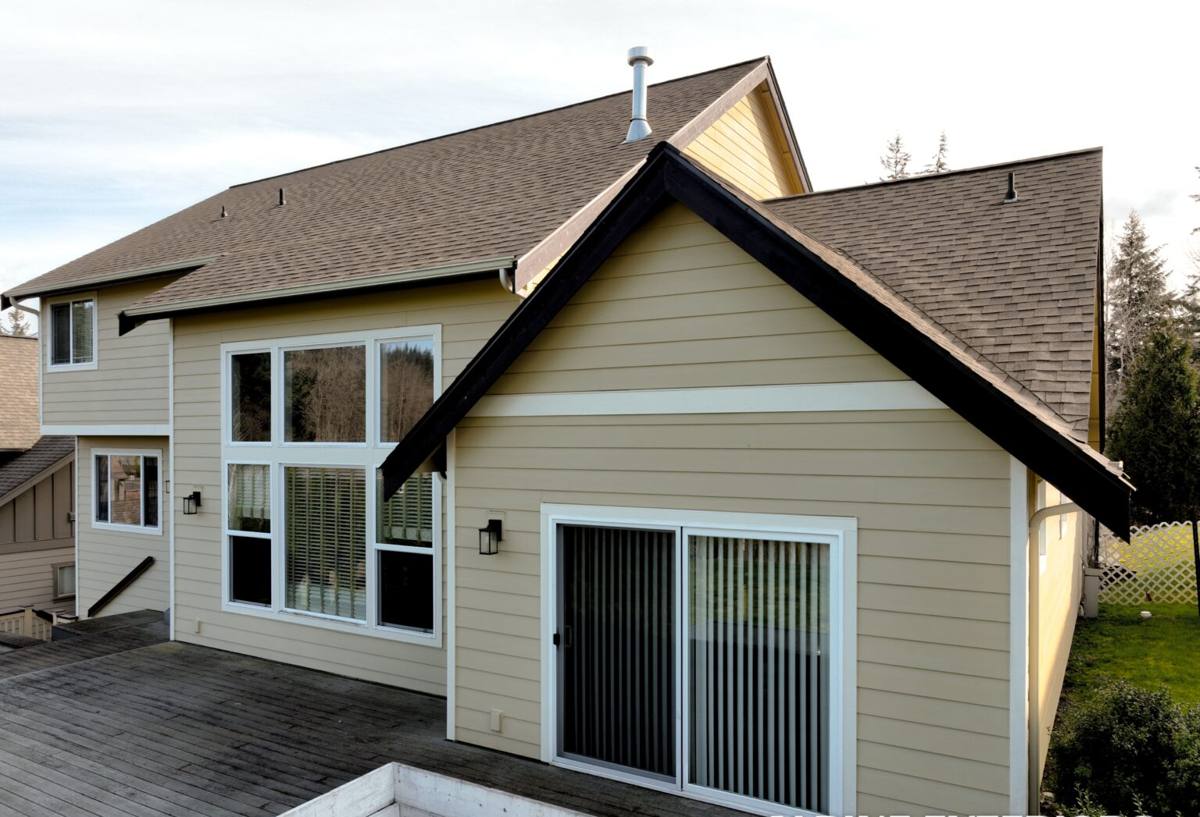
What Sumas's Climate Does to Siding Over Time
Salt Air That Travels Further Than It Looks Like It Should
Sumas is inland, but marine air moves across this whole part of Whatcom County and doesn't stop at the coastline. Over years, it works on fasteners, flashing, and lower-grade trim hardware, slowly weakening the connections that hold siding tight to a wall. A repair that only addresses the visible crack or gap without checking the fasteners and flashing behind it tends to fail again within a season or two, because the underlying hardware was already compromised.
Driving Rain and Wind-Driven Water
Storms in this part of the county push rain sideways into walls more often than they let it fall straight down, and that sideways force finds any weak seam, unsealed joint, or gap left by a previous repair. A patch job that doesn't re-establish a proper water-shedding lap or reseal a joint correctly can actually make things worse, trapping water behind the new material instead of letting it run off the wall the way the original installation was designed to.
A Long Moss and Mildew Season
Sustained dampness and mild temperatures add up to a moss and mildew season that stretches across much of the year on shaded or north-facing walls. When we're called out for a repair, we look at surrounding wall area for staining or growth beyond the immediate problem spot — moss holds moisture directly against a wall, and it's common to find a second issue developing nearby that hasn't been noticed yet.
Freeze-Thaw Cycling
Sumas gets more frequent hard frosts than milder coastal parts of the county. Water that's already worked its way into a crack, a gap, or a poorly sealed joint expands when it freezes, which turns a small crack into a larger one over a single winter. This is one of the more common reasons a repair that looked minor in October turns into a bigger job by spring if it isn't addressed before the cold sets in.
Repair or Replace? How We Tell the Difference
Not every damaged section of siding means the whole wall needs to come off, but telling the difference correctly is the most important part of a repair estimate. Here's how we generally sort it out:
| What We Find | Usually a Repair | Often Points to Replacement |
|---|---|---|
| One or two cracked or impact-damaged panels | Yes, if surrounding sheathing is dry | Only if damage is spreading across multiple walls |
| Isolated corner or trim failure | Yes | If flashing behind it has failed broadly |
| Moss or staining that wipes clean and doesn't return quickly | Yes — cleaning and maintenance | If it returns fast and the wall stays damp underneath |
| Soft or spongy siding in a small area | Sometimes, if caught early | Usually — often means sheathing rot has started |
| Older non-Hardie siding failing broadly (vinyl, wood, LP) | Rarely a lasting fix | Usually — patching a failing system just delays the real job |
| Water staining on interior walls behind the siding | No | Yes — moisture has already gotten past the exterior |
We'll tell you honestly which category your situation falls into. A straightforward repair costs a fraction of a replacement, but recommending one when the wall is actually further gone just pushes a bigger, more expensive problem down the road.
What a Correct Repair Actually Involves
A siding repair that holds up in this climate is more than swapping a damaged board for a new one. It involves:
- Removing enough surrounding material to see the full extent of the damage, not just the visible crack or stain
- Checking the sheathing and house wrap behind the damaged section for moisture, soft spots, or rot before anything new goes back on
- Re-establishing correct flashing and lap details so water sheds the way the original installation intended, rather than just caulking a gap shut
- Matching the replacement material's profile, reveal, and color so the repair doesn't stand out as an obvious patch
- Re-fastening to manufacturer spec, since a repair that's under-fastened or fastened into failed substrate won't hold through the next windstorm
Skipping any of these steps is how a repair becomes a callback. On a property exposed to this much driving rain and salt air, the details behind the visible siding matter as much as the patch itself.
Matching an Existing Hardie Wall
When the original siding is already James Hardie, a repair is usually straightforward — factory ColorPlus finishes are formulated to be consistent across production runs, and matching profile and reveal to the existing wall keeps the repair from being visually obvious. The harder conversation comes up when a home has an older, non-Hardie product that's failing in more than one spot. Patching a wall of aging vinyl or engineered wood siding can buy a little time, but it doesn't address why the material is failing in the first place, and it won't match or perform the same way a Hardie repair does going forward.
How Our Repair Process Works
Inspection First
We start by looking at the damaged area and the wall around it — not just the spot you called about. Given how moisture tends to travel behind siding before it shows up on the surface, a five-minute look at one panel often isn't enough to scope the job correctly.
Diagnosing the Cause
A crack or stain has a reason behind it — impact damage, a failed flashing detail, trapped moisture, or age. We identify the cause before proposing a fix, because repairing the symptom without addressing the cause just means doing the same repair again in a year or two.
Checking What's Behind the Wall
Once damaged material is pulled, we check the sheathing and house wrap underneath for rot or moisture before closing anything back up. This is the step that gets skipped by crews trying to move fast, and it's the one that determines whether a repair actually lasts.
Matching and Installing
New material gets matched to the existing profile and finish, installed to correct fastening and flashing spec, and sealed at every joint the way the original wall should have been detailed.
Final Check
We walk the repair with you before calling it done, and we're straightforward about anything else we noticed nearby that's worth keeping an eye on.
Why We Only Work With James Hardie Fiber Cement
We install and repair James Hardie exclusively — not vinyl siding, LP SmartSide, Cemplank, Allura, primed spruce, or cedar. That's a professional standard, not a sales pitch. Fiber cement's non-combustible core, factory-baked ColorPlus finish, and climate-engineered HZ formulations are built for exactly the kind of sustained moisture and freeze-thaw exposure Sumas sees, and Hardie's transferable warranty gives homeowners real protection when installation and repairs follow their published spec. Every other product we've worked with has its place in the broader market, but we'd rather stand fully behind one system we trust than offer a cheaper repair on a material we know struggles here long-term.
Practically, that means if your home already has Hardie siding, a repair from us matches seamlessly and carries the same standard the rest of the wall was built to. If your home has a different product that's failing, we'll say so plainly and let you decide whether a targeted patch or a longer-term move to Hardie makes more sense for your situation — without pressure either way.
Signs a Sumas Home Needs Siding Repair
- A cracked, chipped, or impact-damaged panel, especially after a windstorm
- Moss or dark staining that returns quickly after cleaning
- Soft or spongy spots when pressed near the base of a wall or below a window
- Gaps or separation at seams, corners, or trim joints
- Rust streaking below fasteners or trim hardware
- Peeling paint or visible warping on any non-Hardie sections
- Musty smells or staining on an interior wall backing up to exterior siding
Cost Factors for Siding Repair in Sumas
| Factor | What It Affects | Why It Matters Here |
|---|---|---|
| Extent of hidden damage | Whether the job stays a patch or grows into a larger repair | Trapped moisture in a damp valley climate often extends further than the visible symptom |
| Material match | Whether replacement panels blend with existing siding | Weathered older siding can be harder to match than a recently installed wall |
| Substrate condition | Added repair scope before new siding goes back on | Sustained rain and humidity make sheathing rot a real possibility behind failed siding |
| Access and site conditions | Labor time | Rural and agricultural properties near the border can have longer setups than in-town lots |
| Original siding material | Whether a lasting repair is realistic at all | An aging non-Hardie wall failing in multiple spots often isn't worth repeated patching |
We give a real number after walking the property, not a phone estimate, because the difference between a simple patch and a job that needs substrate repair usually isn't visible from the driveway.
Why a Crew That Already Works Sumas Matters
Sumas sits far enough from the coast and close enough to the border that its exposure — cold outflow wind, a low-lying valley floor, real freeze-thaw cycling — plays out a little differently than it does closer to Lynden or the water. A crew that's already worked this specific stretch of the county knows which wall orientations hold moisture the longest, which fastening and flashing details are worth the extra time here, and what a repair actually needs to hold up through a full winter rather than just look finished on the day we leave. That's the difference between a repair that lasts and one that turns into a callback.
If you've got a siding problem on a Sumas property — whether it's one damaged panel or something that looks like it might be bigger once we get behind the wall — we're glad to take a look and give you an honest read. Reach out using the form below to schedule a free, no-pressure estimate.