 Lynden Siding
 Blaine's Marine Climate Is Hard on Exterior Siding
Blaine sits right at the edge of Puget Sound and the Canadian border, which means homes here take on a version of Whatcom County weather that's a notch tougher than what you'll find further inland. The salt-laden air off the water accelerates corrosion on fasteners and trim, driving rain off the Strait pushes moisture sideways into joints and laps that would stay dry in a calmer climate, and the long gray stretch from fall through spring keeps north-facing walls and shaded siding damp long enough for moss and algae to take hold. None of this is exotic — it's just Pacific Northwest coastal exposure doing what it does, year after year, to whatever material is on the wall.
The practical effect is that siding in Blaine ages faster than the same product would in a drier, more sheltered part of the state. Caulk lines fail sooner, paint chalks and peels earlier, and any material that isn't dimensionally stable or moisture-tolerant starts showing stress within a handful of years instead of a couple decades. Replacement decisions here need to account for that reality up front, not treat Blaine like generic Western Washington.
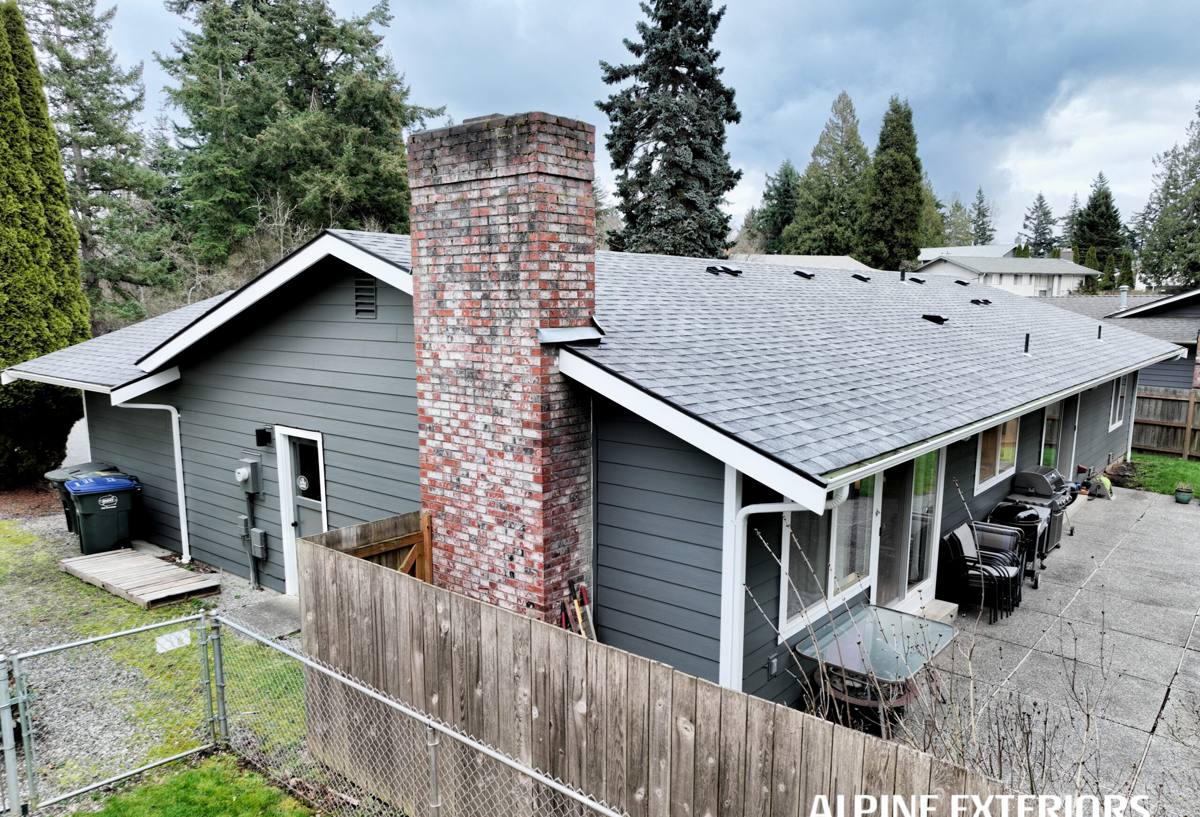
Signs a Blaine Home Needs Replacement, Not Another Patch
Homeowners often ask us to look at a "small problem" and find that the siding underneath has already been compromised for a while. A few patterns we see often in this area:
- Soft, spongy, or crumbling siding near the bottom courses, corners, or anywhere water runs off a roof or deck
- Persistent green or black staining that comes back within weeks of being cleaned, especially on shaded or north-facing walls
- Paint that's peeling or bubbling in sheets rather than just fading, which usually points to moisture trapped behind the surface
- Visible gaps, warping, or buckling in lap siding, particularly around windows and butt joints
- Rusted or popped fasteners and streaking below nail heads, a common sign in salt-exposed areas
- A musty smell or soft drywall on interior walls that share an exterior wall with damaged siding
Any one of these can sometimes be repaired locally. But when several show up together, or when the siding is original and past 15–20 years old, patch repairs usually just delay a full replacement while the sheathing underneath keeps absorbing moisture.
What a Correct Siding Replacement Actually Involves
Tear-Off and a Real Look at What's Underneath
New siding over a compromised wall just hides the problem. A proper replacement starts with removing the old material and inspecting the sheathing, framing, and any window and door flashing underneath. In a wet climate like Blaine's, this step matters more than the siding choice itself — rot found now gets repaired now, not three years after new siding goes up over it.
Moisture Management, Not Just a Barrier
A weather-resistive barrier gets installed correctly lapped shingle-style (upper layers over lower ones) so water sheds down and out, never into a seam. Flashing gets integrated at every window, door, deck ledger, and penetration, and a drainage gap is maintained where called for so any moisture that does get behind the cladding has somewhere to go besides the wall cavity.
Fastening and Clearances Built for Coastal Exposure
Corrosion-resistant fasteners matter more here than in drier inland areas, and every manufacturer's minimum clearances — from grade, roofing, decks, and horizontal surfaces — need to be respected, not shortcut to make a wall look tidier. These are the details that separate siding that lasts three decades from siding that needs attention again in eight years.
Why We Install Only James Hardie Fiber Cement
We don't install vinyl, LP SmartSide, Cemplank, Allura, primed spruce, or cedar, and in a place like Blaine that's a deliberate call, not a brand preference. Vinyl expands and contracts with temperature swings and can warp or crack under sustained wind-driven rain and salt exposure. Wood-based and engineered-wood products depend on an intact factory finish and diligent maintenance to keep moisture out — once that finish is compromised near the coast, the wood substrate underneath doesn't forgive mistakes the way fiber cement does.
James Hardie fiber cement is non-combustible, dimensionally stable, and holds its factory-applied ColorPlus finish far longer than field-applied paint, which matters directly in a climate that's hard on caulk and coatings. Hardie also engineers its HZ5 and HZ10 product lines specifically for climate zones — HZ5 for standard Pacific Northwest moisture exposure and HZ10 for harsher, wetter, coastal conditions closer to what Blaine actually sees. That's not a wide-market compromise; it's a product built with our exact conditions in mind, backed by a real transferable warranty when installed to spec.
To be fair to the alternatives: vinyl is inexpensive and low-maintenance in mild climates, and cedar has a natural appearance many homeowners genuinely love. Those are real advantages elsewhere. In Blaine's salt air and long wet season, though, we've found the maintenance burden and moisture risk outweigh the upfront savings or the look, which is why we standardized on Hardie and don't install the alternatives at all.
Our Siding Replacement Process
| Step | What Happens |
|---|---|
| On-site assessment | We walk the exterior, check problem areas you've flagged, and look for signs of hidden moisture damage |
| Written estimate | Scope, product line, color, and clear pricing before any work is scheduled |
| Tear-off and inspection | Old siding removed, sheathing and framing checked, any rot repaired before anything new goes up |
| Weather barrier and flashing | Correctly lapped barrier and integrated flashing at every window, door, and penetration |
| Hardie installation | Fastened and cleared to manufacturer spec, with attention to grade, roof, and deck clearances |
| Trim, caulking, and final finish | Joints sealed, trim finished, site cleaned up |
| Walkthrough | We review the finished work with you before calling the job done |
What Affects the Cost of Siding Replacement in Blaine
Every home is different, but the same handful of factors drive most of the variation we see on estimates in this area.
| Factor | Why It Matters |
|---|---|
| Extent of hidden moisture damage | Rotted sheathing or framing found during tear-off adds repair scope beyond the siding itself |
| Home size and wall complexity | More corners, dormers, and trim detail mean more labor and material cuts |
| Siding profile and color | Lap width, panel style, and ColorPlus color selection affect material cost |
| Access and site conditions | Tight lots, slopes, or landscaping close to the house can slow tear-off and staging |
| Existing trim and flashing condition | Failing trim or flashing usually gets replaced alongside the siding, not left in place |
We'd rather walk your specific home and give you real numbers than quote a broad range that doesn't reflect what's actually going on with your walls.
Why Hiring a Crew That Already Works in Blaine Matters
A contractor who regularly works this part of Whatcom County already knows what coastal exposure does to fastener choice, flashing details, and clearance decisions — they're not learning it on your house. That familiarity shows up in small but important calls: which walls need extra attention to moss and shade, how much drainage gap to build in on the sides that take the worst of the weather off the water, and which trim details tend to fail first in this specific climate. It also means a crew that's set up to be responsive if you have a warranty question or a follow-up concern down the road, rather than a company that did one job in the area and moved on.
Caring for New Siding Once It's Installed
Fiber cement is low-maintenance compared to the alternatives, but "low-maintenance" isn't "no-maintenance," especially in a climate this wet. A little attention keeps a correctly installed job performing for decades.
- Rinse siding periodically to keep salt residue and organic buildup from settling in, especially on walls facing the water or shaded from direct sun
- Keep gutters clear so water sheds away from the wall instead of overflowing down the face of the siding
- Trim back vegetation and landscaping that traps moisture against exterior walls
- Re-caulk trim joints if you notice cracking or gaps, rather than waiting for water to get behind them
- Have flashing and caulking spot-checked every few years, particularly around windows, doors, and deck ledgers
- Address any moss or algae promptly with a gentle wash rather than pressure-washing, which can force water behind panels
If you're seeing early signs of trouble on your current siding, or you're just ready to stop patching and do it right, we're happy to take a look at your Blaine home and put together a straightforward, no-pressure estimate — use the form below to get started.