 Lynden Siding
 Storm Roofs in Maple Falls Take a Different Kind of Beating
Maple Falls sits up in the foothills east of Lynden, where the terrain climbs and the tree cover thickens. That setting changes how storms hit a roof compared to town. Wind doesn't just blow through — it funnels and gusts unpredictably around tree lines and elevation changes, snapping branches and dropping limbs onto roof planes that a flatter, more open lot wouldn't have to deal with. Add in the long wet season that Whatcom County sees off the water, and you get roofs that stay damp longer, dry out slower, and take on damage that isn't always obvious from the ground.
We service Lynden and the surrounding communities, including Maple Falls, and the roofs we see up there tend to show a specific pattern: wind-lifted shingles near ridgelines and edges, impact damage from falling debris, and moisture problems that started small and got worse because nobody could see them from the driveway. Storm damage repair here isn't just about patching a leak — it's about understanding why that leak happened and making sure the fix holds through the next system that rolls through.
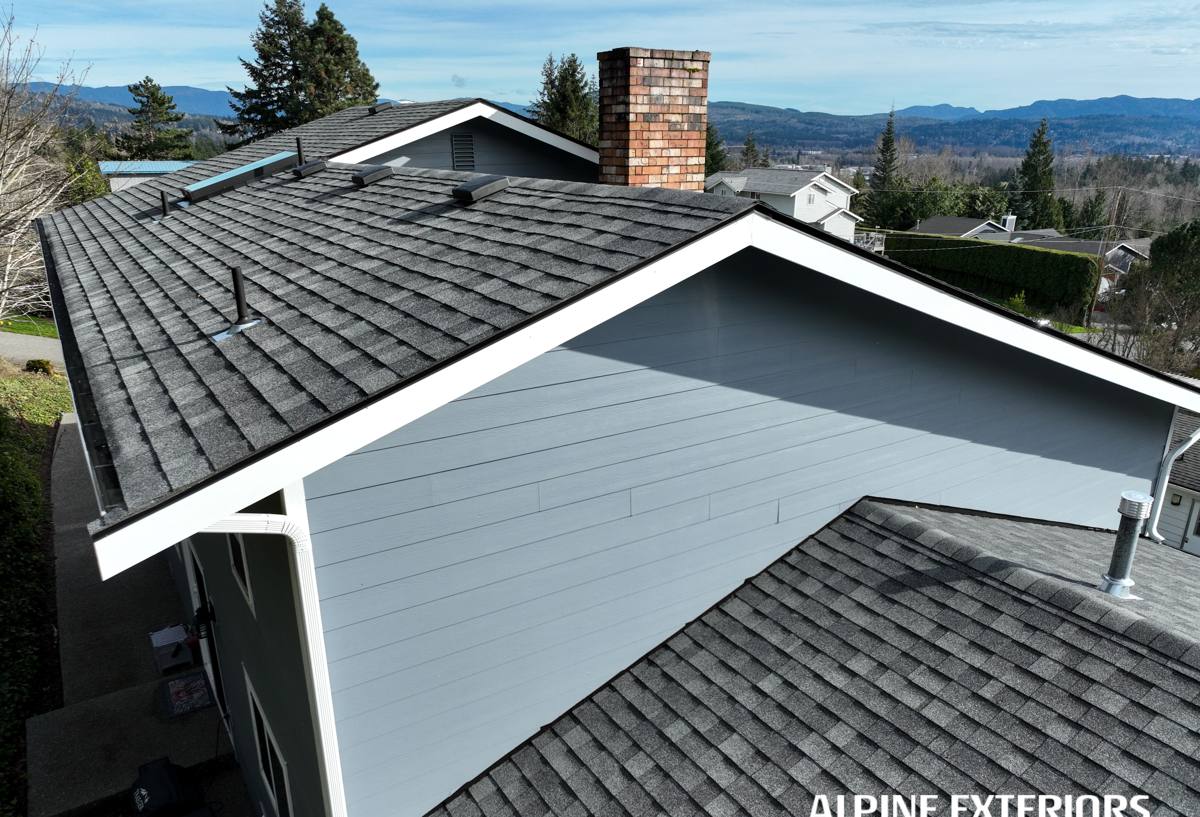
What Storm Damage Actually Looks Like on a Maple Falls Roof
Homeowners usually call us after they've spotted a stain on a ceiling or found shingles in the yard after a windstorm. By that point, the damage has usually been developing for a while. Here's what we look for on an inspection:
- Shingles that are cracked, curling, creased, or missing entirely, especially near ridges, valleys, and roof edges where wind pressure is highest
- Impact damage from falling branches or debris — bruised or punctured shingles, dented flashing, cracked ridge caps
- Lifted or loosened flashing around chimneys, vents, and skylights, which is one of the most common leak sources after a windstorm
- Granule loss in gutters and downspouts, a sign shingles have been stripped by wind-driven rain or hail
- Soft spots or sagging in the roof deck, which usually means water has been getting into the sheathing for a while
- Interior staining, bubbling paint, or musty smells in attic spaces, which point to a leak that's been active longer than the storm that just passed
Not every one of these needs a full repair — some are cosmetic and some are structural. The point of a proper inspection is telling the difference before it costs more to fix.
Why Moss and Moisture Make Storm Damage Worse Here
Whatcom County's wet season runs long, and a roof that's already carrying a layer of moss or algae is more vulnerable when a storm hits. Moss holds moisture against the shingle surface, which softens the mat underneath and makes it easier for wind to lift or tear shingles that would otherwise hold. It also traps debris in valleys and along eaves, which backs up water during heavy rain and pushes it under the shingle edge instead of off the roof.
When we're called out for storm damage, we're checking for moss and organic buildup as part of the same inspection — not as an upsell, but because it directly affects whether a repair holds. A shingle repair done over a moss-compromised area is a repair that's likely to fail again in the next storm. We'll tell you plainly if that's what we're looking at, and what it takes to fix it right.
Signs Moss Has Already Weakened a Roof Section
- Shingles that feel spongy or lift easily when checked by hand
- Visible moss growth thicker than a light green haze, especially on north-facing or shaded slopes
- Granules collecting heavily in gutters even outside of storm events
- Dark streaking that doesn't wash off with rain
What a Correct Storm Repair Actually Involves
A lot of storm repair work gets done as a quick patch — a few shingles swapped, some caulk around a flashing joint, done. That approach can hide a bigger problem instead of fixing it. A repair we'd stand behind includes:
Deck Inspection Before Anything Gets Covered Up
If shingles were torn off or punctured, we check the decking underneath before replacing anything. Wet or soft sheathing needs to be addressed now, not left for the next contractor to find.
Matching Materials, Not Just Covering the Gap
Shingle color and profile drift over the years as manufacturers update product lines. We do our best to match existing shingles closely, and we'll tell you upfront if an exact match isn't realistic so you can decide whether a small color variance is acceptable or whether a larger repair section makes more sense.
Flashing and Underlayment, Not Just Shingles
Most leaks after a storm trace back to flashing, not the shingle field itself. A repair that only replaces shingles without checking flashing around penetrations is treating the symptom, not the cause.
Proper Fastening for Wind Exposure
Roofs in wind-exposed, tree-lined settings like Maple Falls benefit from nailing patterns and sealant practices built for higher wind resistance, not just the manufacturer's minimum spec.
How Our Storm Repair Process Works
- Inspection and documentation. We walk the roof (or use a drone where access is limited), photograph the damage, and give you a clear written summary of what we found — including anything that isn't storm-related, like pre-existing wear or moss buildup, so you know what's what.
- Honest scope discussion. We'll tell you if this is a targeted repair, a larger section replacement, or if the damage pattern suggests the roof is close to the end of its useful life and a repair would just be a stopgap.
- Insurance paperwork support. If you're filing a claim, we provide documentation your adjuster can use and can walk the roof with them if needed. We don't inflate estimates to chase a bigger payout — our job is an accurate scope, not a number designed to impress an insurer.
- The repair itself. Tear-off of damaged material, deck repair if needed, new underlayment where exposed, matched shingles, and flashing work — done in a sequence that doesn't leave your roof open to weather overnight.
- Cleanup and final check. Nails, debris, and old material cleared from the yard and gutters, followed by a final walk-through so you can see exactly what was done.
Working With Your Insurance Company
Most storm damage claims in this region come down to wind and impact damage, both usually covered under standard homeowner's policies, though coverage details vary by carrier and policy. We're not a public adjuster and we don't promise claim outcomes — that's between you and your insurer. What we can do is give you a clear, honest, well-documented scope of the actual damage, so the claims process has accurate information behind it instead of guesswork.
One thing worth knowing: after a significant windstorm, it's common for traveling repair crews to go door to door in affected areas offering fast inspections and pressuring homeowners to sign contracts on the spot. Take your time. A legitimate repair doesn't need to happen in the next ten minutes.
What Affects the Cost of a Storm Repair
| Factor | Why It Matters |
|---|---|
| Extent of shingle damage | A handful of shingles is a different job than a full slope needing replacement |
| Deck condition underneath | Soft or water-damaged sheathing adds material and labor beyond the visible repair |
| Flashing and penetrations involved | Chimneys, skylights, and multiple vents each add complexity to a clean, leak-free repair |
| Roof pitch and access | Steeper roofs and limited access (common with wooded lots) affect labor time and safety setup |
| Shingle matching availability | Discontinued or weathered shingle colors may require a larger repair area to blend well |
| Moss or moisture remediation needed | Addressing underlying moss damage alongside the storm repair prevents a repeat failure |
We give straightforward, itemized estimates rather than vague lump-sum numbers, so you can see what you're paying for and why.
Why It Matters Hiring a Crew That Already Works This Area
A contractor who regularly works Lynden and the surrounding foothill communities, including Maple Falls, knows what these roofs are up against — tree debris, extended wet stretches, moss pressure, and wind patterns that behave differently once you're up in elevation and tree cover. That's not something you can fake with a generic storm-repair checklist. It affects which materials we recommend, how we fasten and flash a repair, and what we flag as a risk for next season even if it isn't causing a leak yet.
Local also means practical things: shorter response time after a storm when a tarp or emergency repair can't wait, familiarity with permitting through Whatcom County when a repair scope requires it, and a crew that's still around next year if a question comes up about the work.
Questions Worth Asking Any Roofer Before a Storm Repair
- Are you licensed and insured to work in Washington State, and can you provide proof?
- Will you inspect the roof deck, not just replace visible shingles?
- Will I get a written scope of work and itemized estimate before anything starts?
- How do you handle insurance documentation if I'm filing a claim?
- What's your plan if you find damage beyond what's visible from the ground?
After the Storm: What Homeowners Should Do First
- Photograph visible damage from the ground — don't get on the roof yourself
- Check the attic for staining, light coming through, or damp insulation
- Note the date and general conditions of the storm for insurance purposes
- Get a tarp or temporary cover on any active leak before the next rain, if it's safe to arrange
- Get an inspection before signing any repair contract, especially from a crew that showed up unsolicited
If a recent storm left you with damage, missing shingles, or just a nagging feeling something isn't right up there, we're glad to take a look. We offer free, no-pressure estimates for homeowners in Maple Falls and throughout the Lynden area — an honest assessment first, so any decision you make about repairs is based on what's actually happening on your roof.