 Lynden Siding
 Storm Damage Roof Repair Built for Wiser Lake Conditions
Homes around Wiser Lake sit in a pocket of Whatcom County that takes a different kind of beating than a roof in town might see. You're close enough to the water to pick up salt-laden air moving in off the Strait, surrounded by trees that keep everything shaded and damp longer after a storm passes, and exposed to the same driving Pacific rain that hammers the rest of Lynden every fall and winter. That combination — moisture, salt, shade, and wind-driven rain — is exactly what turns a small storm event into a roof problem that shows up months later as a stain on the ceiling.
We repair storm-damaged roofs on homes in this area regularly, and the pattern is consistent: the damage that actually causes leaks is rarely the dramatic stuff. It's a handful of lifted shingle tabs, a flashing seam that got worked loose by wind, or a spot where moss has been quietly holding water against the deck for a season or two before anyone noticed. This page walks through what storm damage actually looks like out here, what a repair should include to hold up, and how we handle the job from the first call to the final cleanup.
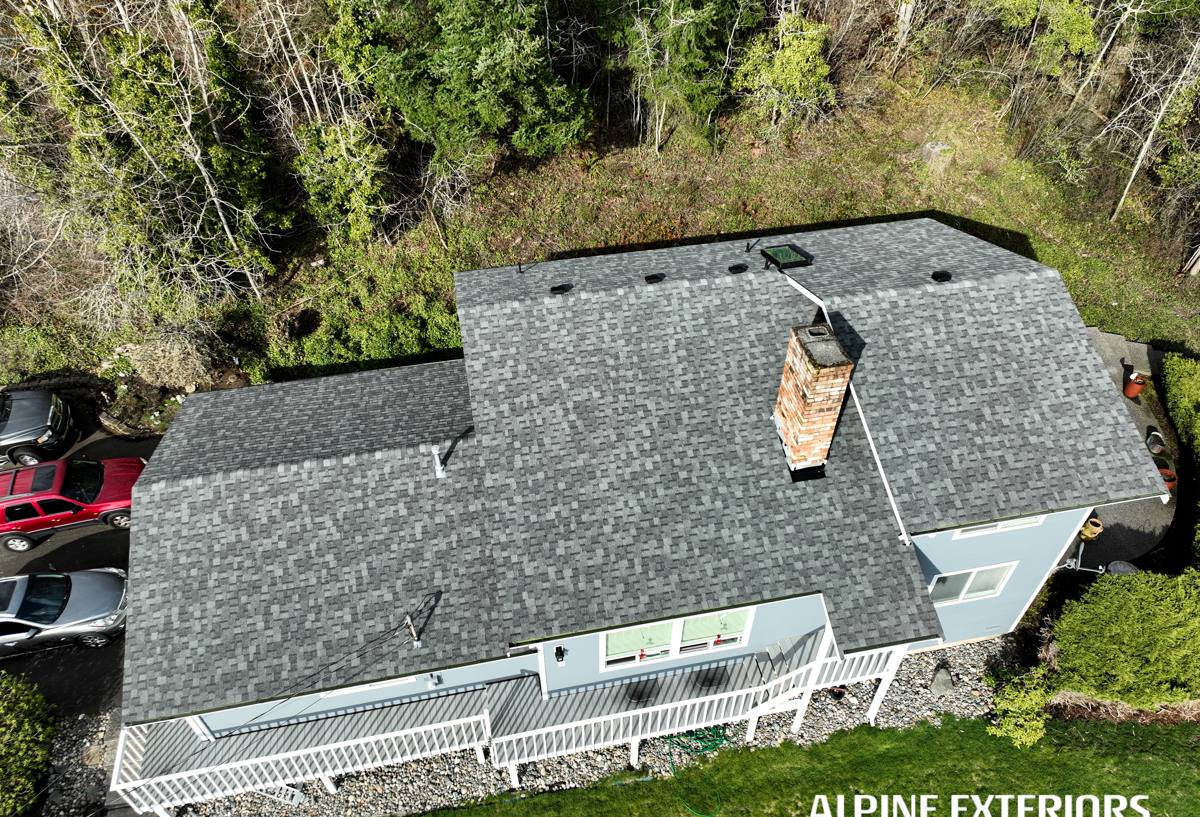
What Whatcom County Weather Does to a Roof Over Time
It helps to understand the mechanics before you look at your own roof. Three things are working against you year-round in the Wiser Lake area:
Salt Air
Metal fasteners, flashing, and exposed nail heads corrode faster this close to the water. Corrosion weakens the seal at every penetration point — vents, chimneys, skylights — long before the surrounding shingles show wear. A storm doesn't have to be severe to exploit an already-weakened fastener.
Driving Rain
Wind-driven rain doesn't just fall straight down — it gets pushed sideways and upward under shingle edges and flashing laps that were never designed to shed water from that angle. This is how a roof that looks fine from the ground develops a leak at a valley or a wall transition during a strong system.
A Long Moss Season
Whatcom County's wet stretch runs long, and the tree cover common around Wiser Lake keeps roofs shaded and slow to dry. Moss and moisture-loving growth get a head start on north-facing slopes and anywhere debris collects, lifting shingle edges and holding water against the roof deck for weeks at a time.
Signs Your Wiser Lake Roof Has Storm Damage
After any significant wind or rain event, it's worth doing a quick check — from the ground and, if it's safe, in the attic. Look for:
- Shingles that look curled, cupped, or lifted at the edges compared to the rest of the roof
- Granules collecting in gutters or at downspout outlets after a storm
- Bent, creased, or missing flashing around chimneys, skylights, and vent pipes
- Any daylight visible through the roof deck when viewed from inside the attic
- New water stains, dark spots, or soft drywall on ceilings, especially near exterior walls
- Moss or dark streaking concentrated on shaded or north-facing slopes
- Debris — branches, needles, moss clumps — built up in valleys where water is meant to flow freely
Any one of these on its own might not mean much. Two or three together, especially after a wind event, is worth a professional look before the next rain.
What a Correct Storm Damage Repair Actually Involves
A repair that actually holds isn't just replacing the shingles someone can see from the driveway. Storm damage travels — wind gets under one section and loosens the seal on shingles well beyond the visibly torn ones, and water that got under a lifted edge doesn't always dry out on its own.
Full Inspection, Not Just a Look From the Ground
We get on the roof to check the deck underneath any damaged area, not just the surface shingles. If water has been sitting against plywood or OSB decking, that wood needs to be assessed and, if soft or delaminating, replaced — patching shingles over compromised decking just hides the problem until it fails again.
Matching Repairs to the Existing Roof System
Storm repairs need to tie into the surrounding shingles correctly — proper overlap, nailing pattern, and sealant lines — so the repaired section sheds water the same way the rest of the roof does. A patch that's just laid on top without integrating into the courses around it is a future leak point.
Flashing Comes First
Given how much of the damage we see traces back to flashing — around chimneys, skylights, walls, and valleys — any proper storm repair rechecks and, where needed, replaces flashing before new shingles go down. Fixing shingles while leaving compromised flashing underneath is a half-repair.
Moss and Debris Removal as Part of the Job
If moss or trapped debris contributed to the damage, we clear it as part of the repair rather than leaving it to keep working on the roof after we've left.
Our Process, Start to Finish
We keep this straightforward because homeowners dealing with storm damage usually want it handled, not managed.
1. Inspection and Honest Assessment
We walk the roof, document what we find, and tell you plainly whether you're looking at a targeted repair or something bigger. We don't pad a repair into a full replacement, and we don't talk you out of a replacement if the damage genuinely calls for one.
2. Documentation for Insurance
If you're filing a claim, we photograph and document the damage in a way that holds up with adjusters — dated photos, clear description of cause, and a written scope of work. We can walk your insurance adjuster through what we found if that's useful.
3. The Repair Itself
Deck repair where needed, flashing correction, and shingle replacement matched as closely as possible to your existing roof, tied in properly rather than surface-patched.
4. Cleanup and Final Check
We clear debris, check gutters and downspouts for anything that came loose during the storm or the repair, and do a final walk to confirm the repair sheds water the way it should.
Repair vs. Replacement: What Actually Drives the Decision
Not every storm-damaged roof needs to come off. Here's what typically separates a repair from a full replacement:
| Factor | Points Toward Repair | Points Toward Replacement |
|---|---|---|
| Roof age | Under roughly 12-15 years | Near or past its expected service life |
| Extent of damage | Isolated to one or two areas | Spread across multiple slopes |
| Deck condition | Solid, dry decking under the damaged area | Soft, delaminated, or water-stained decking in several spots |
| Shingle availability | Matching shingles still obtainable | Discontinued style, visible mismatch inevitable |
| Underlying flashing | Intact aside from storm impact | Corroded or failing independent of the storm |
| History of repairs | First significant issue | Third or fourth repair in recent years |
We'll tell you honestly which column your roof falls into. A patch job on a roof that's genuinely at the end of its life just delays a bigger expense and risks interior damage in the meantime.
Managing Moss for the Long Haul
Because the moss season runs long around Wiser Lake's tree-shaded, lake-humid setting, a one-time cleanup after storm repair only buys so much time. Homeowners who stay ahead of it generally do a couple of things: keep gutters and valleys clear going into the wet months, and have the roof checked before moss has a chance to establish itself on shaded slopes each year. Zinc or copper strips near the ridge can help slow regrowth on some roofs, though they're not a substitute for periodic clearing. We're happy to point out where moss tends to establish on your specific roof during any inspection — it's usually the same spots every year.
Why It Matters That We Already Work Out Here
A roofing crew that's worked Wiser Lake and the surrounding Lynden area knows which slopes hold moisture longest, which flashing details tend to fail first in this specific microclimate, and how the salt-and-rain combination ages materials differently than it does ten miles inland. That local pattern recognition shortens the inspection and sharpens the diagnosis — we're not guessing at what a lake-adjacent, tree-covered roof in Whatcom County typically needs, we're confirming it against what we've already seen on roofs like yours nearby.
It also matters for response time after a storm. When a system moves through and several homes in the area need eyes on their roof at once, being local means we can get to you without a multi-day wait while more water works its way into the structure.
If you've had a storm come through and want a second set of eyes on your roof, we're glad to take a look. The estimate is free, there's no pressure to sign anything on the spot, and you'll get a straight answer about whether you're looking at a repair or something more — use the form below to get started.