 Lynden Siding
 Building a Deck That Actually Holds Up Out Here
Sumas sits at the edge of Whatcom County, close enough to Lynden that we treat it as home ground, not a drive-to job. That matters more with decks than with almost any other exterior project, because a deck is the one structure on your house that's fully exposed on every side — top, bottom, and all four edges — to whatever the Nooksack Valley throws at it. Marine-influenced air off the Sound, long stretches of driving rain, and a moss season that can run eight or nine months out of the year all work on wood and fasteners in ways that a drier inland climate never would.
A deck built to a generic national spec will often look fine for the first year or two. The problems show up later — soft spots near the ledger board, green film that won't scrub off, hardware that's bleeding rust into the boards. This page is about what a deck actually needs to hold up in Sumas specifically, and how we build to that standard rather than to the minimum.
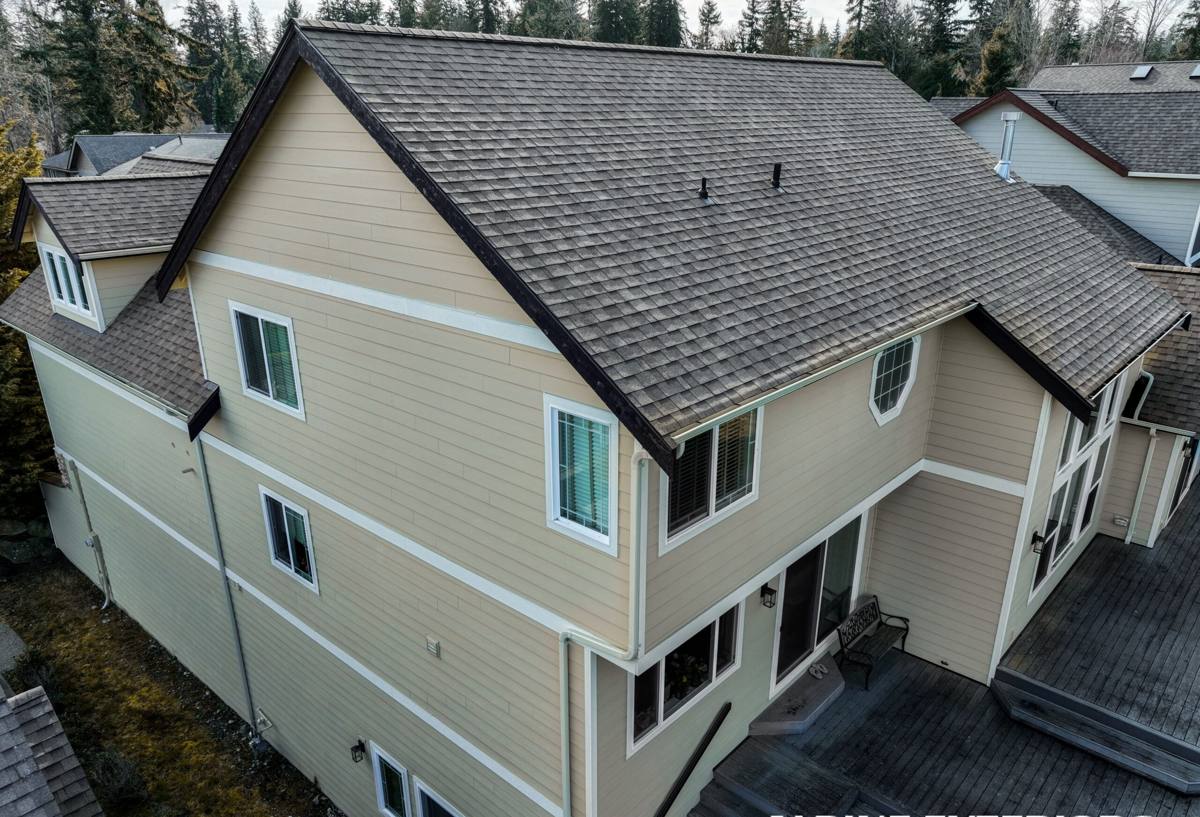
What Local Conditions Do to a Deck Over Time
Moisture That Doesn't Let Up
Whatcom County gets long stretches of steady, low-intensity rain rather than short heavy downpours. That's actually harder on a deck than a big storm, because the wood and framing stay damp for days at a time instead of getting wet and drying out. Anywhere water can collect or linger — under the decking boards, behind the ledger, around post bases — is where rot starts.
Moss and Algae Growth
The same damp, shaded conditions that make this a green part of the state also make it an easy place for moss and algae to colonize a deck surface. Moss holds moisture against the wood or composite surface, and on wood decking it accelerates decay right at the walking surface. It's also a slip hazard on stairs and low-traffic areas that don't get foot-scrubbed by regular use.
Salt-Tinged, Corrosive Air
Being close to Puget Sound and the Strait of Georgia, this region's air carries more salt and moisture than an inland climate does. Over years, that accelerates corrosion in fasteners, joist hangers, and any exposed metal hardware. A deck built with standard interior-grade screws or under-spec'd hangers will show rust streaks and weakened connections well before the structure itself is worn out.
Freeze-Thaw Cycling
Winters here aren't brutally cold, but we do get repeated freeze-thaw cycles — several per season, sometimes several per week. Water that's worked its way into a crack, a fastener hole, or an unsealed cut end expands when it freezes and widens that opening a little more each time. It's a slow process, but it's constant, and it's one of the main reasons small maintenance gaps turn into structural ones.
What a Correctly Built Deck Requires Here
None of the climate issues above are exotic — they're just persistent. A deck that's designed around them from the start avoids most of the problems that show up on decks built to a bare-minimum spec.
- Ledger flashing that actually sheds water away from the house band joist, not just a bead of caulk behind the board
- Stainless steel or heavy hot-dip galvanized fasteners and hangers, rated for the corrosive, damp air this region sees year-round
- Proper airflow underneath the deck so the framing can dry out between rain events instead of staying wet
- Footings set below frost depth and inspected before backfill, so seasonal freeze-thaw doesn't cause heaving over time
- Board gapping sized correctly for the material — too tight and water and debris pack the gaps and hold moss; too wide and it's a maintenance and comfort issue
- Sealed or capped cut ends wherever a board is trimmed on site, since a factory-sealed edge does nothing once you've cut through it
Choosing a Decking Material for This Climate
Every decking material sold today can be made to work in Whatcom County — the question is how much upkeep you're signing up for and how the material behaves once it's been wet for the fourth straight day. We'll walk through the honest trade-offs rather than push one product line.
| Material | Moisture & Moss Behavior | Maintenance Load | Typical Lifespan Range |
|---|---|---|---|
| Pressure-treated wood | Absorbs moisture readily; needs regular sealing to resist moss and checking | High — annual cleaning and periodic re-sealing | Shorter without upkeep, longer with it |
| Cedar | Naturally more rot-resistant than pine/fir, but still absorbs water and grays without maintenance | Moderate to high — sealing recommended | Moderate, upkeep-dependent |
| Capped composite | Shrugs off moisture and resists moss much better than wood; surface doesn't need sealing | Low — occasional washing | Long, backed by manufacturer warranty |
| PVC decking | Fully synthetic, essentially immune to rot and largely moss-resistant with routine cleaning | Low | Long, backed by manufacturer warranty |
Composite and PVC decking cost more up front than wood, but in a climate that stays damp this long, the maintenance savings and moisture resistance usually make the difference back over the life of the deck. That said, plenty of homeowners in Sumas still want the look and feel of real wood, and we'll build that just as carefully — it just comes with a maintenance conversation up front, not a surprise five years in.
Structural Details We Don't Cut Corners On
A deck's finish surface gets all the attention, but the framing underneath is what determines whether it's still solid in fifteen years. A few areas we treat as non-negotiable regardless of budget:
Ledger Attachment
The ledger board — where the deck ties into your house — is the single most common failure point on older decks nationwide, and it's worse here because of the sustained moisture. We flash it properly, use lag bolts or through-bolts rated for the load, and never rely on nails alone at this connection.
Post Bases and Footings
Posts should sit on hardware that keeps the wood end off standing water, not buried in concrete or resting directly on a footing where water pools. Footings themselves need to be sized and set to local frost depth requirements, not guessed at.
Joist Hangers and Fasteners
This is where we spend more on hardware than a lot of builders would bother with. Given the salt-tinged, damp air out here, standard fasteners corrode faster than they should, and a corroded hanger is a hidden structural weak point you can't see from the top of the deck.
Our Process for a Sumas Deck Project
- On-site consultation — we look at your yard's drainage, sun/shade exposure, and how the deck ties into the house before talking materials
- Design and material selection — sized to your space and budget, with an honest rundown of maintenance trade-offs for each material option
- Permitting — we handle the paperwork with the applicable local building department so the project is inspected and code-compliant
- Framing and structural work — footings, posts, ledger, joists, all built to the standards above before a single deck board goes down
- Decking, railing, and finish work — installed with correct fastening and gapping for the material chosen
- Final walkthrough — we go over care and maintenance specific to your material so you're not guessing later
Permits and Local Requirements
Most raised decks require a building permit, and the requirements can vary depending on whether your property falls under city or county jurisdiction near the Sumas/Lynden line. Rather than guess, we confirm what applies to your specific lot and handle the permitting and inspection process as part of the job, so you're not left tracking down paperwork or wondering if the work will pass inspection.
Keeping a Deck Ahead of Moss and Moisture
However well a deck is built, this climate means ongoing upkeep is part of owning one. The good news is that most of it is simple and infrequent if you stay ahead of it rather than catching up after the fact.
- Sweep off leaves and debris regularly, especially from board gaps and stair treads where moss gets a foothold first
- Wash the surface at least once or twice a year to knock back moss and algae before it establishes
- Check and clear under-deck ventilation gaps so airflow isn't blocked by stored items or overgrown landscaping
- Inspect ledger flashing and railing connections annually for any sign of water intrusion or loosening hardware
- Re-seal wood decking on the manufacturer's recommended schedule — don't wait until it's visibly gray and dry
- Address any soft or spongy boards immediately rather than waiting for a full-season fix
Why It Matters That We Already Work in Sumas
A crew that's already building and repairing decks around Lynden and Sumas isn't guessing at how this climate behaves — we've seen which ledger connections fail first, which corners of a yard hold water longest, and which materials actually hold up through a full Whatcom County winter instead of just looking good in the showroom. That local track record shapes every decision we make on your project, from footing depth to fastener choice, before the first board is ever cut.
If you're planning a new deck or replacing one that's showing its age, we're happy to come take a look and talk through what makes sense for your property. Reach out using the form below for a free, no-pressure estimate.