 Lynden Siding
 Building Decks in Sumas: What the Local Climate Demands
Sumas sits at the north edge of Whatcom County, close enough to the strait and the Sound that the same marine-influenced weather that soaks the rest of the county reaches here too — salt-tinged air on the wind, long stretches of driving rain from fall through spring, and a moss season that can run eight months out of the year on anything shaded or north-facing. A deck built without that reality in mind doesn't usually fail because the wood was bad or the crew was careless on install day — it fails months or years later, quietly, in the framing nobody can see. We've built and repaired decks across this stretch of the county long enough to know which shortcuts show up first, and where.
The practical effect on a deck: sustained moisture exposure at ledger boards, joist hangers, and post bases; moss and algae growth on horizontal surfaces that don't get much sun; and freeze-thaw cycling on fasteners and footings during the occasional hard cold snap that rolls down out of the Fraser Valley. None of this is exotic — it's just consistent, and a deck built for a dry-summer showroom photo doesn't hold up against consistent moisture over a Whatcom County winter.
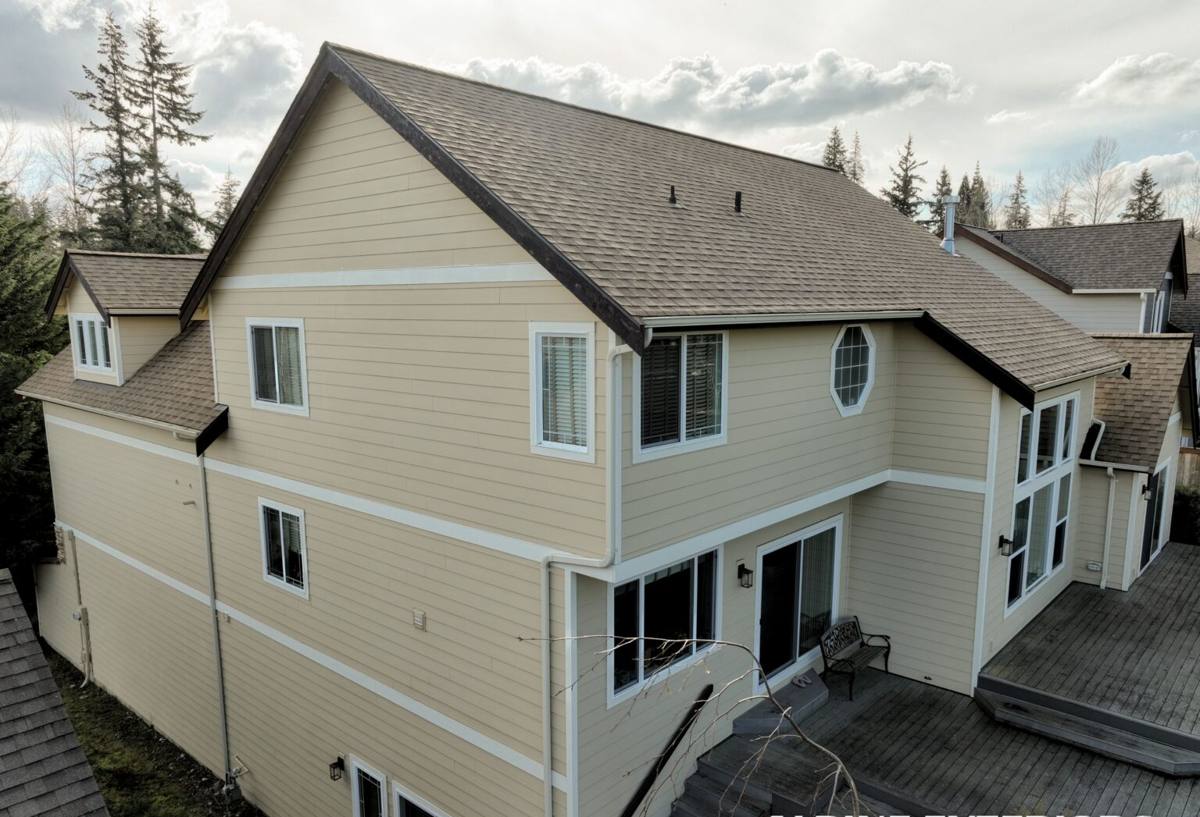
What a Correctly Built Deck Involves
Footings and Frost Depth
Every deck starts below grade, and this is where a lot of corner-cutting happens because nobody sees it once the boards go down. Footings need to be sized and set to the depth required by local code, on undisturbed soil, with post bases that hold the post itself off the concrete so it isn't sitting in standing water after a wet week. Ground around Sumas can hold water longer than people expect, especially on lots with heavier clay content, so we check drainage at each footing location before we pour, not after.
Ledger Board Attachment
If there's one detail that determines whether a deck lasts fifteen years or thirty, it's the ledger board — the piece that bolts the deck to the house. This is the single most common point of structural failure we find when inspecting or repairing decks, almost always because water got behind the ledger and rotted the rim joist or sheathing behind it without anyone noticing from outside. A correct ledger installation includes flashing that sheds water away from the house rather than into it, along with structural lag bolts or through-bolts sized to the actual load — never just deck screws.
Decking Material Options
Pressure-treated lumber, cedar, composite, and capped PVC boards all behave differently once they're taking on rain for eight or nine months a year. None of them is the wrong choice outright — the right one depends on your budget, how much upkeep you want to take on, and how much sun that particular deck actually gets.
Comparing Decking Materials for a Whatcom County Deck
This is the comparison we walk homeowners through on-site, because the right answer changes depending on sun exposure, budget, and how much maintenance you're willing to do:
| Material | Moisture & Moss Behavior | Maintenance | Typical Lifespan |
|---|---|---|---|
| Pressure-treated lumber | Absorbs and releases moisture; shaded boards that don't fully dry between rains are prone to moss and mildew | Annual cleaning, periodic staining or sealing | 10–15 years before major boards need replacing |
| Cedar | Naturally rot-resistant but still surface-absorbent; greys and can host moss without regular upkeep | Regular cleaning and re-sealing to hold its look and shed water | 15–20 years with consistent maintenance |
| Composite decking | Doesn't absorb moisture the way wood does, but surface texture can trap grime that feeds moss and algae if never washed | Occasional washing; no staining or sealing | 20–25+ years, backed by manufacturer warranty |
| Capped PVC / polymer | Fully moisture-resistant surface; best resistance to moss staining of the group | Lowest maintenance — soap and water as needed | 25+ years, typically the longest manufacturer warranty |
We install all of these. Our job is to tell you honestly which one fits the deck you're actually building — a shaded, north-facing deck under fir trees is a different conversation than a sun-exposed deck off a south-facing kitchen.
Fasteners, Flashing, and the Hidden Details That Prevent Rot
Most of what separates a deck that holds up from one that doesn't isn't visible once the project is finished. Stainless or coated hot-dip galvanized fasteners rated for treated-lumber and ground contact matter, because standard hardware corrodes and weakens gradually in this climate — you don't find out until a board lifts or a railing wiggles. Flashing tape at the ledger, joist tape on top of framing before decking goes down, and proper spacing between boards so water actually drains instead of pooling are all small things that cost little at build time and save a full rebuild later.
Post bases, joist hangers, and railing hardware should also be rated for the exposure — in a coastal-influenced county like this one, galvanized or stainless hardware is cheap insurance against the moisture load this area gets every year, compared to standard black-coated fasteners that were never meant for it.
Our Deck-Building Process
The sequence doesn't change much whether we're building a first deck or replacing one that failed early:
- On-site visit to look at sun exposure, drainage, soil, and how the deck will connect to the house before any design is finalized.
- Straightforward proposal covering material options, structural approach, and a realistic timeline — no pressure to upsize the project beyond what you asked for.
- Permit pulled and plans submitted where required, before any digging starts.
- Footings, framing, and ledger attachment built to hold up under this area's rain and moss load, not just to pass a quick glance.
- Decking, railing, and finish work installed with attention to drainage gaps and fastener placement.
- Final walkthrough where we point out what maintenance the specific materials you chose will actually need going forward.
Permits and Code Considerations
Most raised decks require a building permit, and inspections typically check footing depth, ledger attachment, and railing height and spacing before the project is signed off. Skipping this step is a common shortcut we see on decks we're later asked to fix or bring up to code, and it usually costs more to correct after the fact than it would have to do right the first time. We handle the permit process as part of the job rather than leaving it for the homeowner to sort out, and we build to pass inspection the first time, not to squeak by.
Why a Crew That Already Works Sumas Matters
A deck built to a generic spec sheet written for a warmer, drier region doesn't hold up the same way here. Working regularly in and around Sumas and greater Lynden means we already know which details get skipped by builders unfamiliar with this area's rain totals and moss pressure, what local inspectors are actually checking for, and how a given lot's drainage tends to behave through a wet Whatcom County winter. It also means we're not guessing at how a shaded, tree-lined lot will behave differently from an open, sun-exposed one just a few properties away. That's not a marketing point — it's the difference between a deck we build once and one we get called back to rebuild in eight years.
Deck Maintenance Checklist for the Marine Climate
Whatever material you choose, a few habits go a long way toward getting the full lifespan out of it in this climate:
- Clear leaves and debris from between boards and off the surface before wet weather sets in each fall
- Check the gaps between deck boards so water can actually drain instead of sitting
- Look at the ledger board area at the house connection once a year for staining, soft wood, or gaps in the flashing
- Wash off moss and algae buildup on shaded sections before it stains the surface or gets slick underfoot
- Re-seal or re-stain wood decking on a regular schedule — don't wait until it looks obviously worn
- Check railings and stair connections for looseness at the start of each season
What Deck Projects Typically Cost
Cost depends heavily on size, material, height off the ground, and railing style, and we'd rather give you an honest range on-site than a number that doesn't hold up once we see the actual conditions. In general terms, pressure-treated lumber decks run lowest up front, cedar sits in the middle, and composite or capped PVC decking costs more initially but requires far less ongoing spend on staining and sealing over the life of the deck. The right way to think about it is total cost over 15 to 20 years, not just the number on the first bid.
If you're planning a new deck in Sumas or need an honest look at one that's showing its age, we're happy to come out, walk the site, and put together a straightforward, no-pressure estimate — just fill out the form below.