 Lynden Siding
 Deck Repair Built for Sumas and North Whatcom County Weather
Sumas sits right up against the Canadian border in the northern reach of Whatcom County, and decks out here take a beating that homeowners further inland don't always deal with in the same way. Between the moisture rolling off the foothills, long stretches of overcast damp weather, and a moss season that can run from October clear into April, a deck in Sumas or the surrounding Lynden countryside is under near-constant pressure to trap water somewhere it shouldn't. We've repaired enough of them to know the failure patterns are consistent, and catching them early is almost always cheaper than waiting.
This page covers deck repair specifically for the Sumas area and the rural properties around it, including what tends to fail first, what a proper repair actually involves, and how we approach the work when we're called out.
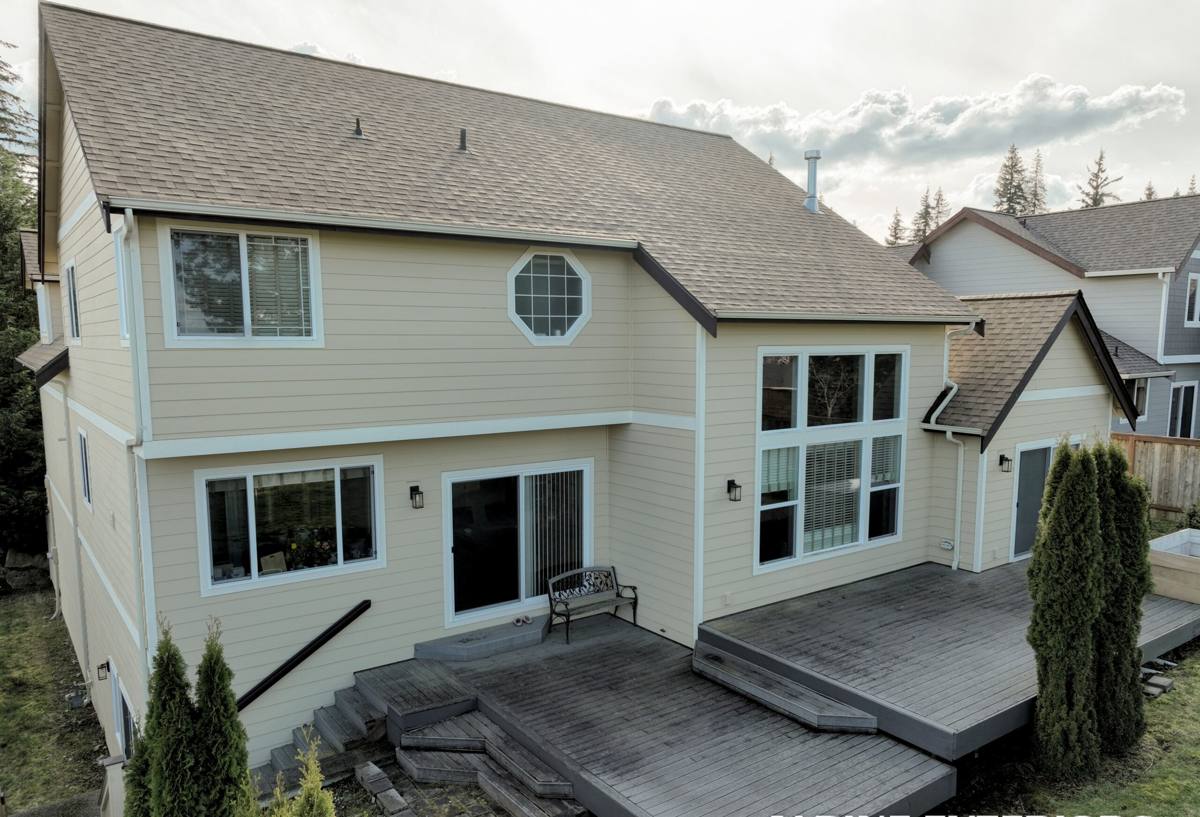
Why Decks in This Area Fail the Way They Do
Most deck damage we find isn't from one big event. It's slow, cumulative moisture exposure that finally shows up as soft wood, a loose railing, or a board that flexes underfoot. A few things are specific to this part of Whatcom County:
Driving rain and wind exposure
Open farmland and fewer windbreaks mean rain out here often comes in sideways rather than straight down. That pushes water into joints, under flashing, and behind ledger boards in ways a more sheltered urban deck rarely experiences. Water intrusion at the ledger — where the deck attaches to the house — is one of the most serious problems we find, because it's structural and it's hidden until you go looking.
Extended moss and algae season
Cool, damp, and shaded conditions for much of the year give moss and algae a long runway to establish on horizontal deck surfaces. Beyond looking bad, moss holds moisture against the wood or composite surface far longer than bare wood would dry on its own, and it makes the deck genuinely slick underfoot — a real slip hazard on stairs and ramps.
Freeze-thaw cycling
Whatcom County doesn't get deep prolonged freezes most winters, but Sumas does see enough freeze-thaw swings to work water deeper into any crack or checked board it's already found. A hairline split that seemed cosmetic in August can widen noticeably by February.
What We Look For on a Sumas Deck Inspection
When we walk a deck out here, we're checking specific things in a specific order, because the visible problem is rarely the whole story:
- Ledger board attachment and flashing — the single most common source of hidden rot
- Post bases and any wood-to-concrete contact points, where standing water collects
- Joist ends and beam pockets, probing for soft spots with an awl, not just a visual check
- Railing post connections — these take lateral stress and loosen over time in wet ground conditions
- Stair stringers, especially bottom cuts that sit closest to grade
- Fastener condition — old nails or the wrong-grade screws corroding and staining the wood
- Surface board spacing and drainage — tight or blocked gaps that trap moss and standing water
Most of these are invisible from the top of the deck. A repair quote based only on what's visible from above is a quote that's guessing.
Common Repairs We Handle in the Sumas Area
Ledger and flashing repair
If the ledger board or its flashing has failed, water has likely been getting into the rim joist and possibly the house framing behind it. This is a repair we treat as structural, not cosmetic — it involves pulling back siding or trim as needed, replacing compromised wood, and installing flashing that actually sheds water away from the house rather than behind it.
Rotted board and joist replacement
Soft or spongy decking boards get replaced, along with any joists or framing members that tested soft with an awl. We don't patch over punky wood or sister a new board next to a compromised one without addressing the compromised one first — that's a repair that fails again within a season or two.
Railing and post stabilization
Loose railings are a safety issue, not just an annoyance. Depending on how the original railing was fastened, this can mean re-anchoring posts, adding proper structural blocking, or in some cases replacing posts that have rotted at the base where they meet the deck surface.
Moss and surface restoration
For decks where the structure is sound but the surface is heavily mossed or graying, we handle cleaning and surface treatment as part of a repair visit. This isn't just power-washing — improper pressure washing can actually damage wood fibers and make moss come back faster. We use methods appropriate to the material, whether that's wood or composite decking.
Fastener and hardware upgrades
Older decks around Lynden and Sumas were often built with standard nails or non-rated screws that corrode quickly in this climate. Where we're already opening up a section for repair, we replace fasteners with corrosion-resistant, code-rated hardware so the fix lasts rather than becoming a repeat visit in a few years.
Repair vs. Replacement: How We Help You Decide
Not every deck problem calls for a full rebuild, and not every deck is worth repairing piecemeal either. The honest answer usually comes down to how much of the structural framing is affected versus the surface decking.
| Factor | Leans Toward Repair | Leans Toward Replacement |
|---|---|---|
| Ledger and framing condition | Solid, isolated soft spots only | Widespread rot at ledger or multiple joists |
| Age of structure | Under 15-20 years, built to a reasonable standard | Older deck near end of expected service life |
| Extent of damage | Localized to specific boards or one section | Damage spread across most of the deck footprint |
| Code compliance | Railings and stairs already meet current code | Railing height, spacing, or footings don't meet code |
| Budget priority | Extend usable life at lower cost now | One-time investment, avoid repeat repair calls |
We'll give you a straight answer on which side of that table your deck falls on. If a repair genuinely makes sense, we won't push a replacement just to sell a bigger job.
Our Process for Deck Repair Calls in Sumas
Because Sumas is a bit further out from Lynden proper, we plan the visit to actually get it done in one trip where possible:
- Phone or online estimate request — tell us what you're seeing (soft spots, wobble, loose railing, moss) so we can bring the right materials
- On-site inspection — we probe suspect areas, check the ledger and post bases, and identify the actual extent of damage, not just the symptom
- Written scope and estimate — a clear breakdown of what needs replacing, what's cosmetic, and honest ranges rather than a vague lump sum
- Repair work — matched materials where possible, correct fasteners and flashing, and cleanup of any moss-affected surfaces addressed in the same visit
- Final walkthrough — we point out what we did and what to keep an eye on going forward, especially anything moisture-related that's worth monitoring
Maintenance That Actually Extends Deck Life Here
A few habits make a real difference in a climate like this one:
- Keep gutters and downspouts clear so runoff isn't dumping directly onto or near the deck structure
- Sweep leaves and debris off the surface regularly through fall — trapped organic matter feeds moss and holds moisture
- Address small soft spots or loose boards as soon as you notice them rather than waiting for the next dry season
- Check railing posts for movement once or twice a year, particularly after a hard winter
- Have flashing at the house connection inspected periodically — it's the one spot you truly can't monitor yourself without pulling boards
Why Hire a Crew That Already Works This Area
Deck repair isn't the same job in every climate. A crew used to drier conditions can miss the specific failure points that show up out here — hidden ledger rot, moss-driven surface degradation, fastener corrosion from sustained dampness. Working regularly in Lynden and out toward Sumas means we're not guessing at how Whatcom County weather behaves on a deck over years; we've already seen what a decade of this climate does to different materials and building methods, and we bring that into every repair estimate.
We also know that getting a contractor out to the Sumas area sometimes takes longer scheduling than a job closer to town. We plan visits to be efficient and complete, so you're not left waiting on a return trip for something that could've been finished the first time.
If you've got a soft spot, a wobbly railing, or a deck that's just looking rough after another wet Whatcom County winter, we're happy to take a look. Fill out the form below for a free, no-pressure estimate on your Sumas or Lynden deck repair.