 Lynden Siding
 Metal Roofing in Sumas: Built for This Corner of Whatcom County
Sumas sits out at the eastern edge of Whatcom County, in the flat, low-lying farmland of the Sumas Prairie near the Canadian border, just a short drive from our base in Lynden. It's a different setting than the towns closer to Bellingham Bay, but it sits under the same regional weather system that shapes exterior work across this part of the Pacific Northwest — the same marine-influenced air, salt-tinged where it comes off the water, that pushes inland and combines with driving rain, a long moss season, and winter outflow wind events that hit this side of the county harder than more sheltered spots. We work in Sumas regularly, and metal roofing has become one of the systems we recommend most often here, specifically because of how it holds up against that combination.
This page is about one thing: metal roofing for Sumas homes. Not a generic rundown of metal roofing in general, but what it takes to get one right on a property in this specific location, under this specific weather.
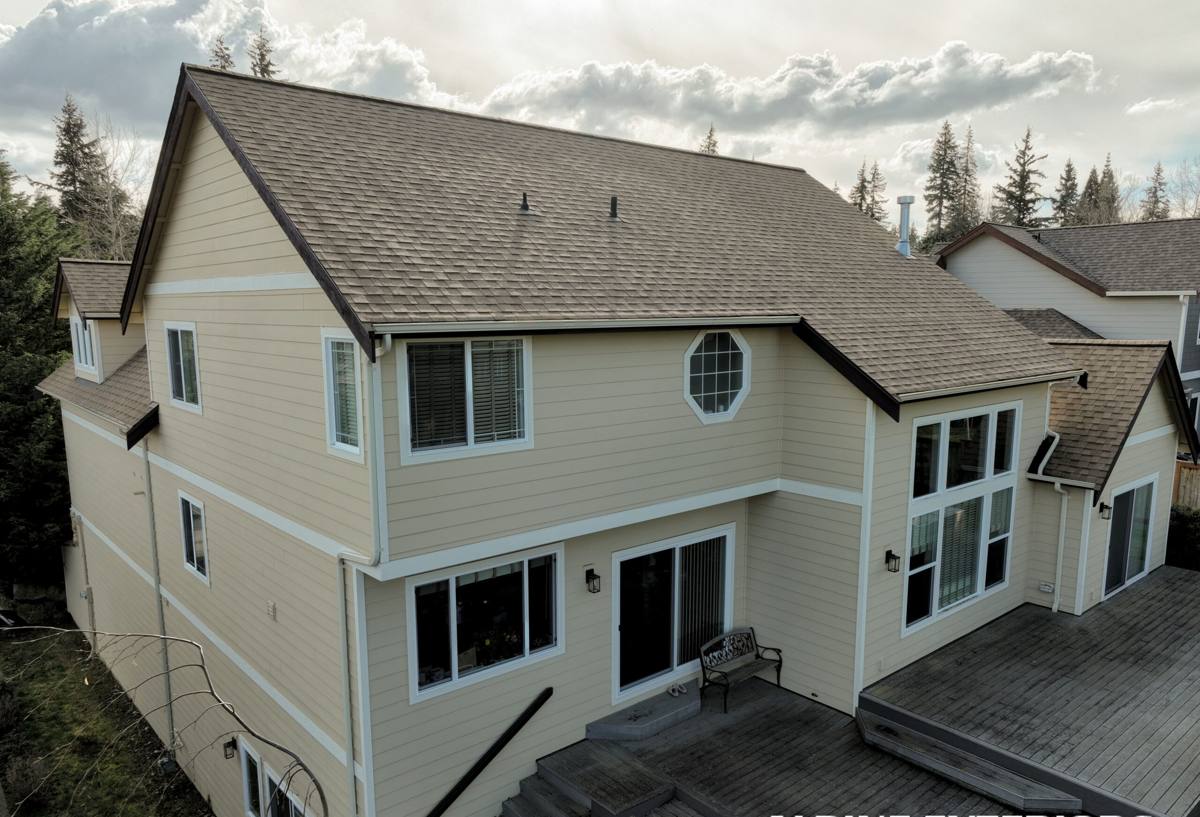
What Sumas' Climate Does to a Roof
Driving, Wind-Driven Rain
Storms moving through the Sumas Prairie don't drop rain straight down as often as homeowners might expect. Wind pushes it sideways into roof valleys, ridge caps, and anywhere two roof planes meet, and on a flat, low-lying property that moisture doesn't shed and drain as fast as it would on a well-exposed hillside lot. A roofing system that isn't detailed for wind-driven rain — correct lap direction, sealed seams, properly lapped underlayment — tends to show leaks first at those transition points rather than in the middle of an open roof plane.
Outflow Wind Events
Because of its position near the head of the valley by the border, Sumas sees more cold outflow wind events during winter than towns further west toward the water. Those events bring sudden temperature drops and real wind load, which puts more stress on roofing fasteners and panel attachment than an average calm inland site would ever face. This is one of the clearer reasons metal roofing makes sense here: correctly installed metal panels handle sustained wind uplift better than most other roofing materials, provided the fastening spec actually accounts for it.
A Long Moss Season
Persistent regional dampness and mild temperatures add up to a moss and algae season that runs across much of the year on shaded and north-facing roof planes in this part of the county. Moss holds moisture directly against a roofing surface, and on porous materials that moisture works its way in over time. Metal doesn't give moss the same foothold that shingle granules or wood shakes do, which is a real advantage on Sumas properties with heavy tree cover.
Freeze-Thaw Cycling
Sumas sees more hard frosts and occasional freezing conditions than milder coastal parts of Whatcom County. Water that gets trapped under flashing or in a poorly sealed seam and then freezes expands, which accelerates cracking in materials that aren't built to move with temperature swings. A metal roof, installed with room for thermal expansion and contraction, handles that cycling far better than a roofing material that simply sits rigid and cracks.
Standing Seam vs. Exposed-Fastener Metal Panels
Not all metal roofing is the same system, and the right choice for a Sumas home depends on the roof, the budget, and how much maintenance a homeowner wants to think about down the road.
Standing Seam
Standing seam panels use concealed clips and fasteners hidden under raised, interlocking seams, so there's no exposed screw head anywhere on the field of the roof. That matters directly in a climate with driving rain and freeze-thaw cycling, because there's no fastener penetration through the panel face to work loose or corrode over time. It's the system we lean toward on Sumas homes with more exposed roof planes or heavier weather exposure, and it carries a higher upfront cost that generally pays back in lower long-term maintenance.
Exposed-Fastener (Corrugated / Ribbed) Panels
Exposed-fastener panels are screwed directly through the panel face into the roof deck, using gasketed screws to seal each penetration. They cost less upfront and work well on outbuildings, shops, and homes where budget is the deciding factor. The tradeoff is that every one of those screw penetrations is a potential leak point over the life of the roof, and the rubber gaskets on exposed fasteners typically need inspection and occasional replacement well before a standing seam roof needs any attention at all.
| Factor | Standing Seam | Exposed-Fastener |
|---|---|---|
| Fastener exposure | Concealed, no face penetrations | Visible screws through the panel face |
| Upfront cost | Higher | Lower |
| Long-term maintenance | Minimal once installed correctly | Periodic gasket and fastener checks needed |
| Best fit in Sumas | Primary residences, full wind and rain exposure | Shops, outbuildings, budget-driven projects |
What a Correct Metal Roof Installation Involves
Metal roofing performs the way it's supposed to only when the details underneath it are handled correctly. On a Sumas property facing this level of wind and moisture exposure, none of the following are optional extras:
- Ice-and-water shield at eaves and valleys: A self-adhered waterproof membrane at the points most likely to see wind-driven rain and any freeze-thaw moisture buildup, not just standard felt.
- Full synthetic underlayment: A continuous, properly lapped underlayment across the whole deck as a backup layer beneath the metal, in case anything ever gets past the panels themselves.
- Correctly matched fasteners: Fasteners and flashing metal need to be compatible with the panel metal itself — mixing incompatible metals sets up galvanic corrosion that can eat through a panel from the inside over years.
- Room for thermal movement: Metal panels expand and contract with temperature swings, and clips or fastening patterns that don't allow for that movement lead to oil-canning, stress cracking, or seams working loose over time.
- Proper flashing at every penetration: Vents, chimneys, and wall transitions all need custom-formed flashing integrated into the panel system, not just caulked over as an afterthought.
- Adequate ventilation: Attic and roof deck ventilation keeps condensation from forming on the underside of metal panels, which is a real risk if warm interior air meets a cold metal surface with nowhere to vent.
None of this is exotic. It's the baseline spec for a metal roof done right, followed consistently rather than shortcut on the details a homeowner can't see once the job is finished.
Metal Roofing Cost Factors in Sumas
| Factor | What It Affects | Why It Matters in Sumas |
|---|---|---|
| Panel system | Standing seam vs. exposed-fastener pricing | Wind and rain exposure often justifies the higher-cost concealed-fastener system |
| Roof complexity | Number of valleys, penetrations, and roof planes | More transitions mean more flashing detail where wind-driven rain tends to find gaps |
| Tear-off vs. overlay | Labor scope and deck condition | Tear-off reveals hidden moisture or rot common under older roofing in this damp climate |
| Deck condition | Repair costs before panels go on | Long-term trapped moisture from moss or old flashing can rot roof sheathing |
| Wind and fastening spec | Clip spacing, fastener type and count | Outflow wind events near the border can call for tighter fastening than a sheltered site |
These are general cost drivers, not a quote. Every roof in Sumas has a different pitch, layout, and deck condition, so we walk the roof in person before putting a real number on the work.
Our Installation Process, Start to Finish
- On-site inspection: We walk the roof, check the deck and existing flashing, and talk through which panel system fits the home and budget.
- Written estimate: A clear scope and price before any work starts, with no pressure to sign on the spot.
- Tear-off and deck prep: Old roofing comes off, and we repair any soft or water-damaged decking we find before anything new goes down.
- Underlayment and flashing: Ice-and-water shield at eaves and valleys, full synthetic underlayment across the deck, and custom flashing formed for every penetration.
- Panel installation: Panels go on with fastening and clip spacing matched to this area's wind exposure, with room built in for thermal movement.
- Final walkthrough: We check seams, flashing, and fastener torque, clean up the site, and go over the finished roof with the homeowner.
Signs Your Current Roof Is Ready for a Metal Upgrade
- Missing, curling, or granule-shedding shingles, especially after a windy winter
- Moss or dark staining that comes back quickly after cleaning, particularly on shaded or north-facing slopes
- Rust staining or visibly corroded flashing and fasteners around vents and valleys
- Leaks that show up during wind-driven rain but not during calm, straight-down rain
- A roof approaching or past its expected service life that's due for replacement anyway
- Daylight or drafts visible in the attic around roof penetrations
Why a Crew That Already Works in Sumas Matters
A crew that works this part of Whatcom County regularly knows how outflow wind, moss, and freeze-thaw cycling actually behave on real Sumas roofs over a full year, not just how a panel system performs on a spec sheet. That experience shapes real decisions on install day: where extra flashing attention pays off, which roof planes stay wet or shaded longest, and which fastening pattern is worth the added time so a homeowner isn't dealing with a callback after the next winter windstorm. Sumas' exposure, sitting inland near the border in flat, low-lying terrain, is different from a sheltered in-town lot closer to Lynden, and a crew with hands-on local experience accounts for that instead of applying a generic install built for calmer conditions.
Get a Free, No-Pressure Estimate
If your Sumas home needs a new roof, is due for replacement, or you're weighing metal against another roofing material for this climate, we're glad to take a look and give you a straightforward, honest assessment. Reach out using the form below to schedule a free estimate — no pressure, no upsell script.