 Lynden Siding
 Siding Installation Built for Sumas, WA
Sumas sits at the far northern edge of Whatcom County, right against the Canadian border where the Nooksack valley opens into flat farmland. It's close enough to Lynden that we're out here regularly, and the homes in this stretch of the county face a specific combination of weather that shapes how siding should actually be installed: salt-tinged marine air working its way inland, driving rain that hits walls sideways more often than it falls straight down, and a moss season long enough that most homeowners here just think of it as part of the year rather than a seasonal event. This page is about one thing — new siding installation for a Sumas property — and what it takes to get that job right in this specific climate, not a generic overview of every exterior service we offer.
We install James Hardie fiber cement siding exclusively. For a border-valley property dealing with sustained moisture, salt exposure, and real temperature swings, it's the material and the installation approach we stand behind without hedging.
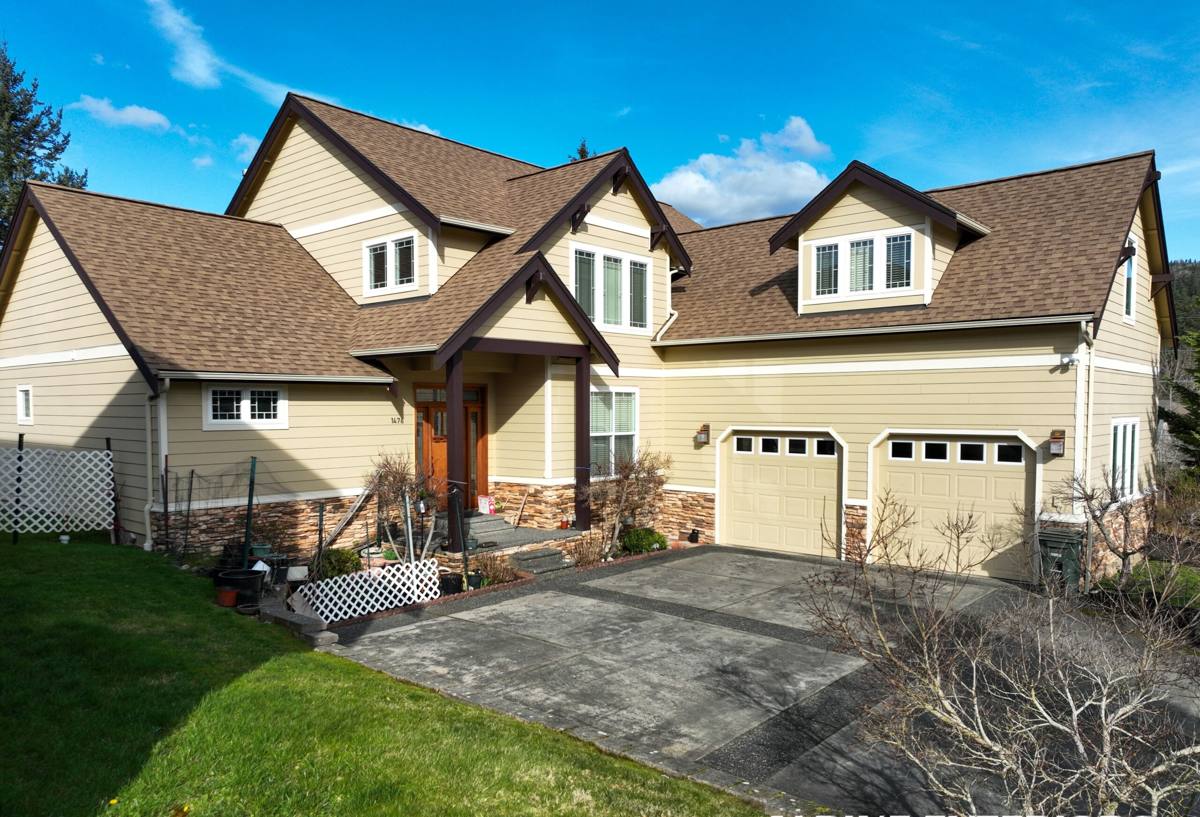
What the Sumas Climate Asks of a Siding Job
Salt Air Working Inland
Whatcom County sits close enough to the Sound that salt-laden air moves well inland from the immediate coastline, and Sumas gets a share of it even at distance. Salt speeds up corrosion on fasteners, flashing, and any exposed metal trim, and it can break down a weak factory finish faster than it would in a drier, inland climate. That's a detail that matters more at the installation stage than most homeowners realize — the wrong fastener or an unsealed cut edge is where salt-driven corrosion actually starts.
Driving Rain, Not Just Rain
Rain around here rarely falls straight down. It comes in sideways, pushed by wind off the valley, and that changes what a wall assembly needs from its siding, flashing, and water-resistive barrier. A siding job that only accounts for water falling from above — rather than being driven horizontally into seams, corners, and penetrations — is a job that's going to leak somewhere within a few years, not a few decades.
A Long Moss and Mildew Season
Mild temperatures, consistent dampness, and plenty of shaded wall area on most homes add up to a moss and mildew season that runs across much of the year in this part of the county. On siding, that shows up first as green staining or dark streaking on north-facing and shaded walls. It's not just cosmetic — sustained organic growth holds moisture directly against the wall surface, and that's exactly the condition that leads to hidden rot behind siding that looks fine from ten feet away.
Freeze-Thaw and Wind Exposure
Sumas sits far enough inland and close enough to the corridor that funnels cold air down from the Fraser Valley in British Columbia that it sees more frequent hard frosts and occasional wind-driven cold snaps than towns closer to open water. Water that's worked its way into a porous or poorly sealed siding material and then freezes expands, accelerating cracking and material failure in a way a purely wet-but-mild climate wouldn't produce on its own.
What a Correct Siding Installation Actually Involves
New siding is a system, not a single product nailed to a wall. Getting it right for a Sumas property means paying attention to every layer, not just the visible finish.
- Water-resistive barrier: A continuous, properly lapped barrier behind the siding is the first line of defense against wind-driven rain that gets past the outer surface.
- Flashing at every penetration: Windows, doors, hose bibs, vents, and any other wall penetration need flashing detailed to shed water outward, not just caulk relied on to do a flashing detail's job.
- Correct fastener pattern and type: Fastener spacing, embedment depth, and material all affect how siding performs under wind load and how well it resists salt-driven corrosion over time.
- Proper clearance at grade and roof lines: Siding installed too close to the ground, a roof, or a deck surface stays wet longer and is one of the most common causes of premature rot we see on this type of terrain.
- Factory-cut and field-cut edge sealing: Any cut edge on fiber cement siding needs to be sealed per manufacturer spec, since an unsealed cut edge is a direct path for moisture into the material itself.
- Caulking and joint treatment: Butt joints, corners, and trim intersections need the right sealant, applied correctly, to stay flexible and watertight through temperature swings.
Skipping or rushing any one of these doesn't usually show up on install day. It shows up two, five, or ten years later, as a callback the original crew is long gone from.
Why James Hardie for a Sumas Property
We used to work with a wider range of siding products before narrowing to one system, and that decision came from watching what actually held up under sustained Whatcom County moisture and salt exposure versus what quietly became a maintenance problem a few years in. For a Sumas home specifically, facing valley damp, salt air, and real freeze-thaw cycling, fiber cement makes a strong case for itself.
- Non-combustible core: Fiber cement doesn't feed a fire the way wood-based or wood-derived siding products can, which matters for household safety and can matter for insurance underwriting too.
- Factory-applied ColorPlus finish: Color is baked on under controlled factory conditions rather than brushed on in the field, so it resists fading, chalking, and moisture intrusion far longer than a site-applied paint job.
- Climate-engineered HZ product lines: Hardie builds different formulations for different climate zones, including versions engineered for regions with sustained moisture exposure — a real match for a border-valley property like this one.
- Dimensional stability: Fiber cement doesn't swell, cup, or warp the way engineered wood siding can after repeated wet-season moisture cycles, which matters more here given how long that wet season runs.
- Strong transferable warranty: Hardie backs its products with a solid warranty structure when installation follows spec, which gives a homeowner real protection instead of a marketing claim.
We don't install LP SmartSide, vinyl siding, Cemplank, Allura, primed spruce, or cedar. Each has a place in the broader market, and plenty of homeowners elsewhere are satisfied with them. We made a professional call that one system, installed correctly every time, is worth more to a homeowner than a cheaper option that quietly shifts maintenance risk back onto them a few years down the road — especially on a property that doesn't get a break from wind, salt, and moisture for long stretches of the year.
Our Installation Process for a Sumas Home
- On-site walkthrough: We look at the existing siding, wall assembly, trim, and any trouble spots — soft spots, staining, gaps around penetrations — before quoting anything.
- Tear-off and substrate inspection: Old siding comes off and we check the sheathing and framing underneath for rot or hidden moisture damage before anything new goes up.
- Repair before cover: Any compromised sheathing, framing, or flashing gets repaired first. Covering a damp or rotted substrate with new siding just hides the problem instead of solving it.
- Water-resistive barrier and flashing: A continuous barrier goes on first, followed by flashing at every window, door, and penetration, detailed to shed wind-driven rain outward.
- Hardie panel or plank installation: Siding goes up per manufacturer spec — correct fastener type and spacing, proper clearances at grade and roof lines, and sealed cut edges throughout.
- Trim, caulking, and finish detail: Corners, joints, and trim intersections are sealed with the right sealant so the whole system stays watertight through seasonal temperature swings.
- Final walkthrough: We go over the finished job with the homeowner and flag anything worth keeping an eye on going forward.
Repair, Partial Replacement, or Full Re-Side?
Not every Sumas home needs a full tear-off. The right scope depends on how far moisture damage has spread and how old the existing siding is.
| Situation | Likely Scope | What We Check |
|---|---|---|
| Isolated staining or moss on one or two walls | Cleaning plus possible spot repair | Whether moisture has gotten past the surface into the substrate underneath |
| Cracking, warping, or soft spots on aging siding | Partial replacement of affected sections | How far damage extends beyond the visibly affected area |
| Siding nearing or past its expected service life | Full re-side | Overall condition of sheathing and framing before committing to new siding |
| New construction or major remodel | Full installation from bare sheathing | Wall assembly design, water-resistive barrier plan, and window/door flashing details |
We won't push a full re-side on a home that only needs targeted repair, and we won't recommend a patch job on a wall assembly that's already compromised underneath. The scope gets decided after we've actually looked, not before.
Cost Factors for Siding Installation in Sumas
Every property is different, but a few things consistently move the price on a Sumas siding job more than they might elsewhere in the county:
- Tear-off vs. new construction: Removing and disposing of old siding, and repairing whatever it was hiding, adds labor that new construction doesn't require.
- Substrate condition: Rot or hidden moisture damage found once old siding comes off can add repair costs that aren't visible until tear-off happens.
- Wall complexity: Homes with more corners, dormers, or varied rooflines take more time to flash and trim correctly than a simple rectangular footprint.
- Site access: Rural and agricultural properties near Sumas can have longer driveways or different staging needs than an in-town Lynden lot.
- Product selection: Hardie's lines, panel profiles, and color options carry different material costs, though installation quality matters more to long-term performance than which specific profile is chosen.
We walk every property in person before giving a real number. A generic price-per-square-foot figure doesn't account for what's actually happening behind the existing siding.
Why a Crew That Already Works Sumas Matters
A crew based in Lynden and working this stretch of the county regularly understands how salt air, driving rain, and a long moss season behave on real homes here over a full year — not just how a product performs on a spec sheet. That experience shapes decisions on install day: which wall orientations stay damp the longest, where extra flashing attention actually pays off, and which fastening details are worth the added time so a homeowner isn't dealing with a callback after the next winter storm. Sumas sits far enough from Lynden's immediate surroundings, and close enough to the border corridor, that its exposure looks a little different from other parts of our service area — and a crew with hands-on experience out here treats that difference seriously instead of installing the same way on every job regardless of where it sits.
What to Expect When You Call Us
- An on-site walkthrough of the existing siding and wall assembly before any scope or price is discussed
- An honest read on whether you're looking at a repair, a partial replacement, or a full re-side
- A clear explanation of why we install James Hardie and how it fits your specific property
- A written estimate with no pressure to sign on the spot
If your Sumas home needs new siding, or you just want an honest second opinion on what's happening behind an aging wall, we're glad to take a look. Reach out using the form below to schedule a free, no-pressure estimate.