 Lynden Siding
 Windows in Blaine Face a Tougher Job Than Most
Blaine sits right on the water at the northern edge of Whatcom County, and that location shapes what a window installation needs to survive. Homes near Semiahmoo Bay and Drayton Harbor take on salt-laden air that finds its way into hardware, weep holes, and unprotected fasteners over time. Add in the wind-driven rain that comes off the Strait of Georgia through fall and winter, plus a moss season that stretches long into spring on the north-facing walls and trim, and you've got a set of conditions that punishes a sloppy window install a lot faster than it would somewhere inland.
A window that's the right product but installed with shortcuts will leak, fog, or stick within a few years in this environment. A correct installation — proper flashing, sealed penetrations, and materials matched to the exposure — is what actually keeps water and air out for the long haul. This page covers what that looks like for Blaine homes specifically, and how we handle it.
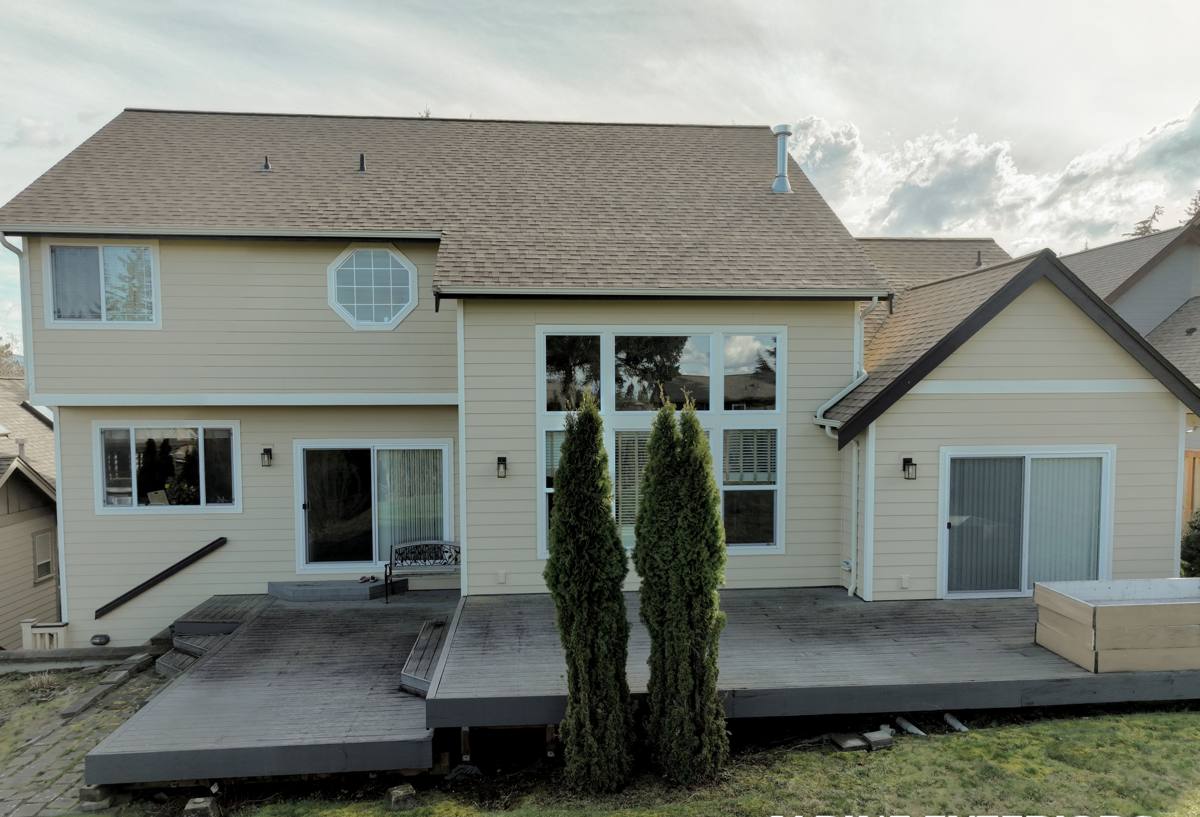
What Coastal Exposure Does to Windows Over Time
Salt Air and Hardware
Salt in the air accelerates corrosion on anything metal — hinges, locks, cranks, and especially lower-grade aluminum or unprotected steel fasteners. Windows closer to the water or facing prevailing wind off the bay see this first. Cheaper hardware finishes will pit and seize years before a quality window's frame gives out.
Driving Rain and Wind Pressure
Rain in this part of Whatcom County rarely falls straight down. Wind pushes it sideways and up under trim, sills, and poorly lapped flashing. A window opening that isn't flashed shingle-style — each layer overlapping the one below so water sheds outward — will eventually take on moisture, even if the window unit itself is fine. This is the single most common cause of "window leaks" that homeowners assume is a bad window when it's actually a bad install.
Moss and Prolonged Dampness
North- and west-facing walls in Blaine can stay damp for weeks at a stretch during the wetter months, which is exactly the kind of environment moss and algae like. Around windows, that shows up as dark staining on trim, sills, and caulk lines. It's mostly cosmetic on the surface, but sustained dampness against wood trim or a compromised sealant joint is what eventually lets water track behind the window flange.
Signs It's Time to Replace, Not Just Repair
Not every window problem means a full replacement. But in a coastal climate like Blaine's, some symptoms point to failure that repair or re-caulking won't fix.
- Fog or moisture trapped between panes on a double-pane window — the seal has failed and can't be restored
- Soft or discolored wood trim or sill around the window frame, especially on north- or west-facing walls
- Windows that are hard to open, close, or lock, particularly after damp weather
- Visible daylight or a noticeable draft along the frame edges
- Paint or caulk that keeps failing at the same spot no matter how often it's redone
- Persistent moss, algae, or black staining on the trim that returns within a season of cleaning
- Rising heating bills with no other explanation, especially in rooms with older or original windows
If you're seeing one or two of these, it may be a localized repair. If you're seeing several on the same window or across multiple windows on one exposure, that's usually a sign the flashing or seal has failed and it's time to talk replacement.
What a Correct Window Installation Actually Involves
The window itself matters, but in this climate the installation details are what determine whether it performs for the next 20-30 years or starts leaking in five. A correct job includes:
Removing the Old Window Properly
This means checking the condition of the framing and sheathing underneath once the old unit is out — not just pulling the window and dropping a new one into the same opening. Rot or moisture damage found here needs to be addressed before anything new goes in, or you're sealing a problem inside the wall.
Flashing the Opening
Self-adhering flashing membrane goes in at the sill first, extending up the jambs, with the window's nailing flange integrated on top, and housewrap or building paper lapped over the top flange last. Every layer overlaps the one below it so water is directed out and down, never behind the assembly. This shingle-lap sequence is the single most important step for a home exposed to driving rain off the water.
Sealing and Insulating
Low-expansion foam or backer rod and sealant around the perimeter of the frame closes air gaps without bowing the frame out of square. Exterior caulk joints get finished with a product rated for the trim material and sun/rain exposure it'll actually see.
Setting the Window Level, Plumb, and Square
A window that's slightly out of square will bind, won't seal evenly, and puts uneven stress on the frame — which shows up as premature hardware and seal failure. This gets checked and shimmed correctly before it's fastened off.
Full-Frame Replacement vs. Insert Replacement
Which approach is right depends on the condition of your existing frame and trim, not just preference. We'll tell you honestly which one your home needs rather than defaulting to whichever is easier for us.
| Factor | Insert (Pocket) Replacement | Full-Frame Replacement |
|---|---|---|
| Best when | Existing frame is solid, dry, and square | Frame shows rot, water damage, or is out of square |
| Access to flashing | Limited — reuses existing flashing | Full access to re-flash the opening correctly |
| Exterior trim | Stays mostly as-is | Trim is removed and can be replaced or upgraded |
| Typical cost | Lower | Higher, due to added labor and trim work |
| Long-term risk in wet exposure | Higher if old flashing was already compromised | Lower — new flashing addresses the actual problem |
On a home with visible water staining, soft trim, or a history of leaks, we'll generally recommend full-frame even though it costs more up front — because an insert replacement over a compromised opening just seals the existing problem back inside the wall.
Choosing Windows for This Climate
Material and glass package both affect how a window holds up to salt air and sustained damp. There's no single "best" window for every home — it depends on exposure, budget, and how the rest of the house is trimmed out.
| Material | How It Handles This Climate | Trade-Off |
|---|---|---|
| Vinyl | Won't rot or corrode from salt air; low maintenance | Frame color and trim options are more limited |
| Fiberglass | Very stable, resists moisture and salt exposure well | Higher upfront cost than vinyl |
| Wood-clad | Exterior cladding protects the wood from weather | Any breach in the cladding lets moisture reach wood beneath — needs a careful install and upkeep |
| Aluminum | Strong, but prone to corrosion in salt air without a marine-grade finish | Higher risk of pitting near the water unless finish-rated for coastal use |
For most Blaine homes within a few miles of the water, we steer clients toward vinyl or fiberglass with a double-pane, low-E glass package and a good-quality corrosion-resistant hardware finish — it's the combination that holds up with the least maintenance burden over time. Wood-clad can look great and we'll install it when that's the right call for the home, but we're upfront that it demands more attention in a damp, salty environment than vinyl or fiberglass does.
Our Window Installation Process
- On-site assessment — we look at existing window condition, framing, trim, and any signs of water damage before quoting anything
- Honest recommendation on insert vs. full-frame replacement, and which window material fits your exposure and budget
- Written estimate with the scope, materials, and timeline spelled out — no surprise add-ons mid-job
- Removal of old windows and inspection of the framing underneath before new units go in
- Proper flashing sequence, sealing, and shimming for a level, square, weathertight install
- Exterior trim finish and cleanup, with a walk-through so you know what was done and why
Why It Matters to Hire a Crew That Already Works Blaine
A window installer who mostly works inland doesn't think about salt air corrosion or wind-driven rain off the bay the same way a crew that works this stretch of Whatcom County does. That shows up in small decisions — which caulk and flashing products actually hold up here, how tight the flashing lap needs to be on a west-facing wall that catches weather straight off the water, and which hardware finishes are worth the extra cost near the coast. Those aren't things you can substitute with a generic install checklist.
We also know the practical side: permitting expectations, typical framing conditions in homes of different ages around Blaine and Lynden, and what an honest timeline looks like given the weather windows you actually get here. That local familiarity is what keeps a window project on schedule and keeps the finished install performing the way it's supposed to.
Keeping New Windows Performing Long-Term
A correct install is most of the battle, but a little upkeep extends it further in this climate:
- Rinse salt residue off frames and hardware periodically if you're close to the water
- Keep gutters and downspouts clear so runoff isn't sheeting directly down over window trim
- Check exterior caulk lines once a year and touch up before a small gap becomes a path for water
- Gently clean moss or algae off trim and sills before it holds moisture against the surface long-term
- Operate locks and hardware periodically through the year so mechanisms don't seize from disuse
If you're weighing whether your current windows need repair or replacement, or you're ready to move forward, we're glad to take a look and give you a straight answer — no pressure, no upsell. Reach out for a free estimate using the form below.