 Lynden Siding
 Window Installation Built for Deming's Climate
Deming sits inland from Lynden along the Nooksack River, in the shadow of the Mount Baker foothills, but it shares the same weather pattern that shapes every home in Whatcom County: long wet winters, wind-driven rain that comes in sideways more often than straight down, and a marine-influenced air that keeps everything damp for months at a time. Windows are one of the first places that weather finds a way in. A window that's caulked and screwed into place without proper flashing and drainage will hold up for a season or two and then start showing water stains, soft trim, or fogged glass right around the time you'd expect it to still look brand new.
We install windows across Whatcom County, and Deming jobs come with their own set of considerations — older farmhouse-style construction, a mix of well-insulated newer builds and drafty older ones, and homes set back from the road with more tree cover, which means more shade, more moisture retention, and more moss creeping toward window trim than you'd see on an open lot closer to town.
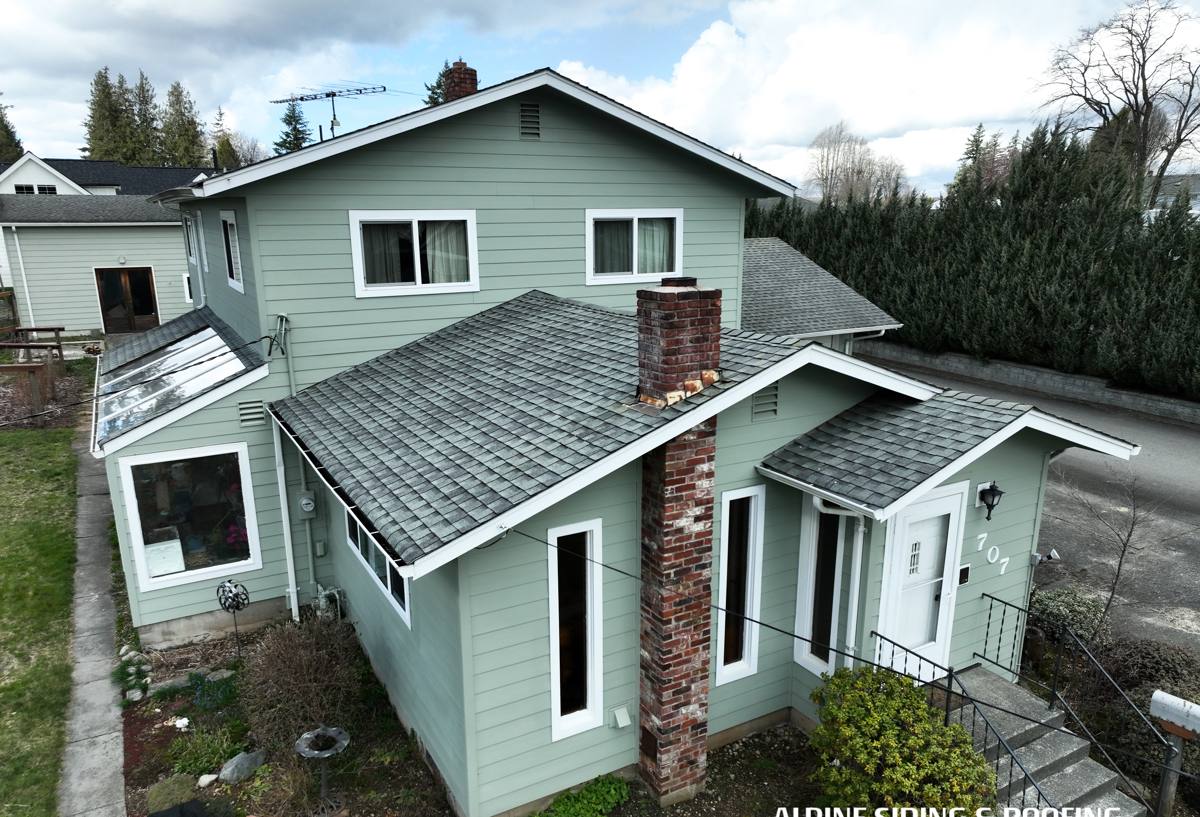
What Wet, Mossy Weather Does to Windows Over Time
Whatcom County's climate isn't dramatic — no hurricanes, no extreme freezes most winters — but it is relentless. That's the part homeowners underestimate. It's not one big storm that damages a window installation, it's ten months a year of moisture testing every seam.
Driving Rain and Wind-Loading
Rain that comes in at an angle pushes against window assemblies in a way straight-down rain never does. If the flashing and water-resistive barrier aren't lapped correctly — water over top, never up and under — wind-driven rain will find that seam eventually. It might take two winters or ten, but it will find it.
Moss, Algae, and Trapped Moisture
Whatcom County's long moss season isn't just a roof problem. Moss and algae take hold on shaded siding and window trim, and once established they hold moisture against the wood or trim material far longer than open air would allow. That constant dampness is what actually causes rot — the moss itself is more a symptom than the cause, but it accelerates the underlying problem.
Salt and Marine Air
Homes closer to Puget Sound's influence deal with a low-grade salt content in the air that speeds up corrosion on hardware, screws, and metal flashing. It's a slower process further inland, but it's still part of why we spec corrosion-resistant fasteners and flashing on every install in this region rather than treating it as optional upgrade.
Signs a Deming Home May Need New Windows
Most window failures show themselves gradually. Here's what we look for, and what you can check yourself before calling anyone:
- Visible daylight or a draft around the frame when the window is closed and locked
- Fogging or moisture trapped between panes on double- or triple-glazed units — a sign the seal has failed
- Soft, spongy, or discolored trim and sill material, especially on north- or shade-facing walls
- Windows that are difficult to open, close, or lock, which often means the frame has shifted or swollen
- Paint or finish that's peeling or bubbling on the interior sill, a common sign of condensation building up inside
- Visible moss or dark streaking on the trim or siding directly around the window
- A noticeable rise in heating costs without any other explanation
What a Correct Window Installation Actually Involves
Window installation looks simple from the outside — take the old one out, put the new one in — but the parts nobody sees are what determine whether it lasts. This is where a lot of installations go wrong, not because the window itself is bad, but because the water management around it was rushed.
Flashing and Water Management
Every opening needs a sill pan to catch and direct any water that gets past the window itself, plus flashing tape or building paper integrated in the correct shingle-lap order — always so water sheds outward and downward, never trapped behind a layer above it. This is the single most important part of the job for a climate like ours, and it's also the part that's invisible once the trim goes back on.
Insulation and Air Sealing
The gap between the window frame and the rough opening needs to be filled with a low-expansion foam or backer rod and sealant — not stuffed with fiberglass insulation alone, which does nothing to stop air movement and can hold moisture against the frame.
Fastening and Structural Fit
The window needs to be shimmed level, plumb, and square before it's fastened, and fastened at the manufacturer's specified points — not just wherever is convenient. A window that's slightly racked in the opening will bind, leak, or fail its seal years before it should.
Choosing the Right Window for This Climate
There's no single "best" window — the right choice depends on your home's exposure, your budget, and how much upkeep you want to take on. Here's how the common options compare for a wet, moss-prone climate like ours:
| Frame Material | Moisture Behavior | Maintenance | Typical Lifespan |
|---|---|---|---|
| Vinyl | Doesn't rot or corrode; can expand/contract with temperature swings | Low — occasional cleaning | 20–30 years |
| Fiberglass | Very stable in moisture and temperature; matches wood's expansion rate | Low | 30-plus years |
| Wood | Attractive, but vulnerable to rot without diligent upkeep in a wet climate | High — repainting/sealing needed | Varies widely with maintenance |
| Wood-clad (wood interior, clad exterior) | Good moisture protection on the exposed side; interior still needs care | Moderate | 25-plus years |
For most homes in the Deming and Lynden area, we recommend vinyl or fiberglass for exterior-facing openings because they hold up to sustained moisture exposure with the least ongoing maintenance. Wood and wood-clad windows still have their place, particularly where a homeowner wants a specific look and is prepared to keep up with the finish — that's a legitimate trade-off, not a wrong choice, as long as it's made with eyes open.
Our Installation Process
1. Assessment and Measurement
We look at each opening individually — not just the window itself, but the condition of the framing, sheathing, and any existing water damage around it. Every opening gets measured precisely; no two rough openings in an older home are ever exactly the same.
2. Removal and Prep
Old windows come out carefully so we can inspect the framing underneath. This is often where hidden rot or past water intrusion shows up, and it's better to find it now than to seal a new window over a problem that's already there.
3. Installation and Weatherproofing
New sill pans, flashing, and the window itself go in per manufacturer specification, then the assembly is sealed and insulated around the perimeter.
4. Trim and Final Inspection
Interior and exterior trim is reinstalled or replaced, and every window is opened, closed, and checked for square and smooth operation before we consider the job done.
What Affects the Cost of a Window Installation
We don't publish flat pricing because every home and every opening is different, but these are the main factors that move the number up or down:
| Factor | Why It Matters |
|---|---|
| Number of windows | Per-window cost typically drops as more windows are done in one visit |
| Frame material | Vinyl is generally the most budget-friendly; fiberglass and wood-clad cost more upfront |
| Condition of the existing opening | Rot or water damage found during removal adds repair time before the new window can go in |
| Window size and type | Larger units, custom shapes, or egress windows require more labor and materials |
| Full-frame vs. insert replacement | Full-frame replacement (removing down to the framing) costs more but is often the right call on older or damaged openings |
We'll walk through which of these apply to your home during the estimate, so you know what you're paying for and why — not just a total number.
Why It Matters to Hire a Crew That Already Works This Area
A window installation crew that mostly works drier inland climates or production-home developments doesn't always carry the same habits a wet-climate installer does — the flashing sequence, the sealant choice, the attention to moss and moisture around shaded openings. Those habits get built from doing the work here, in this weather, on homes like the ones in Deming and around Lynden.
There's also a practical side: a local crew can get to your property without a long drive eating into the job, we're familiar with the older home styles common in this part of Whatcom County, and if a question comes up two years down the road, we're not far away.
Get a Free, No-Pressure Estimate
If you're noticing drafts, fogged glass, or trim that's starting to look rough around your windows, it's worth having someone take a look before it turns into a bigger repair. We'll come out, look at your specific openings, and give you a straightforward estimate — no pressure, no upsell script, just an honest read on what your home needs. Fill out the form below to get started.