 Lynden Siding
 Sumas sits at the far northern edge of Whatcom County, right against the Canadian border where the Nooksack valley flattens out into open prairie farmland. It's a short drive from our crew's home base in Lynden, and it's a town we're in regularly — but the windows on a Sumas home see a slightly different mix of weather than properties a few miles south. It's far enough inland that direct salt spray isn't the daily factor it is on our waterfront service areas, but this whole corner of Washington sits inside one weather system, and salt-tinged marine air still moves through often enough to matter for exposed hardware. The valley floor is flat and low, the farmland is open with fewer trees to break the wind, and the town sits near a natural gap that funnels cold air down from the north in winter. All of that shapes what a correct window installation actually needs to hold up to here, and it's different enough from a sheltered in-town lot that it's worth treating as its own topic rather than a footnote on a general Whatcom County windows page.
Lynden Siding Company installs, repairs, and replaces windows for homes throughout Whatcom County, and Sumas is a regular part of that work. We also handle siding, roofing, and decks, because a window is never really a standalone product — it's one part of a wall assembly that has to work with the flashing, siding, and framing around it, or it becomes the weak point in an otherwise sound wall.
What Sumas's Climate Asks of a Window
Being inland and near the border doesn't mean Sumas is spared from the region's weather — it just changes which parts of it hit hardest.
Driving Rain on Open, Flat Ground
Storms moving through this part of the county push rain sideways more often than they let it fall straight down, and with less tree cover and fewer neighboring structures to slow the wind on open farmland, that wind-driven rain often hits a Sumas home with less resistance than it would on a more sheltered in-town lot. Window flashing and sill pans built only for rain falling straight down get tested hard here, and it doesn't take many storms to find a gap that wasn't sealed correctly.
Outflow Wind Through the Gap
Sumas sits near a natural low point in the terrain where cold air spills down from the north during winter weather events, bringing sharper wind gusts and faster temperature swings than towns set back from that path. That wind load adds real stress to window frames, fastening, and trim — details that hold up fine under ordinary regional weather can still get pushed harder here when an outflow event rolls through.
A Long, Damp Moss Season
Persistent regional moisture, mild temperatures, and shaded walls on tree-lined or outbuilding-adjacent properties add up to a moss and mildew season that runs long in this part of the county. On windows specifically, that shows up as staining or soft growth around sills and lower corners that don't drain and dry out quickly, and it's more than cosmetic — sustained dampness held against a sill is exactly the condition that leads to hidden rot underneath a coat of paint.
Freeze-Thaw on Cold Nights
Sumas sees more frequent hard frosts than milder, closer-to-the-water parts of the county. Moisture that's already worked its way into a poorly sealed sill or frame and then freezes expands and accelerates cracking, which is one more reason a marginal seal doesn't just sit there quietly — it gets worse every winter.
The Windows We See on Sumas Homes
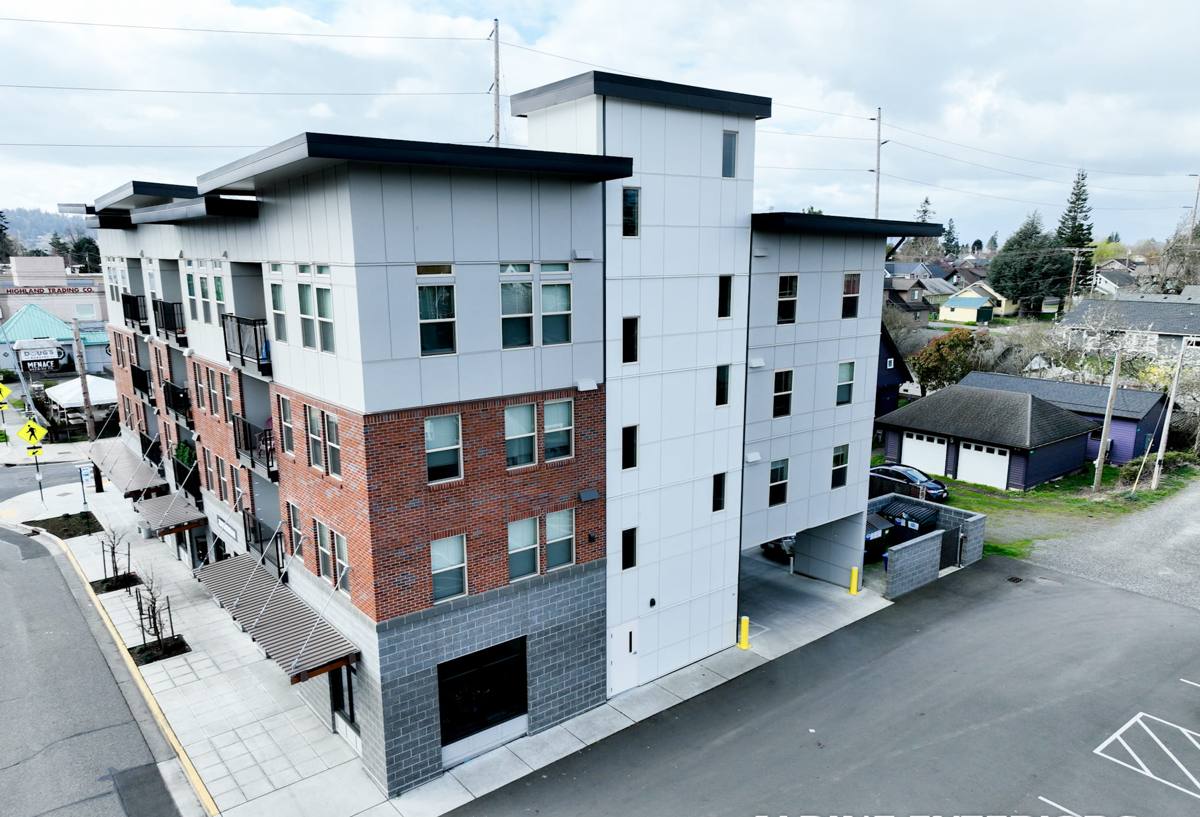
Sumas is a working agricultural community with a real mix of housing stock. Older farmhouses often still carry original wood windows, sometimes single-pane, that were never built for today's energy expectations and are now showing sill rot or failing seals. Newer construction on larger rural parcels tends to bring bigger window openings and more glass area, since there's often more open sightline to work with than an in-town lot offers. And in between, there's a steady stream of ordinary replacement work — homes with aging vinyl windows simply reaching the end of a normal service life. We size up each of these differently rather than assuming every Sumas home needs the same fix.
What a Correct Window Installation Involves
Measuring and Assessment
Every job starts with an in-person look at the actual opening, not a guess based on the window it's replacing. On older farmhouses especially, openings are often slightly out of square after decades of settling, and that has to be accounted for before ordering anything.
Removal and What It Reveals
Pulling the old window out is usually the first real look at what's been happening behind it. On an older home, this is where we typically find out whether sill or jamb framing needs repair before a new window goes in — patching over hidden rot with a new window on top just hides the problem for a few more years.
Sill Pan and Flashing
Given how much sideways rain and wind this area sees, the flashing sequence is the single most important part of the job. A properly pitched sill pan sheds water outward instead of letting it pool under the frame, head flashing has to lap correctly into the housewrap above the window, and jamb flashing needs to tie into the surrounding wall rather than relying on caulk to do that job alone.
Fastening for Wind Exposure
On more exposed rural sites, especially larger openings or homes without much windbreak nearby, fastening patterns need to account for real wind load, not just a manufacturer's minimum spec written for a sheltered lot.
Trim and Finish
The last step is tying the new window into the surrounding siding and trim cleanly, so the finished result looks intentional and sheds water the way the rest of the wall does.
Installation Checklist We Hold Every Job To
- Sill pan pitched to drain outward, not left flat under the frame
- Head flashing lapped correctly into the housewrap above the opening
- Jamb flashing tied into the wall assembly, not just caulked over
- Weep holes and drainage paths left clear and functional
- Fastening pattern matched to the site's actual wind exposure
- Corrosion-resistant hardware appropriate for salt-tinged, sustained regional moisture
- Any framing or sill rot found during removal repaired before the new window goes in
Full-Frame Replacement vs. Insert Replacement
One of the first decisions on a Sumas window project is whether to do a full-frame replacement, which pulls the old window out down to the rough opening and rebuilds the flashing from scratch, or an insert replacement, which sets a new window into the existing frame. The right call depends mostly on what condition the existing frame and flashing are actually in.
| Factor | Insert Replacement | Full-Frame Replacement |
|---|---|---|
| Best fit | Existing frame is sound, square, and properly flashed | Sill or jamb rot, poor original flashing, or a frame that's out of square |
| Speed | Faster, less disruption to surrounding siding and trim | Slower, since flashing and trim are rebuilt from scratch |
| Cost | Lower | Higher, reflecting the added labor and materials |
| What it fixes | The window unit itself | The window and the flashing and framing behind it |
| Common on | Newer homes with sound original installation | Older Sumas farmhouses with original wood windows |
We'll tell you honestly which situation your home is actually in once we've pulled the trim back and had a real look, rather than defaulting to whichever option is faster to sell.
Frame Material for This Setting
Vinyl and fiberglass both resist the moisture and freeze-thaw cycling this area sees far better than untreated or poorly maintained wood. Fiberglass tends to hold its shape and finish a little longer under repeated temperature swings, which can matter on a more wind-exposed rural elevation, while vinyl remains the more budget-friendly option with a solid track record when it's installed correctly. Painted or clad wood windows can still make sense on an older farmhouse where matching the original look matters, but they come with a real ongoing maintenance commitment in a climate this damp. We'll walk through the honest trade-offs against your specific home and budget rather than defaulting to one answer for every property.
Our Process for a Sumas Window Project
- On-site assessment — we look at the actual opening, check for existing moisture damage, and evaluate the site's wind exposure
- Honest recommendation — insert or full-frame replacement, explained with the reasoning behind it
- Written estimate — a clear scope and price before any work starts, no pressure to sign on the spot
- Removal and prep — the old window comes out carefully, and any hidden rot or framing issues get addressed before the new unit goes in
- Installation and flashing — set, shimmed, and flashed to a sequence built for this area's wind and rain exposure
- Trim and finish — exterior trim integrated cleanly with the surrounding siding
Why a Lynden-Based Crew Working Sumas Regularly Matters
Manufacturer installation guidance assumes an average, moderately sheltered site. A lot of Sumas doesn't fit that description — open farmland with less windbreak, a position near a natural cold-air outflow path, and low, flat ground that holds moisture longer than a well-drained hillside lot. A crew that works this specific stretch of the county regularly knows which parts of standard installation guidance deserve extra attention here, and which shortcuts that might pass on a sheltered lot elsewhere in the county tend to show up as a leak or a soft sill within a couple of wet seasons in Sumas.
Being based in Lynden also means we're a short trip away for a follow-up question, a warranty check, or a second opinion — not a crew that drove in from out of the area for one job and is hard to reach afterward.
What to Ask Before Hiring for Window Work in Sumas
- Ask how they'll flash and pitch the sill pan for your specific opening, not just what brand of window they sell
- Ask whether they're recommending insert or full-frame replacement, and why
- Confirm current Washington contractor licensing and active insurance
- Ask how they handle unexpected rot or framing damage found once the old window is out
- Get a written estimate before committing to a schedule
If your Sumas home has windows that are drafty, fogging, hard to operate, or original to an older farmhouse, we're glad to take a look and give you a straightforward read on what it actually needs. Use the form below to schedule a free, no-pressure estimate.