 Lynden Siding
 Why Custer Homes Take a Different Kind of Beating
Custer sits in that stretch of Whatcom County where marine air off the Strait of Georgia and Birch Bay meets open farmland and the kind of wind that doesn't stop just because there's no storm on the radar. Homes out here deal with three things working against their windows at the same time: salt-laden air that speeds up corrosion on hardware and fasteners, driving rain that comes in sideways often enough that vertical surfaces get treated like horizontal ones, and a moss and algae season that runs long because the humidity rarely lets surfaces fully dry out. None of that is dramatic on its own. It's the accumulation, year after year, that turns a window that should last 25-30 years into one that's failing at 15.
Older wood and aluminum-frame windows in this area show it first at the corners and sills, where water sits longest. Vinyl windows show it in seal failure — that foggy look between the panes that means the gas fill is gone and the insulating value with it. We've worked enough houses in and around Custer to know which failure patterns show up here versus, say, a drier inland town, and that shapes how we spec and install a replacement.
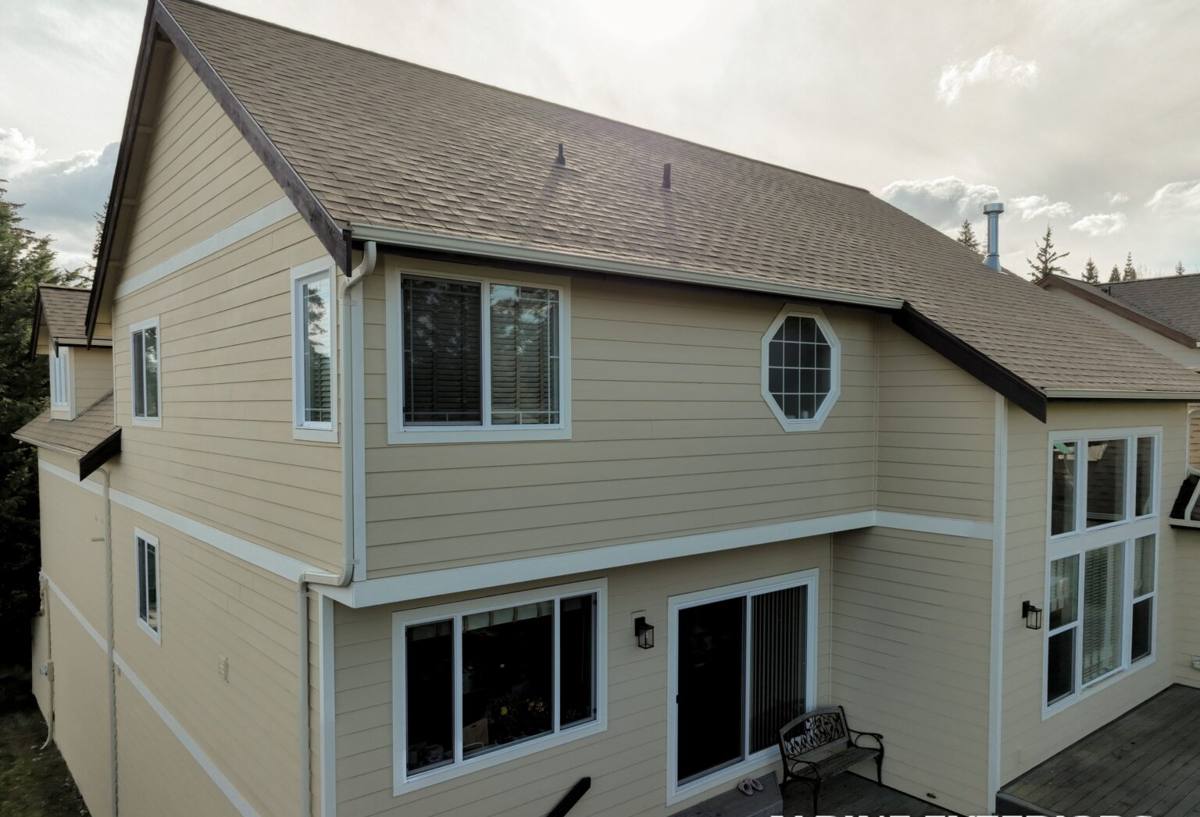
Signs a Custer Home Actually Needs Replacement (Not Just Repair)
Not every problem window needs to come out. Some just need new weatherstripping, a re-glazed sash, or better exterior caulking. Here's how we tell the difference on a walkthrough:
- Fogging or a permanent haze between panes — the seal is gone, and no amount of cleaning fixes it
- Soft or spongy trim and sill wood, especially on north- and west-facing windows that catch the worst of the weather
- Visible daylight or a draft you can feel around the frame with the window latched shut
- Frames that no longer sit square — common after years of moisture-driven wood movement
- Difficulty opening, closing, or locking that isn't fixed by cleaning the tracks
- Condensation forming on the inside of the glass regularly, even with normal ventilation
- Visible mold or moss growth on the frame itself, not just nearby siding or trim
If you're only seeing one or two of these on a handful of windows, repair might still be the honest answer. We'll tell you that on-site rather than push a full replacement you don't need yet.
Rot Is the One That Changes the Math
Once we find soft framing at the sill or jamb, repair usually stops being cost-effective. Rot doesn't stay contained to the window — it's already telling you something about how water has been getting behind the trim, and that same path is often feeding into the wall assembly. At that point, replacement isn't just about the window; it's a chance to correct the water management around the opening before new siding or trim goes back on.
What a Correct Window Replacement Job Actually Involves
Swapping glass is the easy part. What actually determines whether a window lasts 25 years or 10 in this climate is everything around it — the flashing, the sealant, and how the opening is prepped before the new unit ever goes in.
Full-Frame vs. Insert Replacement
There are two honest approaches, and the right one depends on the condition of the existing frame:
- Insert (pocket) replacement — the new window fits inside the existing frame, which stays in place along with your existing exterior trim. Faster, less disruptive to siding, and appropriate when the old frame is still structurally sound and dry.
- Full-frame replacement — the old window and frame come out down to the rough opening, exposing the framing, sheathing, and flashing underneath. This is the right call whenever there's any rot, water staining, or soft wood, because it's the only way to actually inspect and fix what's happening behind the trim.
We won't default to the cheaper insert option just because it's faster if the frame underneath is compromised. That's the kind of shortcut that looks fine at closing and shows up as a callback in two winters.
Flashing and Water Management
Given how much driving rain this area gets, the flashing detail at the sill and head of the window matters more than the window itself in a lot of cases. A correct install means: sill pan flashing that directs any water that gets past the window back out, not into the wall cavity; head flashing integrated with the house wrap or building paper above the opening, not just caulked over; and proper shingle-lap sequencing so water sheds down and out at every layer, the way it would on a roof. Skipping the sill pan is one of the most common corner-cuts we see on past installs in this area, and it's usually invisible until the rot shows up years later.
Sealant and Insulation
The gap between the new window frame and the rough opening gets low-expansion foam or backer rod and sealant — not just caulk squeezed in from the outside. Exterior sealant is the last line of defense against wind-driven rain, not the only one, and it needs to be a product rated for the joint movement and UV exposure our winters and summers both put it through.
Choosing the Right Window for This Climate
Material and glass package matter more here than in a drier, calmer climate. This is a general comparison of what we typically install and how each performs against salt air, rain, and moss conditions:
| Frame Material | Salt Air / Corrosion | Moisture Handling | Maintenance |
|---|---|---|---|
| Vinyl | Doesn't corrode; hardware is the weak point over time | Good, won't rot; seal failure is the main long-term issue | Low — occasional cleaning |
| Fiberglass | Very resistant; dimensionally stable | Excellent; holds paint and seals well over decades | Low to moderate |
| Aluminum | Prone to pitting and corrosion near salt air without a quality coating | Conducts cold and can condense more; needs a thermal break | Moderate — coating wears over time |
| Wood / Wood-Clad | Fine if clad; bare wood needs consistent upkeep | Best appearance, but vulnerable if the exterior seal ever fails | Higher — repainting, sealing, inspection |
For most Custer homes we're recommending vinyl or fiberglass for the exterior-facing performance, with double or triple glazing and low-E coatings to manage both the heat loss in winter and the condensation risk that comes with our humidity. Wood-clad is still a reasonable choice for homeowners who want the interior look, as long as everyone's clear on the maintenance commitment that comes with it — that's a trade-off we'll walk through honestly, not talk you out of if it's what you want.
Our Process, Start to Finish
- Walkthrough and assessment — we look at every window you're considering, note which are repair candidates versus replacement candidates, and check for signs of hidden water damage at sills and trim.
- Measure and order — exact openings get measured; we don't work off rough estimates, since an ill-fitting window creates the exact gap problems we're trying to eliminate.
- Prep and removal — old units come out carefully to protect surrounding siding and trim, especially important on houses where we're not also re-siding at the same time.
- Inspect the opening — this is the step that gets skipped by crews in a hurry. We check the sheathing and framing before anything new goes in.
- Flash, set, and seal — sill pan, window, head flashing, insulation, and sealant, in that order, following manufacturer specs for the specific window being installed.
- Trim and finish — interior and exterior trim reinstalled or replaced to match, with attention to caulk lines that will actually hold up to our rain rather than just look clean on install day.
- Walkthrough and cleanup — we test operation on every window, walk it with you, and clean up debris and packaging before we leave.
What Affects the Cost
Every house is different, so we're not going to throw out a per-window number that doesn't mean much without context. What actually moves the price:
| Factor | Why It Matters |
|---|---|
| Insert vs. full-frame | Full-frame costs more but is often required once rot or water damage is present |
| Frame material | Vinyl is the most budget-friendly; fiberglass and wood-clad cost more upfront |
| Glass package | Double vs. triple pane, low-E coatings, and gas fill all affect price and energy performance |
| Window size and type | Standard double-hung costs less than large picture windows, sliders, or custom shapes |
| Number of windows | Whole-house projects typically bring a better per-unit cost than one-offs |
| Hidden repairs | Rot or framing damage found once the opening is exposed adds labor and material |
We'll flag the possibility of hidden repair costs up front if we see warning signs during the initial walkthrough, rather than let it be a surprise mid-project.
Permits and Local Considerations
Most straightforward window replacements — same size, same opening — don't require a permit in unincorporated Whatcom County, but that can change if you're altering the opening size, changing egress windows in a bedroom, or the work is part of a larger renovation. We handle that determination as part of planning the job so it's not something you have to chase down yourself. If your property is on a well or septic system, or has any easement or setback considerations tied to the county, we factor that into scheduling and site access too.
Maintaining New Windows in This Climate
A good installation buys you decades, but a little seasonal attention keeps it that way:
- Rinse salt residue and grime off exterior frames a couple times a year, especially after storms
- Check and clear weep holes at the sill so water can drain instead of pooling
- Inspect exterior caulk lines annually — sealant is a wear item, not a lifetime fix
- Wipe down tracks and hardware to keep moss and algae from getting a foothold
- Watch for condensation between panes as an early warning sign of seal failure, and address it before it becomes a bigger repair
Why It Matters That We Already Work in Custer
A crew that's only ever installed windows in a dry inland climate will spec and flash a job differently than one that knows exactly how hard this area's rain comes in sideways and how long moss season actually runs. We've done exterior work throughout the Lynden and Custer area long enough to know which details actually matter here — sill pan flashing isn't optional, hardware needs to handle salt exposure, and the install has to account for humidity that doesn't let surfaces dry out quickly. That's not a sales pitch; it's the difference between a window that's still performing in year 20 and one that's showing seal failure by year 10.
If you're seeing drafts, fogged glass, sticking sashes, or soft trim around your windows, we're happy to take a look and give you a straight read on whether you need repair or replacement — no pressure, no upsell. Reach out for a free estimate using the form below, and we'll walk your home with you and lay out exactly what we'd recommend and why.