 Lynden Siding
 Window Replacement for Laurel Homes Near Lynden
Laurel sits in the flat farm country just south of Lynden, in the part of Whatcom County where marine air off the Strait, wet winters, and long stretches of overcast, moss-friendly weather all work on a house year-round. Windows take more of that abuse than almost any other part of the exterior. They're the first thing to show a failed seal, the first place moisture finds a gap, and often the last thing a homeowner replaces even though they're quietly driving up heating bills and letting condensation build up on cold mornings. We do window replacement work throughout the Laurel area as part of our regular Lynden route, and we've built our process around what actually fails out here — not what fails in a showroom.
This page is specifically about window replacement for Laurel-area homes. If you're also dealing with siding, trim, or moisture issues elsewhere on the house, we handle those too, but the notes below are focused on getting windows right in this climate.
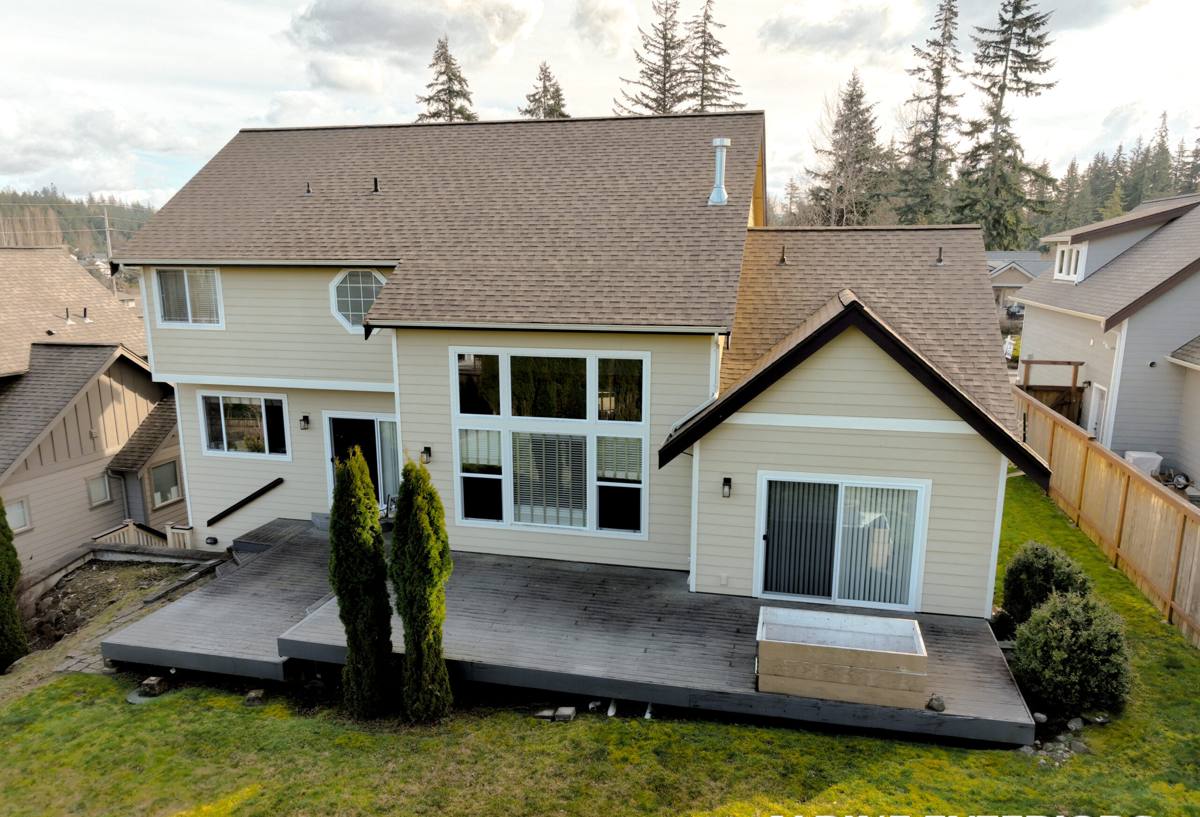
What Laurel's Climate Does to Windows
Whatcom County weather is mild compared to a lot of the country, but "mild and wet for nine months" is its own kind of hard on a house. A few things matter more here than in drier climates:
Driving rain and wind-driven moisture
Storms coming off the water don't just fall straight down — wind pushes rain sideways into window frames, especially on the west and south-facing walls that catch the weather. A window that's flashed and sealed correctly sheds that water. One that isn't will let it track behind the trim and into the wall cavity, where it can sit for months before anyone notices a soft spot or a musty smell.
Salt air
Laurel isn't right on the water, but it's close enough that salt-laden air moves through on a regular basis, especially with onshore winds. Salt air accelerates corrosion on hardware, fasteners, and lower-grade metal components. It also breaks down cheap vinyl and rubber gaskets faster than inland installations see.
A long moss and mildew season
Shade, moisture, and mild temperatures are exactly what moss and mildew want, and Whatcom County gives them most of the year to work. On windows, that shows up as black streaking on sills, moss creeping into corner joints, and — if water is getting behind the frame — hidden rot that moss growth on the exterior trim can be an early warning sign of.
Condensation and cold-morning fog
Older single-pane or failed dual-pane windows fog up on cold, wet mornings because there's no working thermal break. That condensation doesn't just annoy you at breakfast — it drips onto sills and frames over and over, which is its own slow moisture problem even before you get to heat loss.
Signs a Laurel Home Needs Window Replacement, Not Just a Repair
- Fog or moisture trapped between panes that won't clear — the seal has failed and the gas fill is gone
- Soft or spongy wood at the sill or lower frame corners
- Windows that are hard to open, close, or lock, especially after they've swelled from moisture
- Visible daylight or a draft you can feel with your hand along the frame edge
- Paint that keeps failing on the trim around a specific window, even after repainting
- Persistent moss or black streaking on the sill that comes back within a season of cleaning
- Noticeably colder rooms near older windows, or higher heating bills than a similarly sized newer home
A single failed seal or a bad piece of caulking can sometimes be repaired. Rot at the frame, chronic condensation, or hardware that's corroded from years of salt air usually means the window itself needs to come out.
What a Correct Installation Actually Involves
Window replacement done right is mostly about what happens before the new window ever gets set — the flashing, the sealing, and the details around the rough opening. This is where cheap installs fail even when the window product itself is fine.
Assess the opening before ordering
We check the rough opening for square, for existing water damage, and for how the original window was flashed. On older Laurel homes, especially anything built before modern flashing standards, this step often turns up soft sheathing or a flashing detail that needs correcting — not just replacing.
Flash for wind-driven rain, not just vertical rain
Given how much sideways rain this area gets, we pay particular attention to head flashing and the way water is directed away from the top and sides of the frame, not just the sill. A window that only sheds water falling straight down isn't built for a Whatcom County storm.
Seal and insulate the gap correctly
The gap between the window frame and the rough opening needs to be air-sealed and insulated without over-packing it, which can bow the frame and cause the window to operate poorly. We use appropriate low-expansion foam or backer rod and sealant depending on the gap size — not whatever's fastest.
Match trim and finish to the house
Exterior trim gets re-flashed and sealed as part of the job, not just caulked over. On homes with wood trim, we make sure paint and sealant are applied to bare, properly prepped surfaces so the finish actually holds up through a wet Whatcom County winter instead of failing again in a year or two.
Choosing Materials for This Climate
There's no single "best" window material — the right choice depends on your home's age, your budget, and how much maintenance you want to do. Here's how the common options actually perform in a marine, high-moisture climate like Laurel's:
| Frame Material | How It Handles Salt Air & Moisture | Maintenance | Typical Fit |
|---|---|---|---|
| Vinyl | Good — won't corrode or rot; quality varies a lot by manufacturer | Low | Most common replacement choice for value and durability |
| Fiberglass | Excellent — very stable, resists moisture and salt exposure well | Low | Good for homeowners wanting a longer-term, lower-maintenance upgrade |
| Wood (clad exterior) | Good on the exterior face if cladding is intact; vulnerable where clad seals fail | Moderate | Homes wanting a wood interior look with protected exterior |
| Bare wood | Poor without diligent upkeep — this climate's moss and moisture cycle wears bare wood fast | High | Historic or period-specific homes where owners commit to upkeep |
| Aluminum | Fair — conducts cold and can condensate more; hardware needs to be corrosion-rated for salt air | Low-moderate | Less common for residential replacement in this area |
We're upfront about trade-offs rather than pushing one product. Bare wood windows can look great, but in this climate they need real maintenance discipline to avoid the rot and finish failure we see on neglected wood trim throughout the area. Vinyl and fiberglass are what we recommend for most Laurel homeowners who want to install once and not think about it again for a long time.
How We Approach a Job in Laurel
- Walk the home and assess each window individually. Not every window on a house is failing the same way — some may need full replacement, others just better sealing.
- Check for hidden damage before quoting. We look at sills, framing, and sheathing so the estimate reflects what's actually there, not just what's visible from inside.
- Provide a clear, itemized estimate. You'll know what's being replaced, what materials are being used, and what the flashing and sealing plan is.
- Protect the work area. Interior and landscaping protection during removal and install, with daily cleanup.
- Install with proper flashing and sealing details suited to wind-driven rain, not a generic caulk-and-go approach.
- Walk through the finished work with you so you know how to operate and maintain the new windows.
Cost Factors for Laurel Homeowners
Window replacement pricing varies with the number of windows, frame material, size, and whether there's hidden damage to repair. Rather than quote a number that won't mean much without seeing your home, here's what actually moves the price:
| Factor | Why It Matters |
|---|---|
| Number of windows replaced at once | Doing several windows in one visit typically costs less per window than one-off jobs |
| Frame material | Vinyl is generally the most budget-friendly; fiberglass and clad wood cost more upfront |
| Window size and type | Standard double-hung sizes cost less than large picture windows, bays, or custom shapes |
| Hidden rot or framing damage | Repairing soft sheathing or damaged framing adds labor beyond the window itself |
| Access and height | Second-story or hard-to-access windows take more time and equipment |
| Trim and finish work | Matching existing exterior trim or repainting adds to scope |
We'll always give you a firm, written estimate before work starts — no surprise add-ons once the job is underway unless we find something during removal that genuinely needs to be addressed, and we'll show you that before proceeding.
Why a Crew That Already Works Laurel Matters
General contractors who don't work this area regularly sometimes treat Whatcom County like anywhere else in the Pacific Northwest. But Laurel's mix of open farmland exposure, proximity to salt air, and heavy moss season means the flashing and sealing details that work in a drier or more sheltered part of the state aren't always enough here. A crew that routes through Laurel and Lynden regularly has already seen how the local weather finds the weak points in a bad install — and builds around them from the start instead of learning it the hard way on your house.
We're a Lynden-based crew, and Laurel is part of our normal working area, not a special trip. That means we can typically schedule efficiently, we know the kind of housing stock common in the area, and we're not guessing about how this climate treats a window installation over the following winters.
Ready for an Estimate?
If your windows are fogging, drafty, hard to operate, or just old enough that you're wondering whether it's time, we're happy to take a look. We'll give you a straight, no-pressure estimate on what's actually needed — whether that's a full replacement or a smaller repair — using the form below.