 Lynden Siding
 Roofing in Wiser Lake: A Different Set of Demands
Wiser Lake sits in that stretch of Whatcom County where open farmland, tall conifers, and lake-effect moisture all meet in the same neighborhood. That combination is hard on roofs. Homes here deal with driving rain that comes in sideways off open water and fields, salt-tinged air moving inland off the Sound, and shaded, damp lots where moss and moss spores never fully dry out. A roof installed without that reality in mind will look fine for a year or two and then start failing quietly — moss lifting shingle edges, moisture working into the deck, granule loss speeding up in the wettest sections of the roof plane.
A correct new roof installation for a Wiser Lake home isn't about upgrading to a fancier product. It's about building every layer — deck, underlayment, flashing, ventilation, and surface material — to handle sustained wet weather instead of just shedding an average rain.
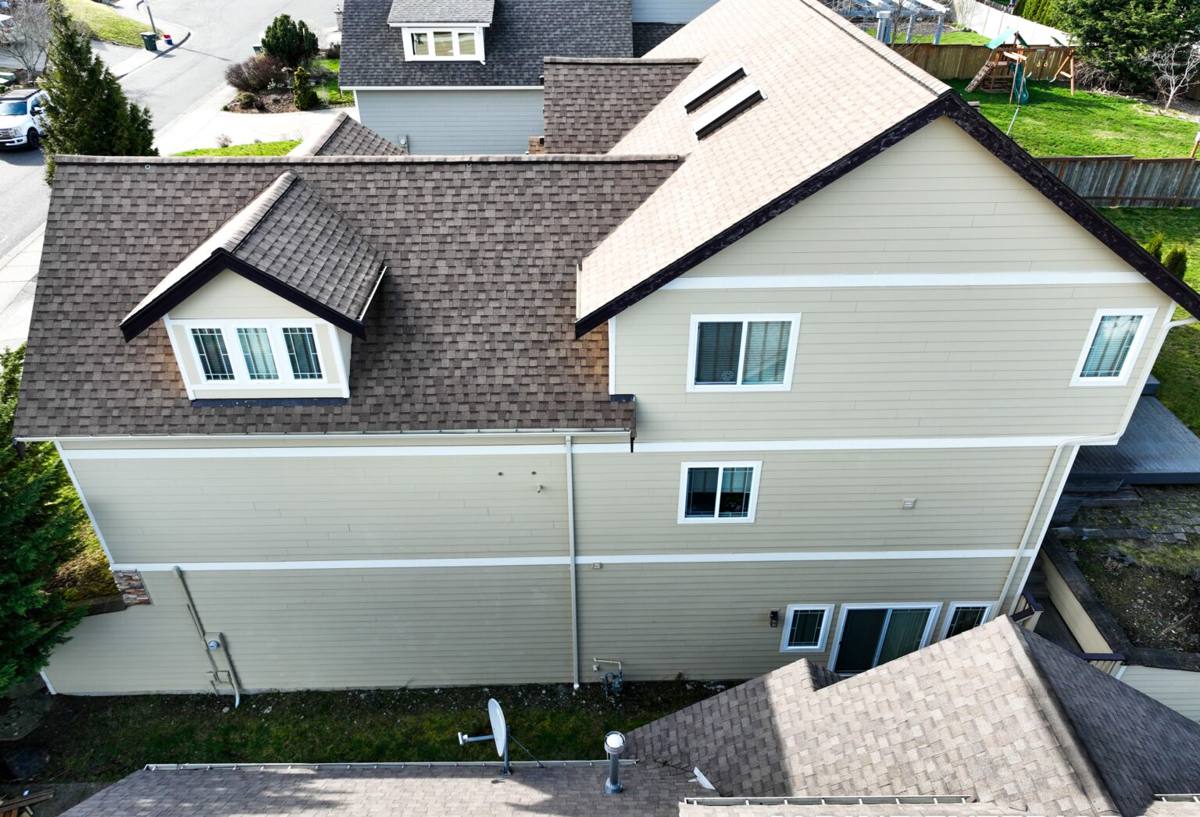
What Driving Rain and a Long Moss Season Actually Do to a Roof
Wind-Driven Rain
Most asphalt shingle systems are designed assuming rain falls mostly straight down. In Whatcom County, storms regularly push rain sideways under wind, which means water can get up under shingle tabs, ride along fastener lines, and find its way past standard underlaps at valleys, eaves, and around penetrations. Over time this shows up as staining on interior ceilings near chimneys, skylights, and roof-wall intersections long before there's an obvious leak.
Moss and Organic Growth
Shaded roof planes near mature trees — common around Wiser Lake — stay damp for days after a storm, which is exactly what moss needs to establish. Once moss takes hold, it doesn't just sit on top of the shingle: its root structure works into the granule surface and lifts tabs slightly, creating a path for wind-driven rain to get underneath. Left alone through a few wet seasons, moss can shorten the usable life of an otherwise sound roof by years.
Salt Air and Corrosion
Metal components — flashing, fasteners, vents, gutters — take a slow beating from salt-carrying air moving in off the Sound. Standard galvanized fasteners and unprotected flashing corrode faster here than they would further inland, which is why fastener and flashing spec matters as much as the shingle brand printed on the wrapper.
What a Correct New Roof Installation Involves
A new roof is only as good as what happens before the first shingle goes down. For a Wiser Lake home, that means:
Full Tear-Off and Deck Inspection
We remove existing roofing down to the deck rather than layering over old material. This lets us actually see the plywood or plank sheathing underneath, replace any sections that have gone soft or delaminated from years of trapped moisture, and confirm the deck is properly fastened before anything new goes on top of it.
Ice-and-Water Shield Where It Matters Most
Self-adhering waterproof membrane goes down at eaves, valleys, and around every penetration — the spots where wind-driven rain and standing water cause the most damage. This isn't standard practice on every roof nationally, but for our climate it's non-negotiable.
Synthetic Underlayment Across the Field
A high-quality synthetic underlayment across the rest of the roof adds a second water-resistant layer beneath the shingles, so if wind ever drives moisture past the surface material, it still has somewhere to shed rather than reaching the deck.
Corrosion-Resistant Flashing and Fasteners
Step flashing, counter-flashing, and fasteners are spec'd to hold up to salt-tinged coastal air, not just meet a minimum code requirement. Cutting corners here is one of the most common causes of early leaks around chimneys and sidewalls.
Balanced Attic Ventilation
Intake at the eaves and exhaust at the ridge keep air moving through the attic space, which controls moisture buildup from the inside and helps the roof dry out faster after storms — a meaningful factor in how long moss takes to re-establish.
Material Options: What Actually Holds Up Here
There's no single right answer for every home, but here's how the common options compare for a Wiser Lake property specifically:
| Material | Moisture & Moss Resistance | Typical Lifespan | Relative Cost |
|---|---|---|---|
| Architectural asphalt shingle (algae-resistant) | Good, with copper/zinc-infused granules that slow moss and algae growth | 25–30 years | Moderate |
| Standard 3-tab asphalt shingle | Fair — more prone to moss and faster granule loss in shaded areas | 15–20 years | Lowest |
| Standing seam metal | Excellent — sheds water fast, nothing for moss to root into | 40–50+ years | Highest |
| Synthetic composite shingle | Good — resists moisture absorption, low maintenance | 30–50 years | Moderate to high |
For most Wiser Lake homes, an algae-resistant architectural shingle strikes the right balance of cost and moss resistance. Homes on heavily shaded, tree-lined lots or homeowners planning to stay long-term often do better with metal or a synthetic composite, since both essentially remove moss as an ongoing maintenance issue.
Our Installation Process
- On-site assessment — we walk the roof, check the attic from inside, and look at drainage patterns specific to your lot before quoting anything.
- Written scope and estimate — materials, tear-off scope, deck repair allowance, and timeline spelled out in plain language, no vague line items.
- Permitting — we handle the Whatcom County permit and inspection requirements for the project.
- Tear-off and deck inspection — old material removed, deck checked and repaired as needed.
- Waterproofing layers installed — ice-and-water shield, underlayment, flashing.
- Roofing material installed to manufacturer spec, with attention to nailing pattern and exposure — both of which affect wind resistance in storm season.
- Ventilation and final flashing details completed and checked.
- Final walk-through — we go over the finished roof with you before calling the job done.
Ventilation and Moisture Control
In a climate this wet, what happens under the shingles matters as much as the shingles themselves. Attics that don't breathe properly trap moisture from everyday household use, which condenses against the underside of the deck and creates the exact damp conditions moss and rot both need. A correctly balanced intake-and-exhaust system pulls that moisture out continuously, which protects the deck from the inside while the roofing material handles everything coming from the outside. We size and place vents based on the actual attic, not a generic formula, since roof shape and existing insulation both affect what a home needs.
Why Local Experience in Wiser Lake Matters
A crew that only occasionally works this area will spec a roof the same way they would anywhere else. A crew that works Wiser Lake and the surrounding Lynden area regularly knows which roof orientations take the worst of the wind-driven rain, which lots hold shade long enough to grow moss fast, and how to sequence a tear-off around a wet forecast instead of leaving a deck exposed overnight. That local pattern recognition is the difference between a roof that's built to code and one that's actually built for this specific stretch of Whatcom County.
New Roof Installation Checklist for Wiser Lake Homeowners
- Confirm the scope includes full tear-off, not an overlay on existing material
- Ask whether ice-and-water shield is included at all eaves, valleys, and penetrations
- Check that flashing and fasteners are specified for corrosion resistance, not just minimum code
- Ask how attic ventilation will be assessed and addressed as part of the job
- Get the shingle or material's algae/moss-resistance rating in writing if moss has been an issue before
- Confirm who is pulling the Whatcom County permit and scheduling inspections
- Ask what happens if deck damage is found once tear-off starts — and how that's priced
- Get manufacturer warranty terms and workmanship warranty terms as separate, written items
What Affects the Cost
Every roof is priced on its own specifics, but the main factors that move the number are consistent:
- Roof size and pitch — steeper roofs take longer and require more safety setup
- Number of layers being removed — tear-off gets more involved with each existing layer
- Deck condition — sections needing replacement add material and labor
- Material choice — asphalt shingle, synthetic composite, and metal sit at different price points, as shown above
- Roof complexity — valleys, dormers, chimneys, and skylights all add flashing detail work
- Access — trees, outbuildings, or tight lot lines can affect equipment and staging
We walk through these factors on-site so the estimate reflects your actual roof, not a generic square-footage average.
If you're planning a new roof for a Wiser Lake home, we're glad to come take a look and give you a straightforward, no-pressure estimate built around your roof, your lot, and this area's weather — use the form below to get started.