 Lynden Siding
 Roofing Around Wiser Lake Faces Its Own Set of Problems
Wiser Lake sits just outside Lynden, tucked into a mostly rural pocket of Whatcom County that mixes open water, mature tree cover, and pasture. That combination changes how a roof ages compared to a house on a bare, sun-exposed lot in town. Homes ringed by fir and cedar stay shaded for a good part of the day, which means roof surfaces dry slower after every rain. Add the marine-influenced weather that rolls in off the Strait of Georgia and Puget Sound — long stretches of steady, low-intensity rain rather than short heavy downpours — and you get a roof that spends more of the year damp than dry.
That moisture pattern, combined with organic debris off the tree canopy, is exactly what moss and algae need to take hold. It's also why wind-driven rain matters more here than people expect: open water and cleared shoreline lots give wind a longer run-up, and driving rain finds its way into flashing, valleys, and penetrations that a straight-down rain would never test. A roof built for a drier or more exposed part of Whatcom County isn't automatically the right roof for a shaded, lake-adjacent lot near Lynden.
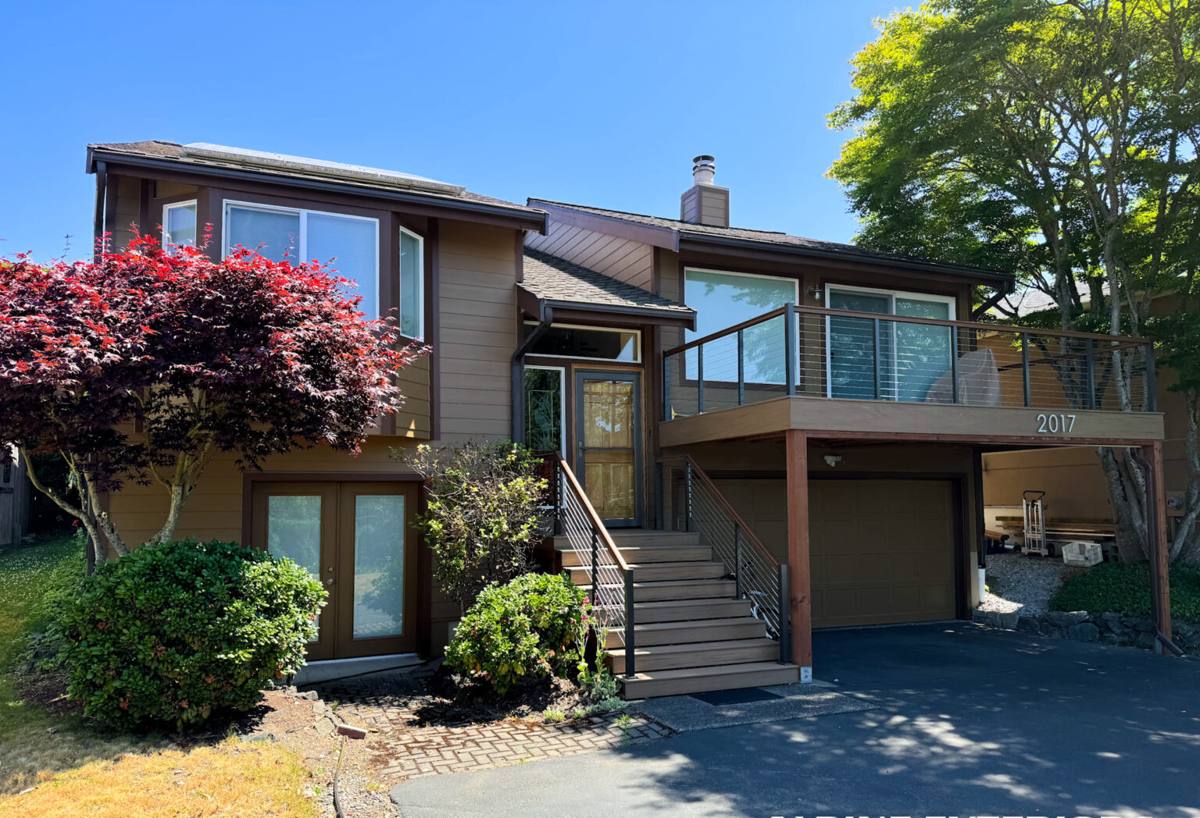
Signs a Wiser Lake Roof Is Due for Replacement
Most roofs don't fail all at once — they show warning signs for a season or two first. On homes near the lake, we look for a specific set of red flags tied to shade, moss, and moisture:
- Thick moss mats, especially on north-facing slopes or sections shaded by nearby trees
- Granule loss showing up as bald or shiny patches on the shingle surface
- Shingles that have started to curl, cup, or lift at the edges
- Gutters filling with granules or moss debris faster than they used to
- Dark streaking (algae) that's spread beyond a few isolated spots
- Rusted, lifted, or loose flashing around chimneys, skylights, or dormers
- Water stains on interior ceilings that show up after wind-driven storms specifically
- Daylight or damp sheathing visible from inside the attic
- A roof approaching or past the 20–25 year mark typical for asphalt shingles in this climate
Any one of these on its own might just mean a repair. Several together, especially moss combined with granule loss, usually means the shingle mat itself is breaking down and a patch job won't hold for long.
What a Correct Replacement Actually Involves
Tear-Off and Deck Inspection
We remove the old roofing down to bare decking rather than layering over it. That's the only way to actually see what's underneath — soft, delaminated, or water-stained sheathing is common on shaded, moisture-heavy roofs near the lake, and it has to be replaced before anything new goes down. Covering over a compromised deck just hides the problem for a few more years.
Underlayment and Ice-and-Water Protection
Given how much of the year this area spends wet, we run synthetic underlayment across the full roof, not just the minimum, and install ice-and-water shield membrane at eaves, valleys, and any low-slope transitions where water tends to sit or back up.
Flashing and Penetrations
Chimneys, skylights, plumbing vents, and dormers are where wind-driven rain gets in. New step flashing, counterflashing, and properly sealed penetrations matter as much as the shingle brand on top of them — most leaks we get called out for started at a flashing detail, not in the open field of the roof.
Matching the Roof to the Site
A shaded, tree-canopy lot near the water calls for different product choices than an open, sun-exposed roof in town — heavier moss resistance, a wind rating that accounts for open-lake exposure, and ventilation sized for a roof that dries slowly. We spec the job to the actual site, not a one-size-fits-all package.
Material Options for This Climate
There's no single "best" roofing material — it depends on budget, how much shade and moss pressure the roof deals with, and how long you plan to own the home. Here's how the common options stack up for a Wiser Lake property:
| Material | Typical Lifespan | Moss/Algae Resistance | Maintenance |
|---|---|---|---|
| Standard asphalt composition shingle | 20–25 years | Moderate (better with algae-resistant granules) | Periodic moss treatment recommended |
| Algae-resistant (AR) architectural shingle | 25–30 years | Better — copper/zinc granules slow algae growth | Lower, but not maintenance-free under heavy tree cover |
| Metal roofing (standing seam) | 40–50+ years | High — sheds moss more effectively, sheds moisture fast | Low; occasional debris clearing |
| Synthetic shake/slate composite | 30–50 years | Good, varies by product | Low to moderate |
For most homes near the lake with real tree cover, we steer people toward algae-resistant shingles at minimum, and talk through metal roofing when the budget allows — the upfront cost is higher, but on a shaded roof that fights moss year after year, the lower maintenance and longer lifespan often make sense over the long run.
A Note on Cedar and Wood Shake
Wood shake still shows up on older homes in this area, and we understand the appeal — it fits the setting. Our professional standard is to be upfront that wood shake is a higher-maintenance product in a shaded, moisture-heavy environment like this: it needs regular treatment to resist moss and rot, and warranty terms from most manufacturers reflect that maintenance requirement. We'll install it if that's what a homeowner wants, but we make sure the maintenance commitment is understood going in, not discovered three years later.
Ventilation Matters as Much as the Shingle
A new roof with poor attic ventilation will underperform no matter how good the shingle is. On shaded lots near Wiser Lake, this is one of the details we see skipped most often on older installs. Balanced intake (soffit vents) and exhaust (ridge or box vents) let the attic breathe, which does two things: it keeps moist air from condensing on the underside of the deck, and it keeps the roof surface from staying warm and damp longer than it needs to — both of which feed moss growth. We check soffit vents for blocked insulation and confirm exhaust venting is sized correctly for the attic, not just reused from whatever was there before.
Our Process
- On-site inspection — we walk the roof and attic, photograph problem areas, and check decking condition
- Written estimate covering material options, ventilation needs, and any decking repair likely to come up
- Permitting through Whatcom County where required, handled before work starts
- Scheduling around weather windows — we don't tear off a roof ahead of a storm
- Tear-off and deck inspection, with any rotten or soft sheathing replaced before underlayment goes down
- Underlayment, ice-and-water shield, flashing, ventilation, and shingle installation
- Full cleanup, including a magnetic sweep for nails around the house and driveway
- Final walkthrough so you can see the finished work before we consider the job done
Why Local Experience Near Wiser Lake Matters
Lake-adjacent properties come with logistics that a crew unfamiliar with the area can miss. Long tree-lined driveways can limit where a dump trailer or material delivery can stage. Septic systems on rural lots need to be routed around, not driven over. Some properties near the shoreline carry setback or drainage considerations worth checking before work starts. And because Wiser Lake sits in more of an open, wind-exposed pocket than a lot buried deep in town, we factor that into flashing and fastening details rather than treating every roof in Whatcom County the same. A crew that's already worked this specific area knows these details going in instead of learning them mid-project.
Keeping a New Roof Performing After Installation
A correctly installed roof still benefits from basic upkeep, especially under tree cover:
- Clear gutters at least twice a year, more often if you're under heavy fir or cedar canopy
- Keep overhanging branches trimmed back so debris and shade don't build up on one section of roof
- Have moss treated at the first sign of regrowth rather than waiting for a full mat to form
- Walk the attic once a year, or after major windstorms, to check for new stains or daylight
- Confirm soffit vents stay clear if you ever add attic insulation later
None of this is complicated, but it's the difference between a roof that hits its full expected lifespan and one that starts showing moss and granule loss five years early.
If you're seeing moss, granule loss, or aging shingles on a home near Wiser Lake, we're glad to come take a look. The estimate is free, there's no pressure attached to it, and you'll get a straight answer about whether you're looking at a repair or a replacement — use the form below to get started.